Choosing Mobile Cold Storage for Florida Events
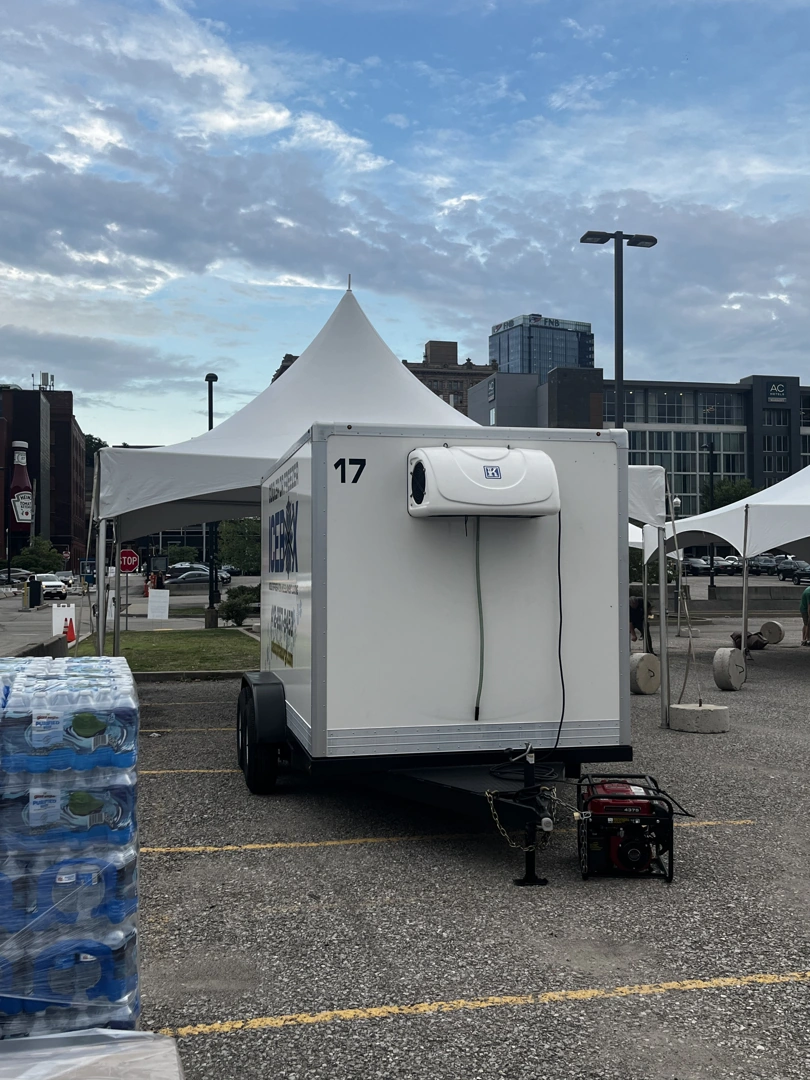
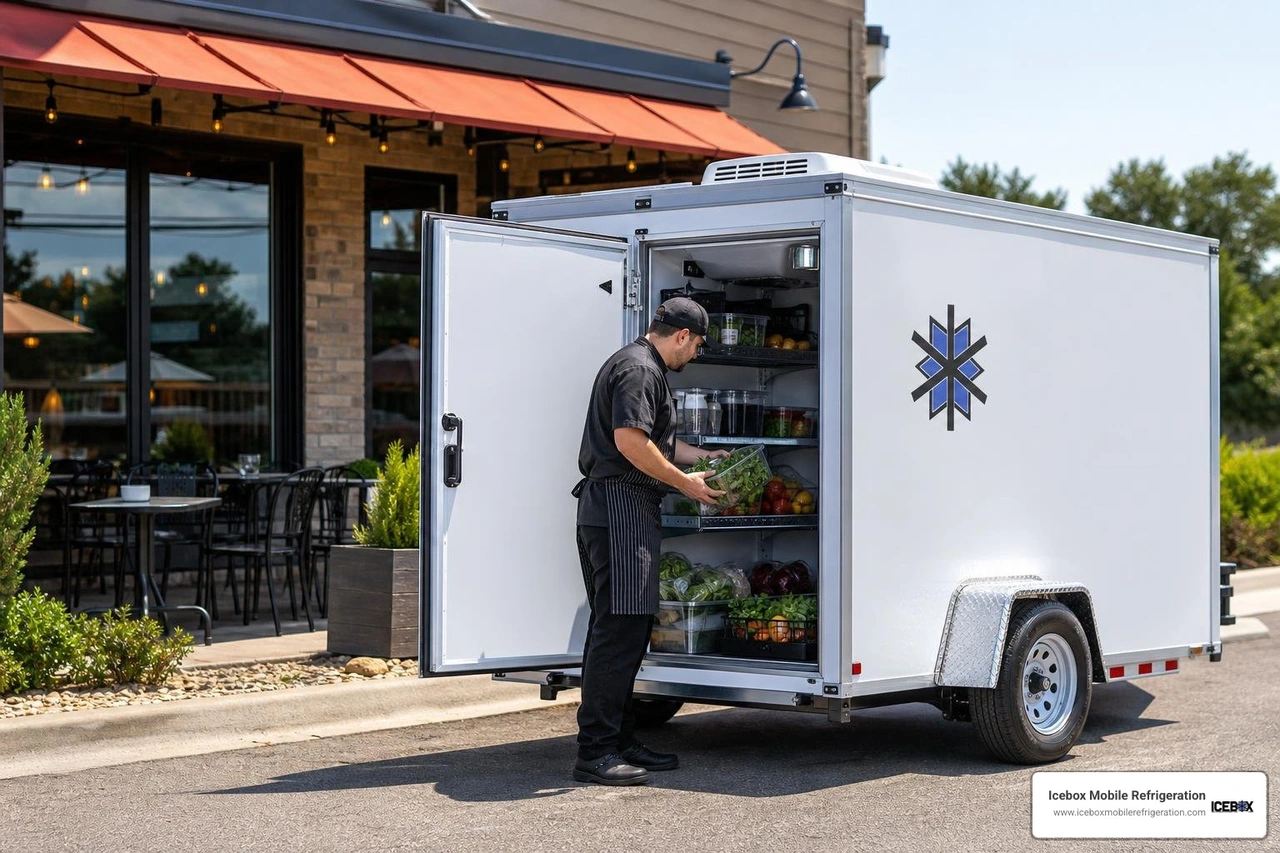
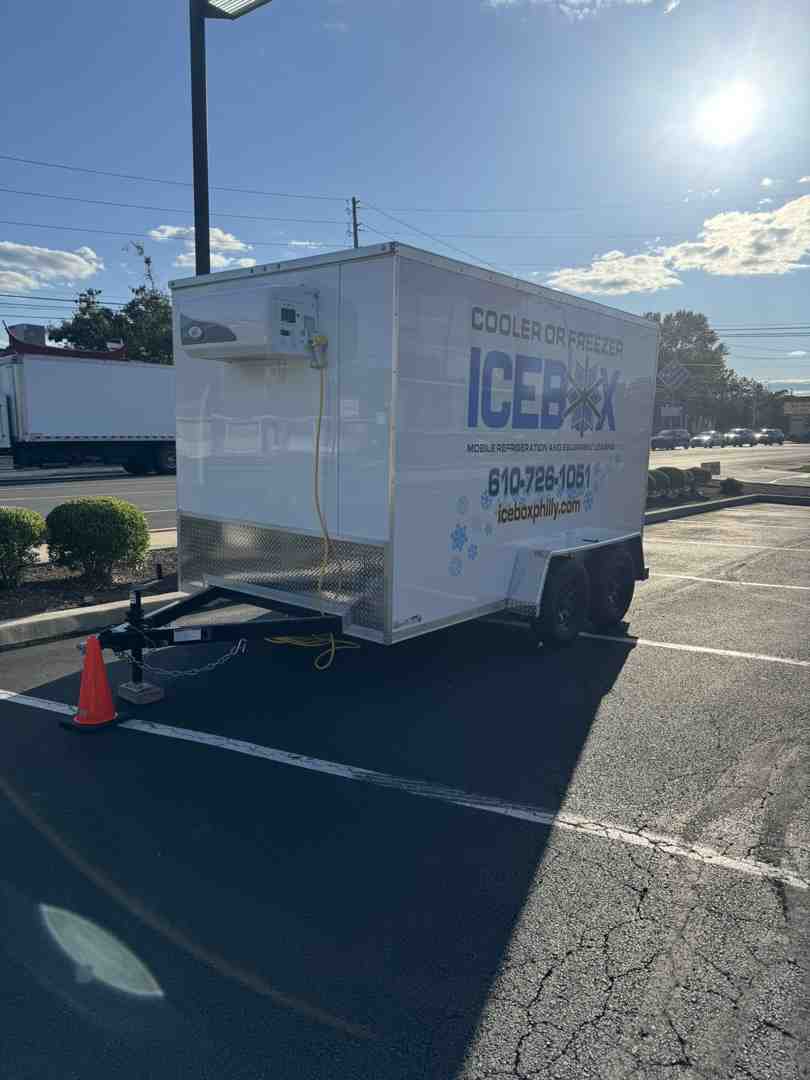
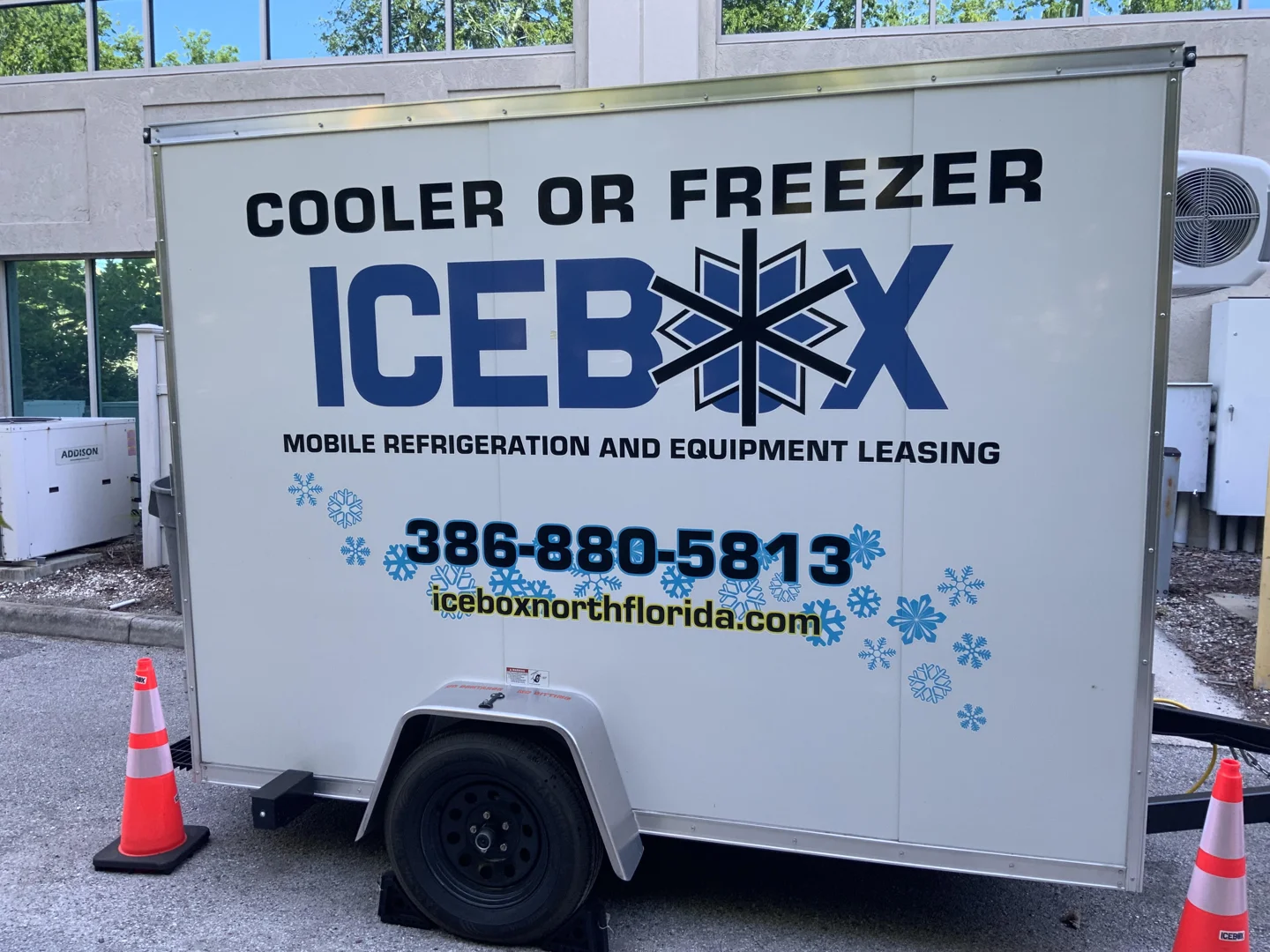
When planning for a walk-in cooler in Florida, start with the site, weather, and storage volume. For temporary event, emergency, or overflow storage, a delivered refrigerated trailer is often the simplest option: confirm a level placement area, available power, clear access for delivery, and enough capacity for your busiest day.
Florida adds a few important concerns:
- Heat and humidity: Keep doors closed as much as possible and use a unit sized for frequent access.
- Rain and storms: Choose secure on-site placement away from flooding, overhead hazards, and loose debris.
- Event changes: Plan for extra chilled space before deliveries arrive, especially during peak season.
- Food safety: Use continuous temperature monitoring aligned with FDA food safety guidelines and organize products so staff can find items quickly.
Unlike permanent outdoor walk-in boxes, mobile cooler trailers are delivered for short-term, on-site use. That can help restaurants, caterers, florists, venues, and disaster-response teams add cold storage without building a permanent structure or navigating the design limits that can apply to freestanding installations in hurricane-prone areas.
We are Dan and Kelley, and the next sections will help you match a Florida mobile cold-storage rental to your site, schedule, and inventory needs.
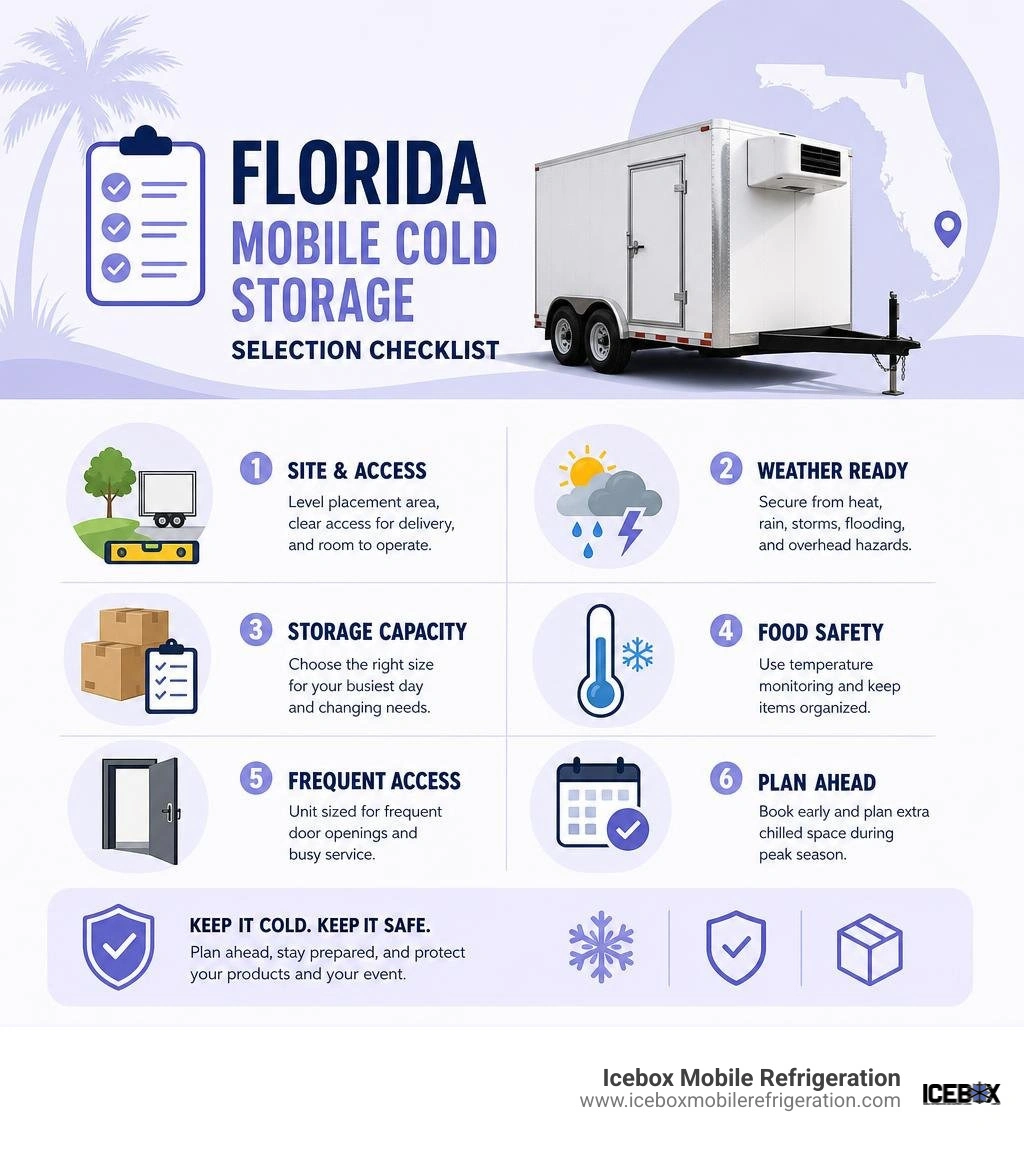
Walk-in cooler Florida vocab explained:
Key Factors When Choosing a Walk-in Cooler Florida Setup
Operating commercial cold storage in Florida means dealing with extreme solar heat, high ambient moisture, and severe storm threats. Whether you manage a seafood restaurant in the Keys, organize large outdoor festivals, or run a bustling commercial kitchen, maintaining exact holding temperatures between 35°F and 45°F protects inventory and prevents costly spoilage.
When planning your setup, three primary engineering elements dictate performance:
- Thermal Efficiency and Insulation: High ambient heat forces refrigeration systems to run continuously if the envelope is weak. Dense foam cores prevent heat gain and maintain consistent internal air temperatures.
- Vapor Barriers and Moisture Management: Humidity penetrates compromised seals instantly, leading to evaporator coil icing, condensation drips, and spoiled packaging.
- Corrosion Resistance: Coastal salt air rapidly degrades sub-par metals. Heavy-duty aluminum or coated steel exteriors extend equipment life and protect internal components.
| Insulation & Build Spec | Moisture Resistance | Thermal Performance | Ideal Application |
|---|---|---|---|
| High-Density Polyurethane SIP | Superior (closed-cell vapor lock) | High R-value per inch | High-humidity mobile & outdoor setups |
| Expanded Polystyrene (EPS) | Moderate (susceptible to vapor over time) | Standard R-value | Indoor, low-humidity dry environments |
| Polyisocyanurate (PIR) | Excellent (tight vapor barrier) | High thermal stability | Commercial walk-in panels & roofs |
| Floored Diamond Plate | High (raised moisture barrier) | Thermal break from ground heat | Outdoor mobile setups & heavy foot traffic |
| Floorless Slab Mount | Variable (depends on slab insulation) | Loses efficiency on hot ground | Pre-existing indoor refrigerated rooms |
Navigating High Humidity, Extreme Heat, and Weather Conditions for a Walk-in Cooler Florida Rental
The Sunshine State's tropical climate is famously punishing on cooling equipment. When outdoor ambient temperatures cross 95°F with 90% humidity, opening a cooler door pulls hot, moisture-laden air directly across your evaporator coils. Without proper air curtains, tight magnetic gaskets, and robust weatherproofing, interior temperatures quickly spike.
For outdoor temporary storage, equipment placement is just as critical as mechanical reliability. Setting up in shaded areas out of standing water channels protects both the equipment and your staff. To explore deeper setup practices for exterior placements, check out our Outdoor Walk-In Cooler Ultimate Guide.
Comparing Insulated Panel Cores and Flooring Configurations
Cold storage panels rely on specific core materials to resist heat transfer. Polyisocyanurate (PIR) and high-density polyurethane structural insulated panels (SIP) create an impenetrable closed-cell barrier against external water vapor, making them the standard for tropical environments. In contrast, expanded polystyrene (EPS) offers a lightweight alternative but requires meticulous exterior skin seals to avoid long-term moisture absorption.
Flooring structure also makes a huge difference. A built-in insulated floor with non-slip aluminum diamond plating prevents thermal bridging from hot asphalt or radiant concrete slabs. It also provides a heavy-duty, cleanable surface that easily handles rolling carts, kegs, and frequent foot traffic. For a broader overview of commercial standards across the state, review our Florida Cold Storage Complete Guide.
Sizing Commercial Cold Storage for Restaurants, Groceries, and Events
Selecting the right cooler footprint prevents operational bottlenecks and costly product loss. A standard restaurant kitchen often needs compact, accessible storage for daily prep, while event caterers and grocery distributors need walk-in spaces capable of holding multiple pallets of goods and beverages.
- Compact Footprints (approx. 7' to 10' length): Ideal for intimate catered weddings, florist seasonal overflow, farm-to-table pop-ups, and kitchen renovations.
- Mid-Size Capacity (approx. 12' to 16' length): Perfectly suited for busy multi-day food festivals, craft brewery releases, and standard restaurant emergency backup.
- Large-Volume Layouts (approx. 20'+ length): Built for high-volume grocery staging, bulk agricultural cooling, and large hospitality venues managing hundreds of meal covers per hour.
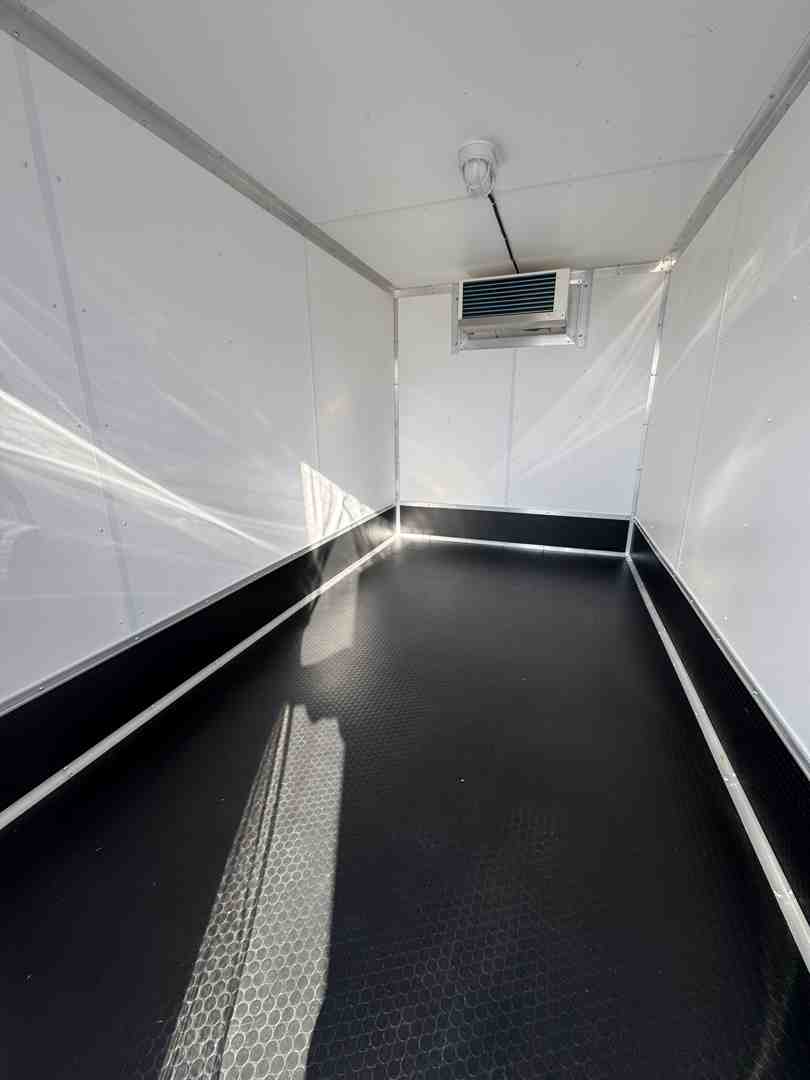
Ensuring balanced interior shelving and wide access aisles keeps air circulating freely around all stored goods. You can learn more about matching your daily volume to the right unit by reading our Walk-In Coolers Rental Complete Guide.
How to Deploy On-Site Walk-In Cold Storage for Florida Operations
Setting up temporary on-site cold storage must be fast, dependable, and simple. When a primary cooling unit breaks down or a major festival weekend approaches, you cannot afford to wait weeks for structural permits, complex concrete anchor engineering, or specialized multi-phase wiring.
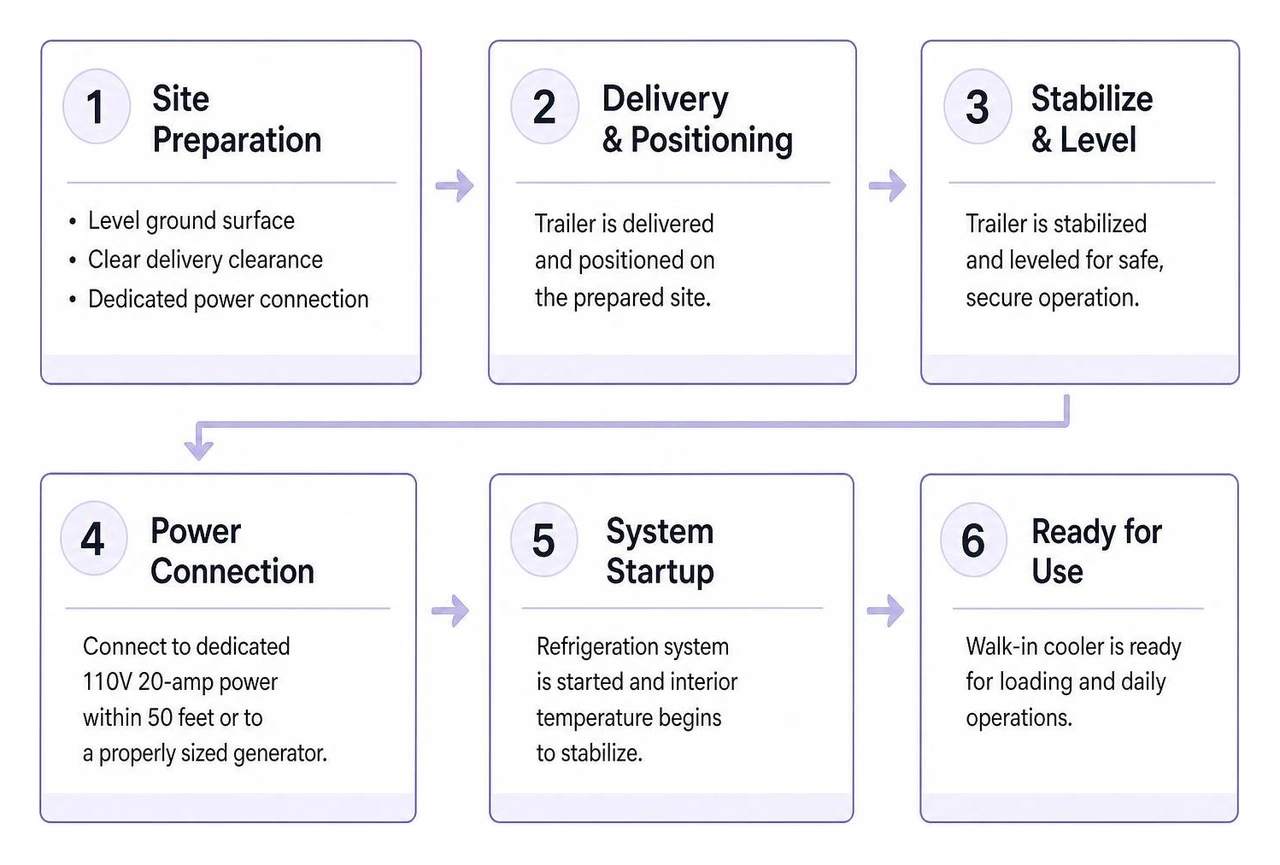
Follow this essential pre-delivery checklist to ensure seamless site readiness:
- Level Ground Surface: Designate a flat, solid surface such as concrete, packed gravel, or paved asphalt that supports the trailer's weight without settling.
- Clear Delivery Clearance: Ensure overhead tree branches, building overhangs, and narrow security gates offer sufficient clearance for delivery.
- Dedicated Power Connection: Verify access to a standard 110V 20-amp dedicated commercial electrical circuit within 50 feet of the parking spot, or prepare a quiet, properly sized commercial generator.
- Safe Pathway Access: Keep loading paths clear of tripping hazards, loose extension cables, and standing water puddles.
Step-by-Step Guide to Sourcing a Temporary Walk-in Cooler Florida Solution
Sourcing temporary cold storage should never add stress to your business operations. Instead of dealing with the rigid footprints or heavy anchoring required for permanent installations, modern businesses rely on mobile cold storage trailers delivered directly to their job sites.
When selecting your temporary setup:
- Assess Total Volume and Temperature Needs: Determine whether you require precise medium-temperature cooling (35°F to 45°F) for food and beverages or need mobile freezer trailers (operating down to 0°F) for frozen inventory.
- Review Trailer Flexibility: Our Portable Walk-In Coolers run on straightforward 110-volt power, eliminating the need for expensive electrician callouts or complex utility rewiring.
- Evaluate Delivery Timelines: For seasonal peaks or upcoming renovations, explore our Florida Walk-In Cooler Rental Guide 2026 to schedule drop-offs precisely when your inventory arrives.
- Request a Custom Rental Quote: Every event and emergency has unique duration and capacity demands. Check our Walk-In Cooler Rental Cost Guide for planning insights, and reach out directly to our team to receive a tailored quote for your specific timeline.
Rapid Deployment Across South, Central, and Coastal Florida Markets
Whether you are preparing for seasonal tourist rushes or facing an urgent cooling outage during hurricane season, our team provides 24-hour emergency support to keep your cold chain secure. We deliver clean, modern, food-grade refrigerated trailers and mobile freezer trailers directly to your business across our dedicated Florida regional hubs:
- South Florida & Coastal Hubs: Rapid on-site setups across Miami FL Refrigeration Locations and our Fort Lauderdale FL Refrigeration Locations.
- Central Florida & Theme Park Corridors: Full event and hospitality service via Orlando FL Refrigeration Locations.
- Gulf Coast & Suncoast Communities: Direct commercial delivery serving the Tampa Bay FL Refrigeration Locations, along with Sarasota, Bradenton, Naples, Venice, and Fort Myers.
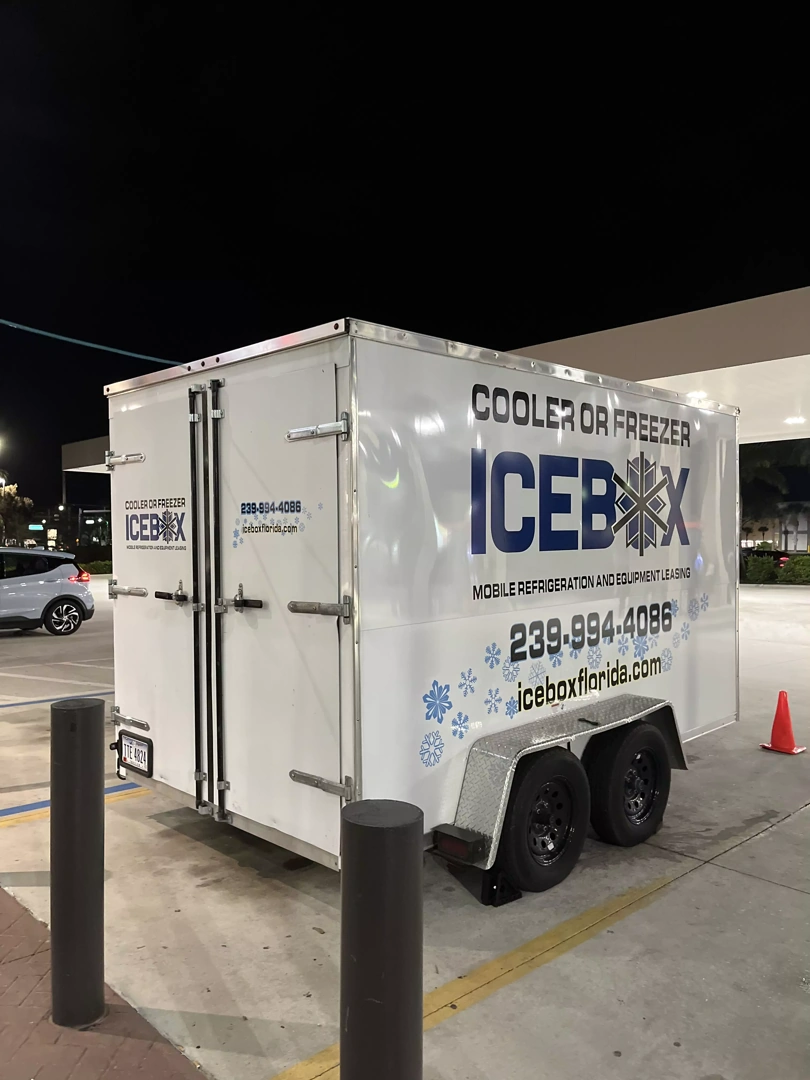
At Icebox Mobile Refrigeration, we focus exclusively on delivering dependable, on-site mobile cold storage rentals that protect your bottom line. Whenever you need flexible, temporary temperature control, contact us today to rent on-site mobile cold storage trailers tailored to your exact operational schedule.
Choose the perfect rental option
Explore our wide range of trailer rentals and find the one that suits your needs
%20(2)-min.webp)
Discover New Blog Posts
Stay updated with our latest blog content.