What to Check Before Signing a Cold Storage Rental Agreement
Before signing a cold storage rental agreement, check the required temperature range, rental dates, delivery and pickup terms, power needs, and who responds if cooling fails. Make sure the contract also says who pays for damage or spoiled goods, what insurance is required, and how to extend or end the rental.
For an event or an urgent need, these details help you plan for on-site mobile cooler trailers or mobile freezer trailers without guessing who handles a problem. I'm Alexander Palmiere, owner of an Icebox Mobile Refrigeration franchise, with experience in mobile refrigeration and business finance. I use that experience to help readers spot unclear costs and responsibilities in a cold storage rental agreement.
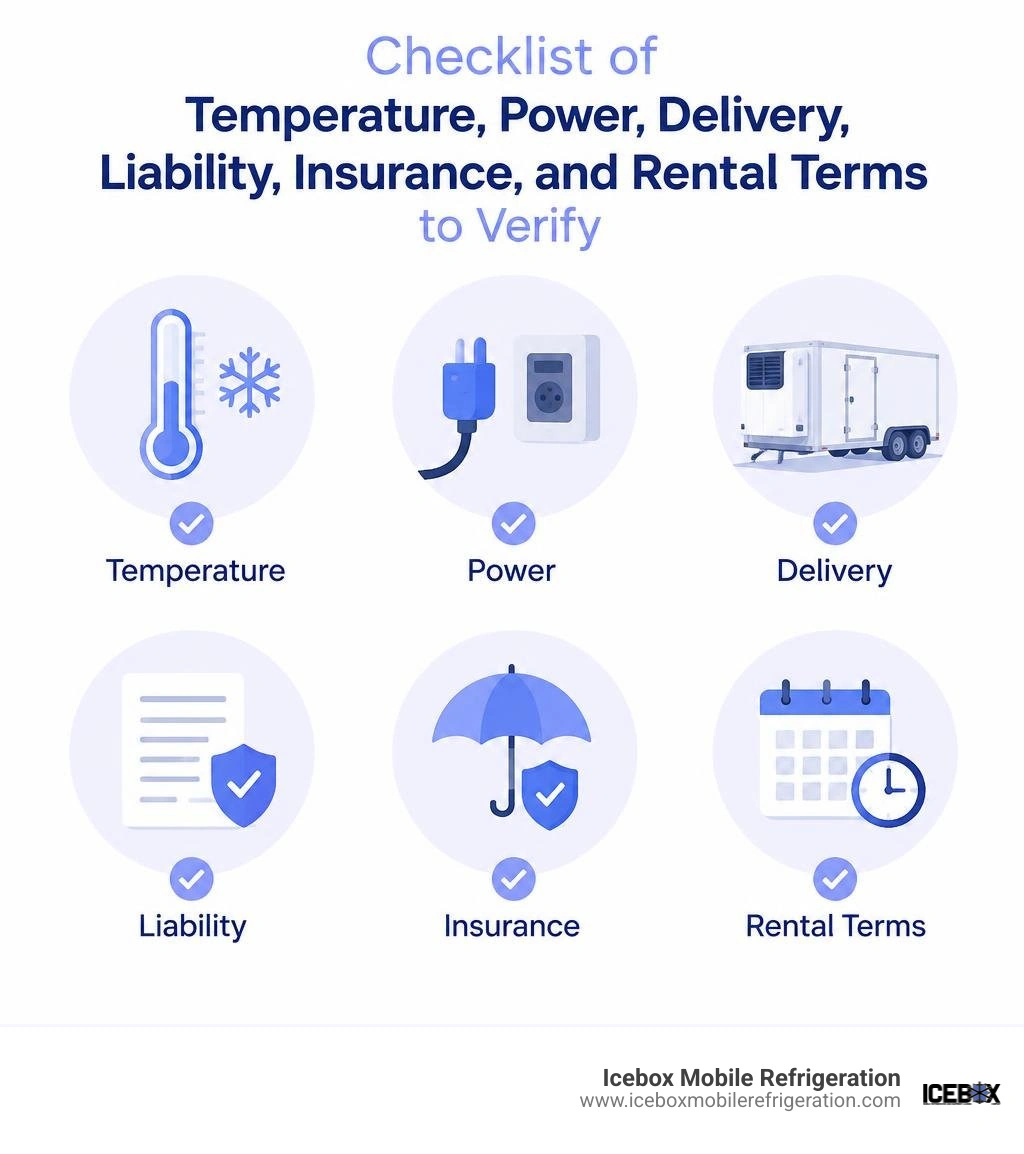
Cold storage rental agreement terms simplified:
Essential Provisions in a Mobile Cold Storage Rental Agreement
When securing temporary on-site cold storage for commercial events, restaurant kitchen renovations, or peak-season overflow, executing a clear rental agreement is critical. Unlike traditional real estate contracts, an agreement for portable units governs dynamic mechanical assets deployed directly to your property.
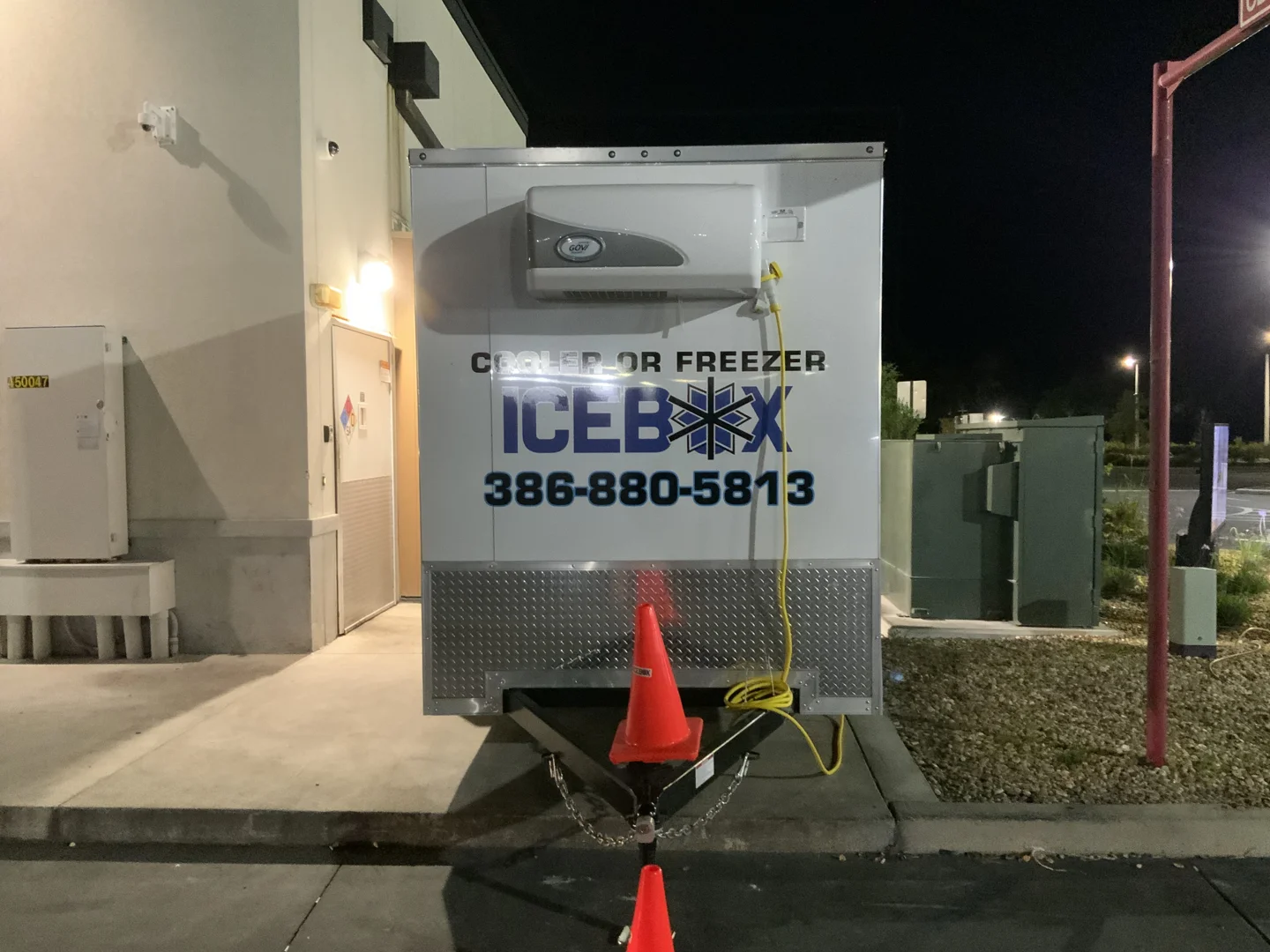
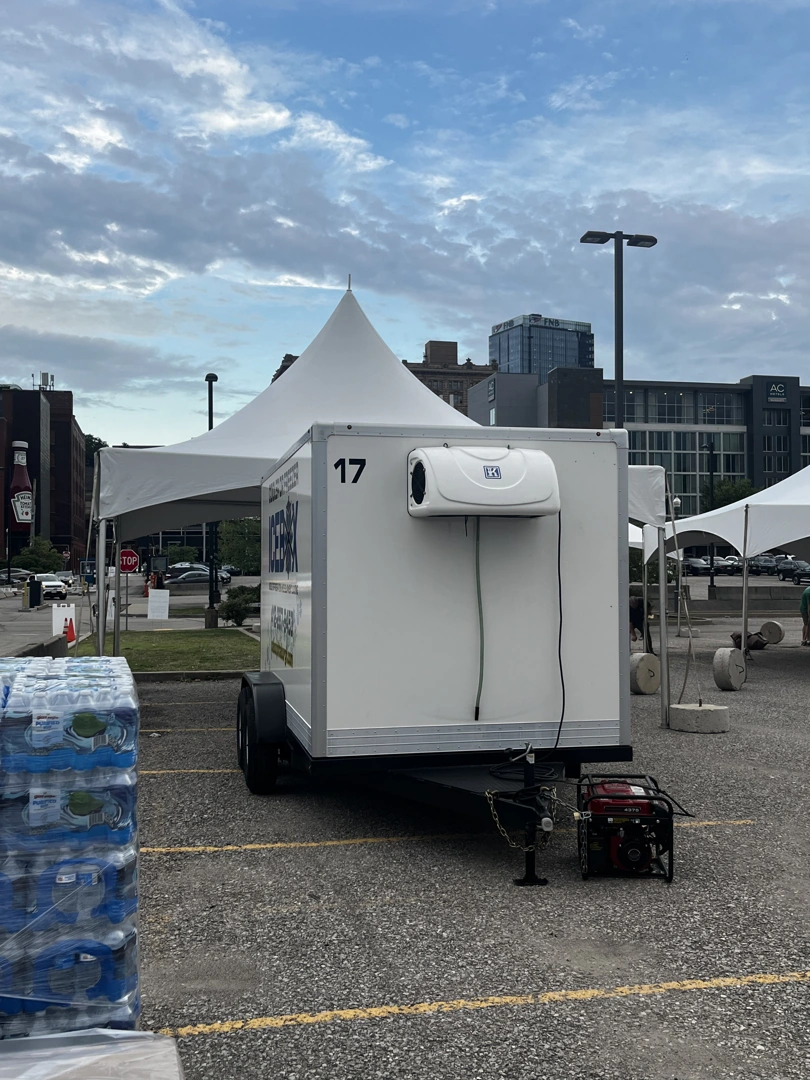
Every comprehensive contract must balance operational access with operational risk. Whether deploying mobile refrigerated trailers or dedicated mobile freezer trailers, the contract must define exact equipment models, delivery schedules, access rights, and clear operational boundaries.
Contracts should mirror formal performance standards—such as those seen in a structured Performance Work Statement for cold storage—by outlining formal equipment acceptance criteria, setup protocols, and mechanical service-level agreements before the unit arrives on site.
Temperature Specifications and Liability in a Cold Storage Rental Agreement
Perishable products demand precise climate stability. Inadequate refrigeration accounts for significant food and pharmaceutical waste, making temperature thresholds a vital clause in any rental document.
Contracts should state targeted operating ranges explicitly:
- Mobile cooler trailers: Standard commercial holding between 35°F and 45°F for fresh produce, floral arrangements, beverages, and dairy.
- Mobile freezer trailers: Freezing performance maintaining temperatures at 0°F for frozen meats, ice, and packaged inventory.
Review our cold storage rental guide to better understand how equipment performance matches specific inventory requirements.
Contractually, lessors almost universally disclaim direct liability for inventory spoilage caused by power disruptions, human error, or sudden mechanical issues. Lessees are expected to maintain independent temperature logging and adhere to strict food safety protocols, such as FDA or local health department guidelines, to ensure compliance during operations.
Power Connection, Site Preparation, and Maintenance Duties
A major advantage of modern mobile cold storage is seamless deployment. While permanent commercial cooling systems often demand complex multi-phase power, high-efficiency mobile cooler trailers and mobile freezer trailers operate efficiently on simple, standard electrical hookups.
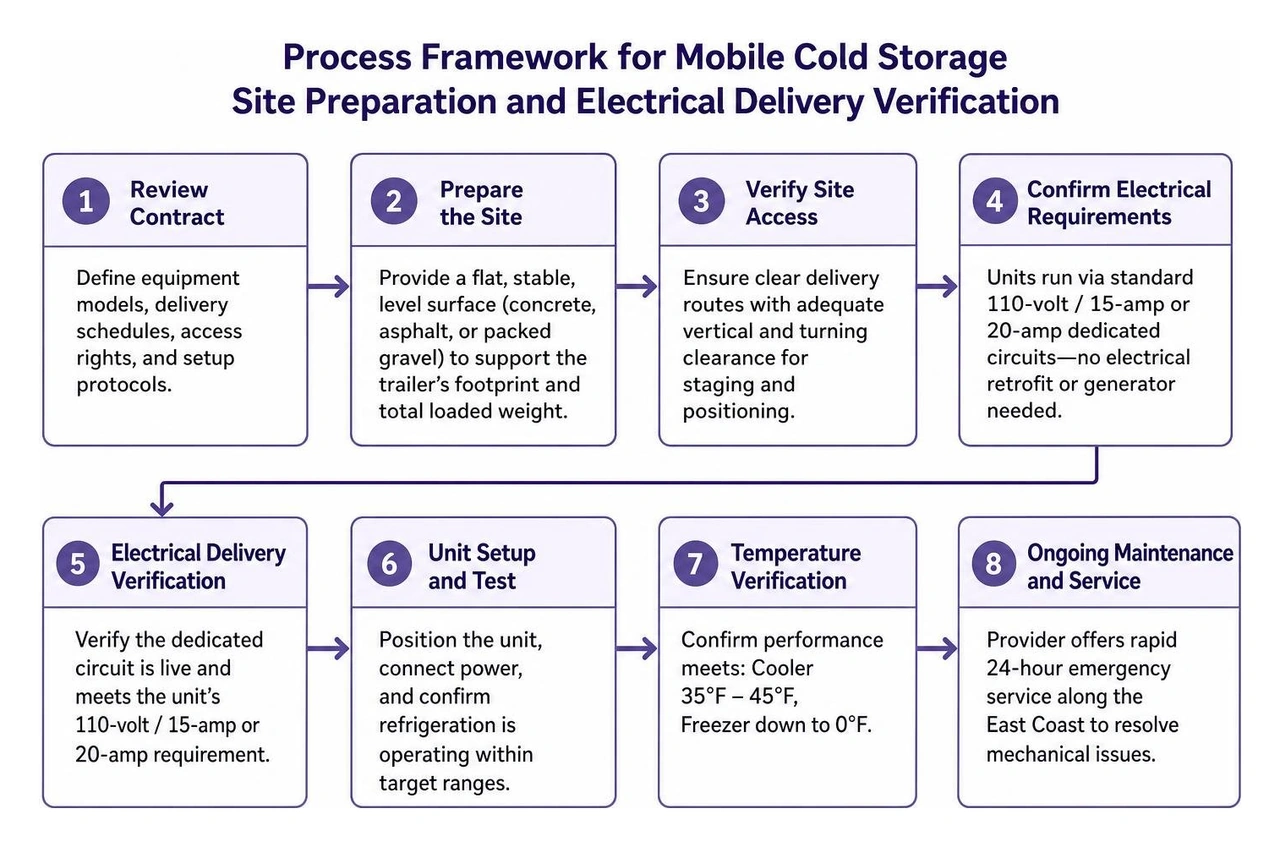
Before taking delivery, ensure your agreement specifies who manages electrical connections, mechanical upkeep, and ongoing service:
- Electrical Supply: Units run via standard 110-volt / 15-amp or 20-amp dedicated circuits, eliminating the need for expensive electrical retrofitting or noisy external generator setups.
- Surface Preparation: The rental space must provide a flat, stable, level surface (concrete, asphalt, or packed gravel) capable of safely supporting the trailer's footprint and total loaded weight.
- Clear Site Access: Verify unobstructed delivery routes with adequate vertical and turning clearance for staging and positioning.
- Service-Level Response: The agreement must state the provider's emergency support window. We back our units with rapid 24-hour emergency support along the East Coast to resolve mechanical issues swiftly.
Consult our temporary storage rental guide for complete pre-arrival preparation steps.
Insurance, Loss Allocation, and Indemnification Clauses
Protecting both parties against casualty loss requires explicit risk allocation in the rental agreement. Standard commercial rental terms outline that the lessee assumes primary responsibility for safeguarding physical goods and surrounding operations.
Key insurance clauses you will encounter include:
- Commercial General Liability: Lessees are typically required to carry general liability coverage (often $1,000,000 or more) naming the rental provider as an additional insured.
- Personal Property & Spoilage Coverage: The contract will stipulate that stored inventory must be insured directly by the renter against all perils, including temperature deviation and casualty loss.
- Mutual Waivers of Subrogation: These provisions prevent insurance carriers from pursuing claims against either party following a covered casualty event, as structured in standard Storage & Lease Agreement terms.
- Indemnification: Renters must hold the provider harmless against third-party claims arising from improper loading, blocked ventilation, or off-label use on site.
Best Practices for Finalizing Your Rental Agreement and Protecting Stored Goods
Careful review during contract execution prevents misunderstandings during off-hire and pickup. Always conduct a thorough walk-through inspection upon delivery, checking internal temperature pull-down rates, exterior door seals, safety releases, and trailer lighting.

Transparent rental agreements do not rely on rigid, hidden fee tables; instead, commercial agreements should provide clear billing schedules, straightforward security deposit terms, and customized rental quotes tailored to your exact timeline.
Short-Term vs. Long-Term Terms in a Cold Storage Rental Agreement
Contract structures vary significantly based on rental duration. A weekend festival in Charlotte, NC requires different contract flexibility than a 6-month hospital renovation in Philadelphia, PA or seasonal seafood demands in Tampa Bay, FL.
| Contract Term | Typical Rental Duration | Primary Use Cases | Key Contract Considerations |
|---|---|---|---|
| Short-Term Rental | 1 day to 4 weeks | Festivals, catering events, private parties, emergency cooler breakdowns | Quick drop-off/pickup turnaround, fixed rental periods, immediate 110-volt plug-in readiness |
| Long-Term Rental | 1 month to 12+ months | Seasonal retail surges, planned facility remodels, expanded commercial capacity | Monthly billing cycles, scheduled routine maintenance, flexible rental extensions |
For a broader evaluation of commercial rental duration strategies, read our refrigerated storage rental guide.
Termination Protocols, Security Deposits, and Extension Rights
The end of your rental term should be as seamless as delivery. A well-drafted cold storage contract outlines straightforward off-hire guidelines:
- Notice Periods: Short-term event rentals operate on predefined return dates, while extended commercial rentals typically require written notice (such as 15 to 30 days) before termination or extension.
- Condition of Return: Units must be returned broom-clean, free of debris, completely defrosted, and cleared of all inventory and private locks.
- Prohibited Items: Agreements expressly forbid hazardous chemicals, toxic substances, flammable fuels, or unapproved materials that could damage cooling coils or contaminate future cargo.
- Deposit Handling: Clear language should dictate that security deposits are refunded promptly following physical inspection and final electrical disconnection.
When your business or event requires reliable, on-site cooling delivered directly to your facility, work with experienced professionals who understand on-site mobile cold storage. Contact our team to review your site requirements, receive a personalized rental quote, and explore service across our East Coast Icebox Mobile Refrigeration locations.
Choose the perfect rental option
Explore our wide range of trailer rentals and find the one that suits your needs

Discover New Blog Posts
Stay updated with our latest blog content.