Why Reliable Medical Cold Storage Matters for Critical Care
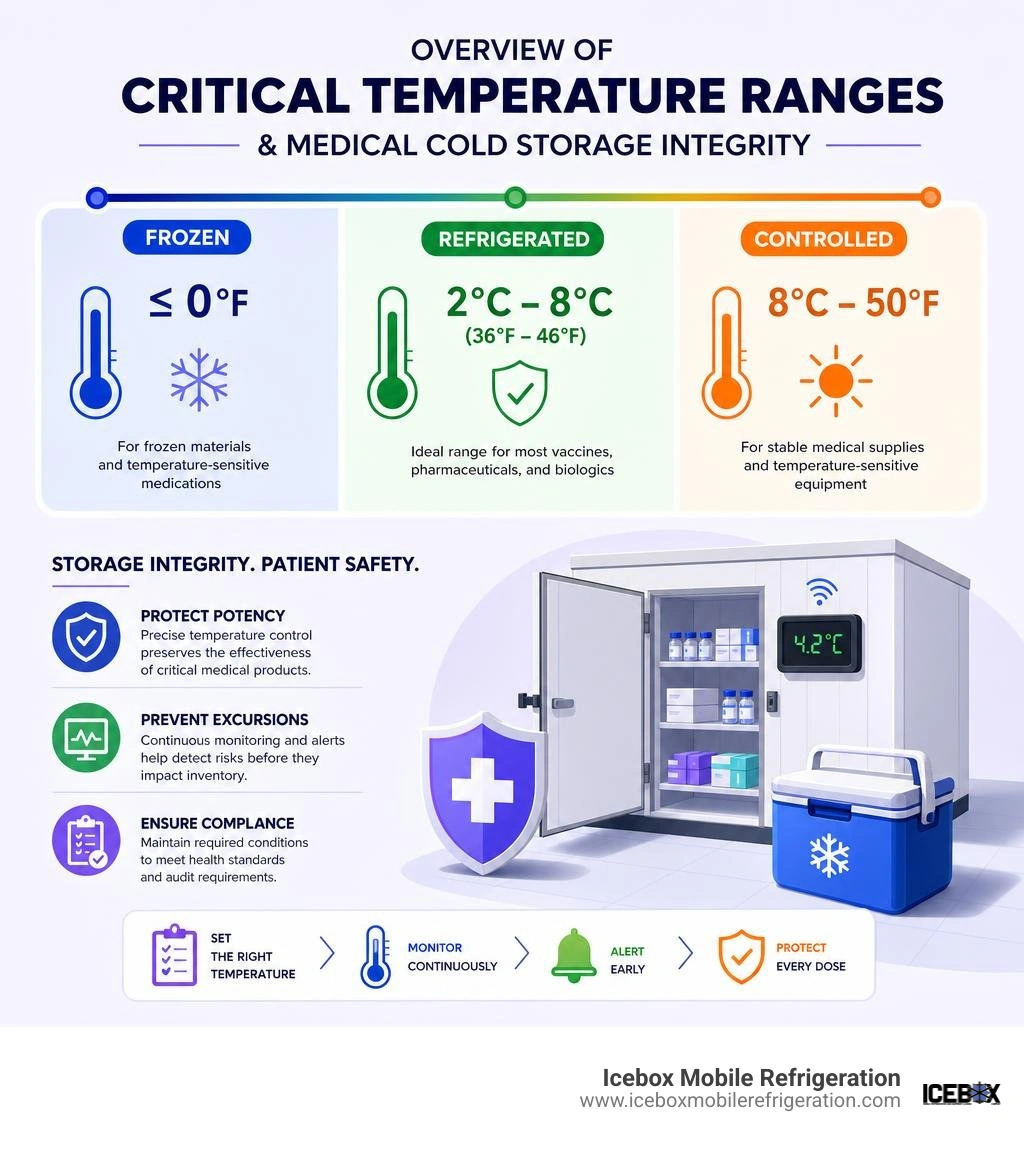
Medical cold storage is the controlled preservation of temperature-sensitive pharmaceuticals, vaccines, biologics, and clinical supplies within exact temperature parameters—typically between 2°C and 8°C (36°F to 46°F) for refrigerated inventory and down to 0°F for frozen materials. Maintaining these exact environments prevents thermal excursions, protects active drug potency, and ensures patient safety.
When medical centers, clinics, or emergency response teams face planned renovations, seasonal demand surges, or sudden power disruptions, temporary on-site cold storage provides immediate protection:
- Thermal Consistency: Reliable setpoints from 0°F to 50°F safeguard delicate inventories.
- Audit-Ready Compliance: Continuous monitoring keeps facilities aligned with health guidelines.
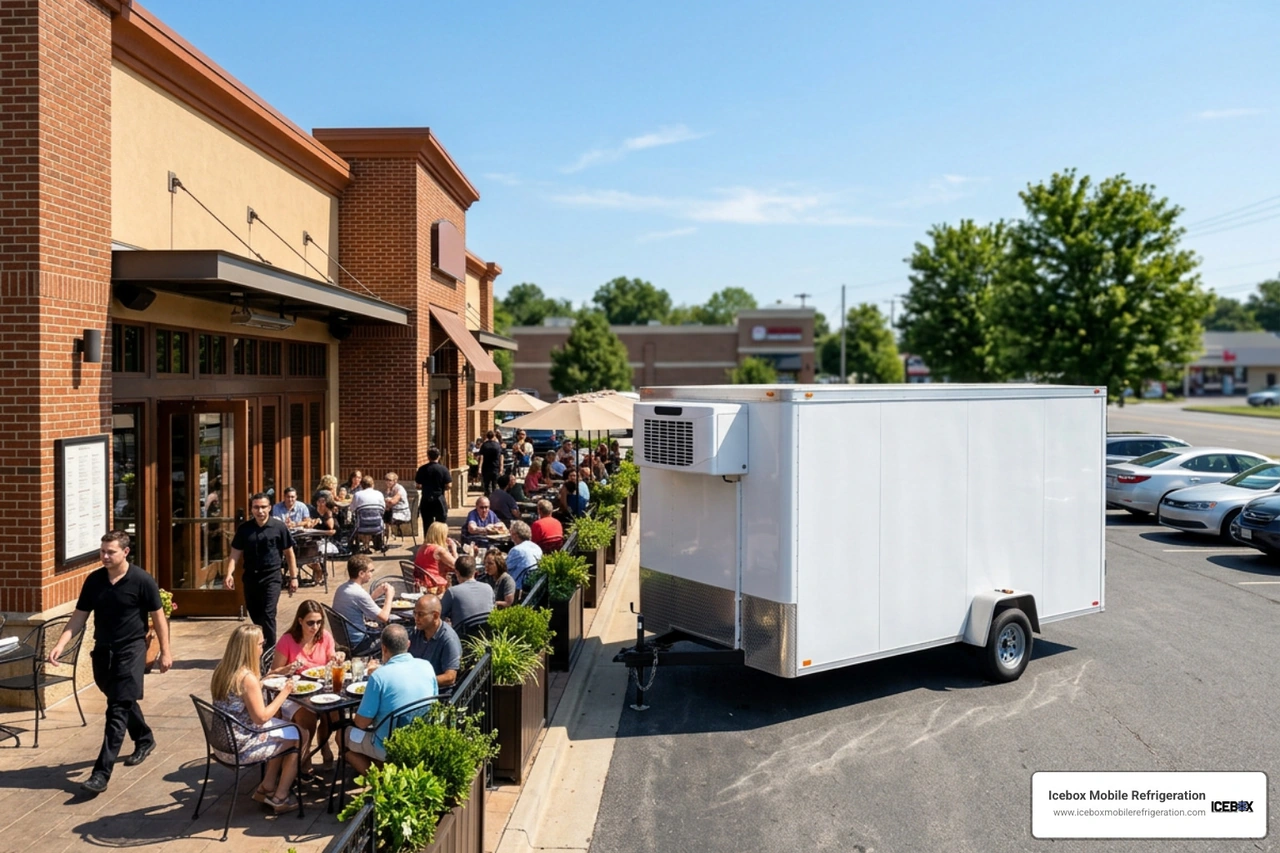
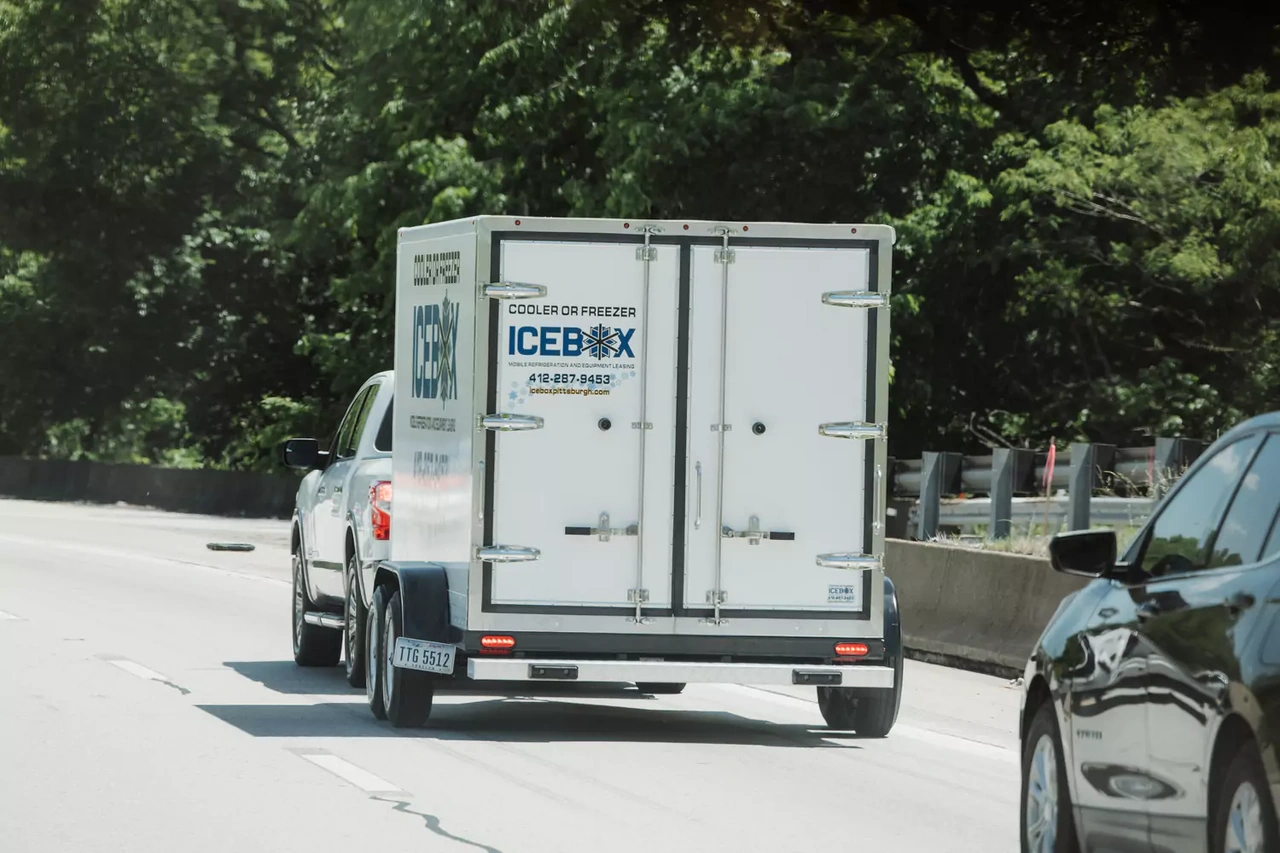
- Immediate On-Site Access: Mobile cooler trailers deliver secure capacity right at your facility's door.
We’re Dan and Kelley from Icebox Mobile Refrigeration, and we’ve put together this straightforward guide to help you navigate dependable temporary cold storage solutions with zero guesswork.
Medical cold storage terms made easy:
Core Requirements and Standards for Medical Cold Storage
Preserving sensitive biological products requires far more precision than ordinary commercial cooling. When managing valuable inventory, even brief temperature spikes can cause irreversible protein denaturation, bacterial contamination, or the crystallization of essential formulas like insulin.
To maintain efficacy, clinical teams must adhere to the CDC Vaccine Storage and Handling Toolkit alongside strict Good Distribution Practice (GDP) protocols. This involves uniform thermal regulation, forced-air circulation to eliminate hot spots, and multi-point alert systems that signal open doors or power disruptions immediately.
Understanding Temperature Ranges for Medical Cold Storage
Every pharmaceutical category demands a specific climate profile. Most standard vaccines, diagnostic reagents, and biopharmaceuticals need a consistent refrigerated environment between 2°C and 8°C (36°F to 46°F). Meanwhile, specific biological samples, frozen serums, and specialized clinical assets must remain completely frozen down to 0°F.
When exploring temporary setups, our pharmaceutical cold storage guide highlights the necessity of versatile equipment that can reliably support an operating envelope between 0°F and 50°F.
| Storage Category | Standard Operating Range | Common Medical Inventory | Key Protection Priorities |
|---|---|---|---|
| Standard Refrigeration | 2°C to 8°C (36°F to 46°F) | Insulin, influenza vaccines, antibiotics, eye drops | Continuous airflow, avoiding freeze points |
| Controlled Cool | 8°C to 15°C (46°F to 59°F) | Certain reconstituted serums, specific test kits | Avoiding ambient heat excursions |
| Medical Freezer | Down to 0°F (-18°C) | Plasma derivatives, varicella vaccines, research tissue | Solid thermal seals, rapid temperature recovery |
Compliance Guidelines and Monitoring Systems
Maintaining regulatory compliance across your pharmaceutical cold chain requires reliable validation tools. Standards like NSF/ANSI 456 establish strict protocols for temperature consistency, recovery speeds after access, and sensor accuracy.
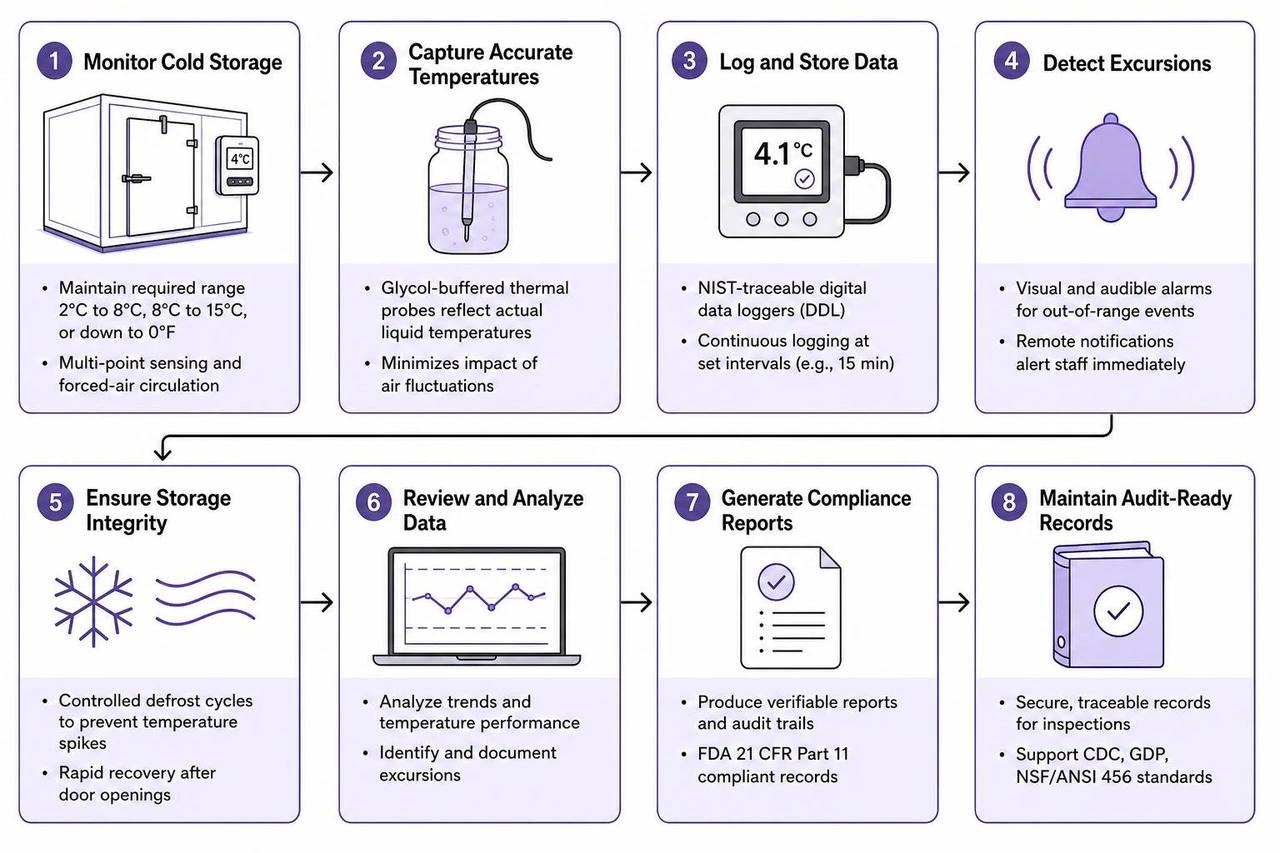
To satisfy FDA 21 CFR Part 11 audit trails, medical storage units utilize:
- Glycol-Buffered Thermal Probes: Probes submerged in glycol bottles mirror actual liquid product temperatures rather than transient air fluctuations caused by routine entry.
- NIST-Traceable Digital Data Loggers (DDL): Continuous recording devices that log data at set intervals (such as every 15 minutes) to generate verifiable documentation for inspections.
- Excursion Safeguards: Visual and audible alarms paired with remote notification triggers to warn staff before temperatures drift outside acceptable parameters.
- Controlled Defrost Cycles: Static cooling and carefully managed defrost routines designed to avoid the sharp thermal spikes common in standard commercial units.
Essential Equipment and Temporary On-Site Solutions
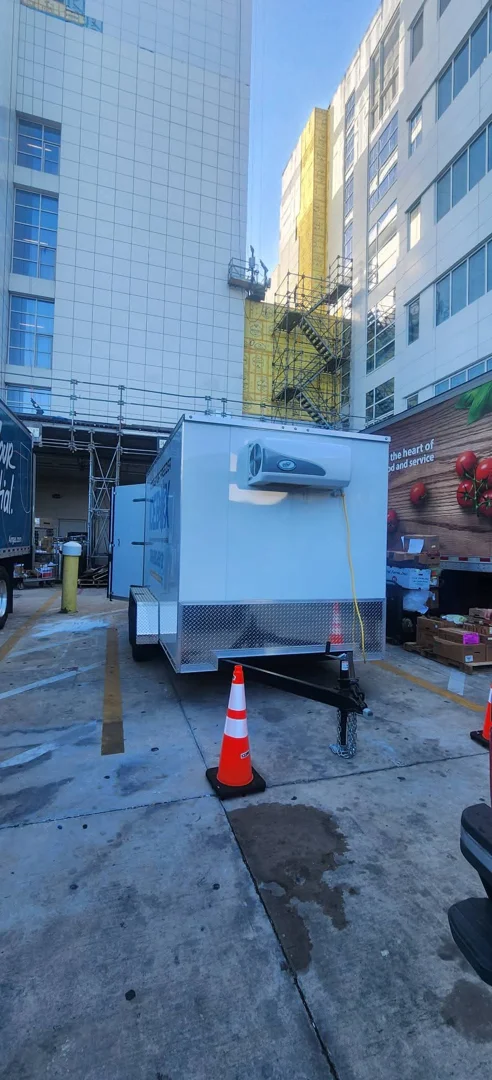
When healthcare facilities face facility expansions, planned maintenance, or seasonal surges, finding flexible physical capacity on-site is essential. Clinical operations require walk-in access, clear internal organization, and robust electrical connections that fit existing facility infrastructure without requiring expensive high-voltage modifications.
Dedicated On-Site Mobile Refrigeration Units
Temporary on-site mobile cooler trailers provide point-of-care capacity right outside hospital loading bays, clinics, or regional pharmacies. Because these units are delivered directly for ground-level or dock-height use, staff can step in and out effortlessly to manage inventory.
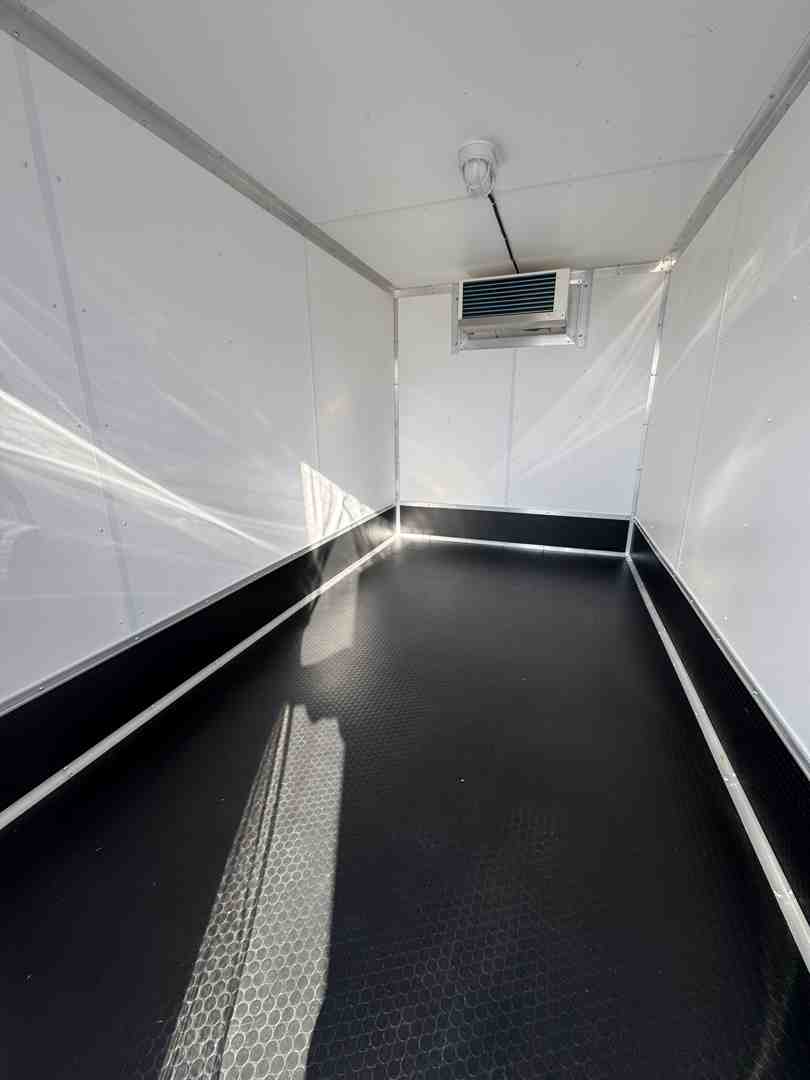
Equipped with advanced insulation panels, antimicrobial surfaces, interior lighting, and reliable electric cooling, mobile freezer trailers maintain steady internal setpoints from 0°F to 50°F. Their electric walk-in designs operate quietly and cleanly, keeping critical medical supplies safe right on facility grounds.
Deploying On-Site Trailers for Medical Cold Storage Emergencies
During sudden emergencies—such as municipal power grid failures, facility chiller breakdowns, or major weather events—having a cold storage trailer for emergency response prevents catastrophic stock loss.
When immediate deployment is required, our easy-to-set-up, 110-volt walk-in trailer units can plug directly into standard 110V 15-amp or 20-amp commercial wall outlets, or run smoothly via backup generators. This simple electrical setup eliminates complex wiring delays, allowing facilities to safeguard delicate inventory and secure cold storage for pharmaceuticals in minutes.
Best Practices for Selecting and Managing Temporary Rentals
Selecting the right temporary cold storage partner ensures your staff spends less time worrying about temperature fluctuations and more time focusing on patient care. Review our comprehensive cold chain storage rental guide for practical preparation steps.
When renting on-site temporary units, keep these best practices in mind:
- Verify Operating Range: Ensure the unit supports precise adjustments across the entire 0°F to 50°F spectrum to match your specific clinical inventory.
- Confirm Clean Electrical Connections: Look for efficient 110-volt plug-and-play capability to avoid high-voltage utility work.
- Ensure Rapid Emergency Support: Partner with providers who offer 24-hour emergency service to safeguard high-value medical supplies around the clock.
- Plan Interior Layout: Choose walk-in trailers with organized shelving, easy interior access, and flat door liners to maintain proper airflow and avoid localized warm pockets.
Whether you are coordinating an upcoming hospital renovation in Charlotte, managing surge inventory in Cincinnati, or establishing an emergency reserve in Tampa Bay, Icebox Mobile Refrigeration provides fast, reliable, on-site cooling trailers along the East Coast.
Ready to protect your valuable pharmaceuticals with dependable on-site storage? Visit our team to explore portable medical cold storage rentals and request a tailored quote for your facility today.
Choose the perfect rental option
Explore our wide range of trailer rentals and find the one that suits your needs
%20(2)-min.webp)
Discover New Blog Posts
Stay updated with our latest blog content.
_compressed.webp)