What Is Long-Term Refrigeration — and Do You Actually Need It?
Long-term refrigeration is the practice of keeping perishable goods at safe, controlled temperatures for extended periods — from several days to months — using dedicated cold storage equipment.
Here's a quick breakdown of what that means in practice:
| Storage Type | Typical Duration | Temperature Range | Common Use |
|---|---|---|---|
| Short-term cooling | Hours to 2–3 days | 33°F–40°F | Events, catering, emergencies |
| Long-term refrigeration | Weeks to months | 33°F–40°F | Food distribution, pharma, biotech |
| Long-term freezing | Weeks to months | 0°F and below | Frozen food, vaccines, specimens |
Whether you're planning a major outdoor event, managing a catering operation, or keeping pharmaceutical products at safe temps during a facility renovation — the challenge is the same: you need reliable cold, consistently, for as long as you need it.
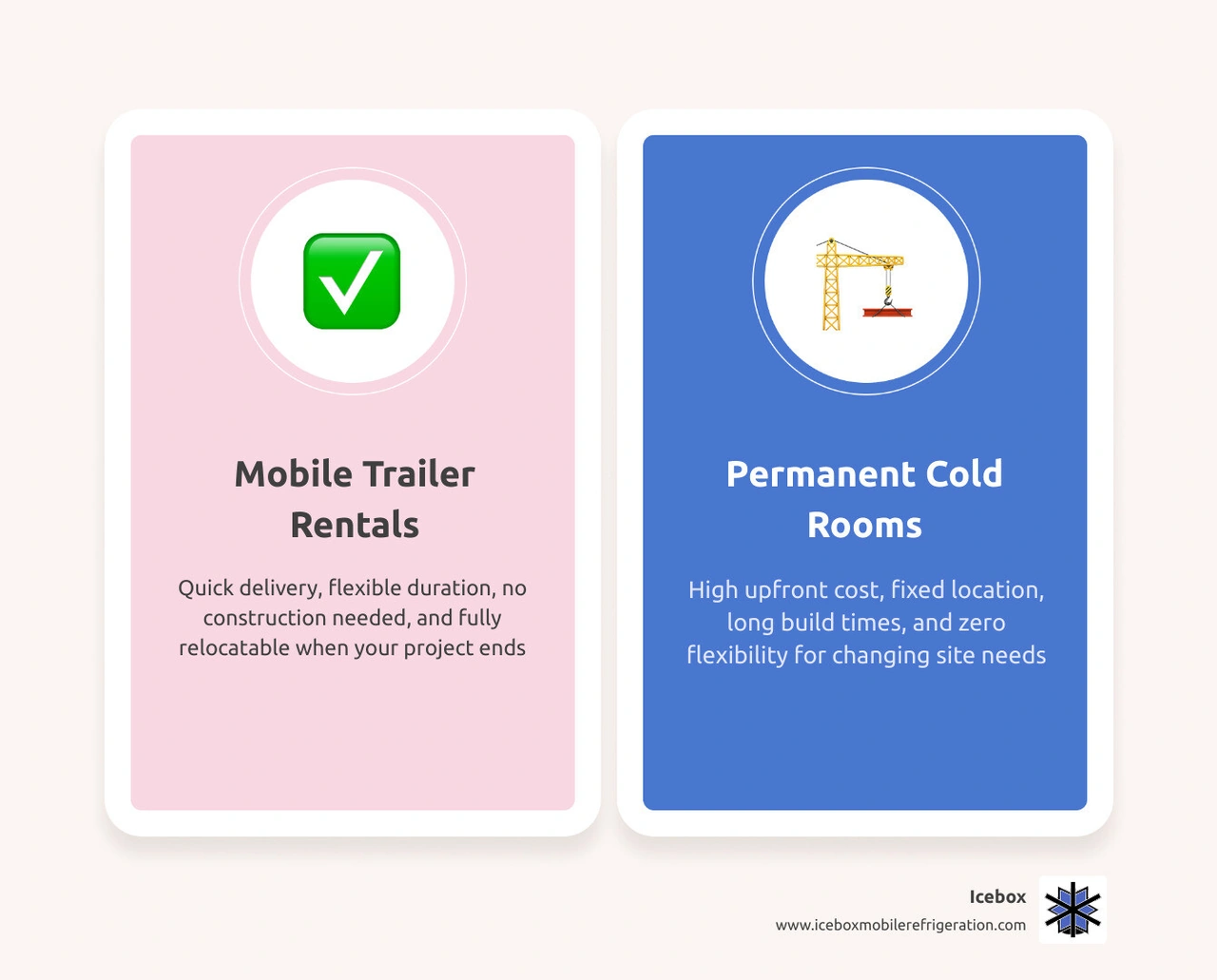
The problem? Permanent cold rooms aren't always practical. They're expensive to build, impossible to move, and completely useless in an emergency.
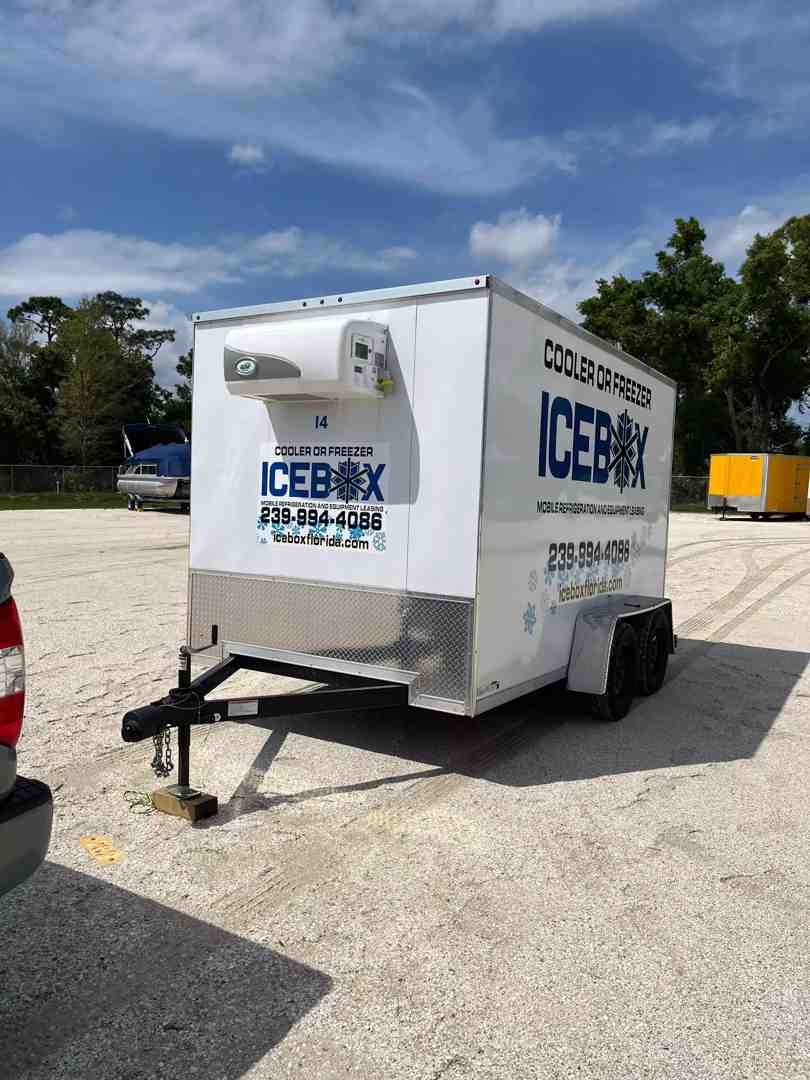
That's exactly where mobile refrigerated trailers come in. Delivered directly to your site, ready to cool, and available for short or extended rentals — they offer the flexibility that permanent installations simply can't match.
This guide walks you through everything you need to know about long-term cold storage using mobile cooler and freezer trailers: how they work, who uses them, and how to get the setup right.
Long term refrigeration vocab explained:
The Essentials of Long-Term Refrigeration with Mobile Trailers
When standard commercial setups are undergoing maintenance, or seasonal inventory spikes push your capacity to the limit, relying on long term refrigeration via mobile trailers is the most practical move you can make.
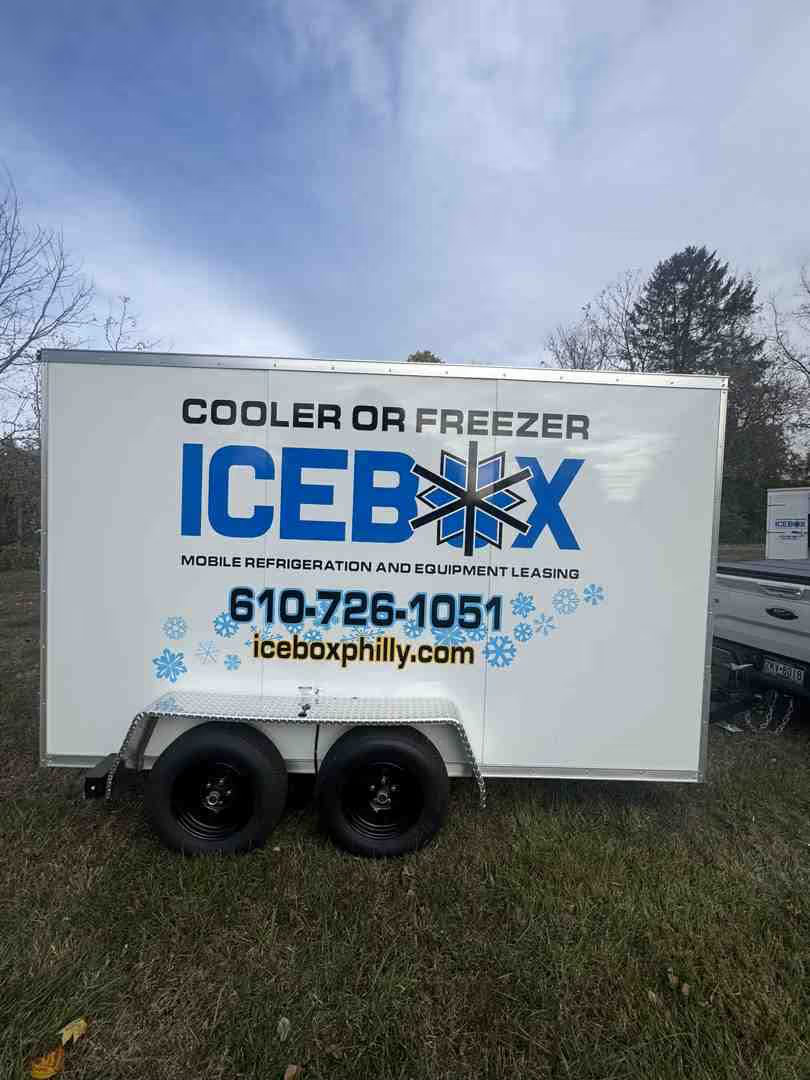
Unlike long-haul freight operations, on-site mobile cooler trailers and mobile freezer trailers are designed to sit stationary at your business location. They act as seamless physical extensions of your building, keeping vital inventory safely preserved right outside your door.
To maintain perfect temperature stability over weeks or months, these units require heavy-duty insulation, airtight seals, and reliable power sources. Below is a breakdown of how our standard mobile units compare:
| Feature | Mobile Cooler Trailers | Mobile Freezer Trailers |
|---|---|---|
| Temperature Range | 33°F to 40°F (Optimal food storage) | 0°F to 32°F (Frozen storage) |
| Power Requirements | Standard 110-volt (115V, 20-amp) | Standard 110-volt (115V, 20-amp) |
| Sanitation Standards | NSF-approved interior surfaces | NSF-approved interior surfaces |
| Common Use Cases | Fresh produce, floral, beverages, meat | Frozen dough, seafood, medical samples |
Understanding Long-Term Refrigeration vs. Short-Term Trailer Rentals
The primary difference between short-term and long-term mobile rentals lies in operational planning. Short-term rentals are typically geared toward weekend festivals, disaster recovery, or catering events. They are drop-and-go solutions where speed is the main priority.
With long-term setups, the focus shifts to energy efficiency, absolute temperature stability, and regular maintenance access. When you lease a unit for several months, you need to think about physical placement, seasonal weather changes, and how your team will access the inventory daily. For a deeper dive into extended storage planning, check out our Long-Term Cold Storage Guide.
Key Industries Relying on Long-Term Refrigeration Trailers
Several critical sectors rely on mobile cooler trailers to keep their operations moving smoothly:
- Catering & Food Service: Large-scale commercial kitchens use our units during kitchen remodels or peak holiday seasons to store bulk ingredients safely.
- Food Distribution: Local distributors use on-site trailers to manage overflow inventory without committing to expensive warehouse leases.
- Biotechnology & Pharmaceuticals: These fields require strict, validated temperature environments. Our trailers keep sensitive biological materials and vaccines stable. To understand the baseline safety standards for food and perishables, you can reference the Are You Storing Food Safely? | FDA guidelines.
Selecting the Right Mobile Cooler and Freezer Trailers
Choosing the right unit comes down to your inventory requirements and power availability. Many commercial setups require complicated three-phase electrical connections. However, our specialized fleet runs on simple, standard 110-volt power.
Our units offer a versatile temperature range from 0°F to 40°F, making them perfect for dual-use applications. Additionally, our trailers feature NSF-approved food-grade interiors, ensuring you stay compliant with all local health regulations. If you need dedicated freezing capabilities for your business, you can Lease a Walk-In Freezer directly through our team.
Best Practices for Long-Term Cold Storage Operations
Operating a mobile unit over the long haul requires a proactive approach to maintain product safety and prevent energy waste.
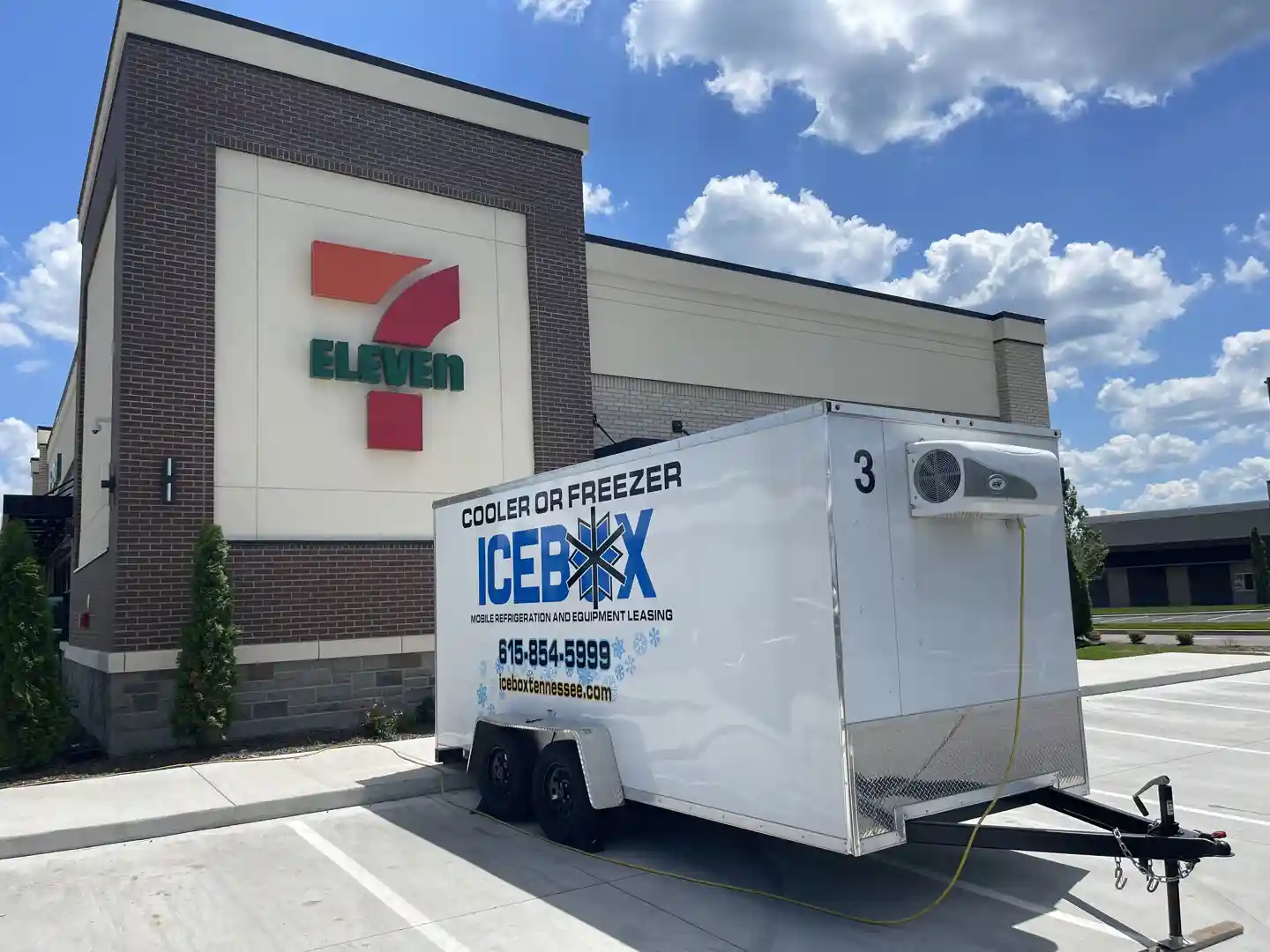
Sizing, Power, and Setup for On-Site Trailer Storage
Proper installation is the foundation of successful long-term storage. Before your trailer arrives, ensure you have a level, solid surface (concrete or asphalt is ideal) close to your power source.
Our mobile cooler trailers run on standard 115V 20-amp service. This means you do not need to hire an expensive electrician to wire up specialized industrial power boxes. Simply plug in, let the unit pull down to your target temperature, and begin loading. For detailed preparation steps, read our On-Site Cold Storage Complete Guide.
Emergency Preparedness and Backup Power Planning
Even the most reliable systems can face unexpected power grid failures. When you are storing valuable inventory, having a backup plan is essential.
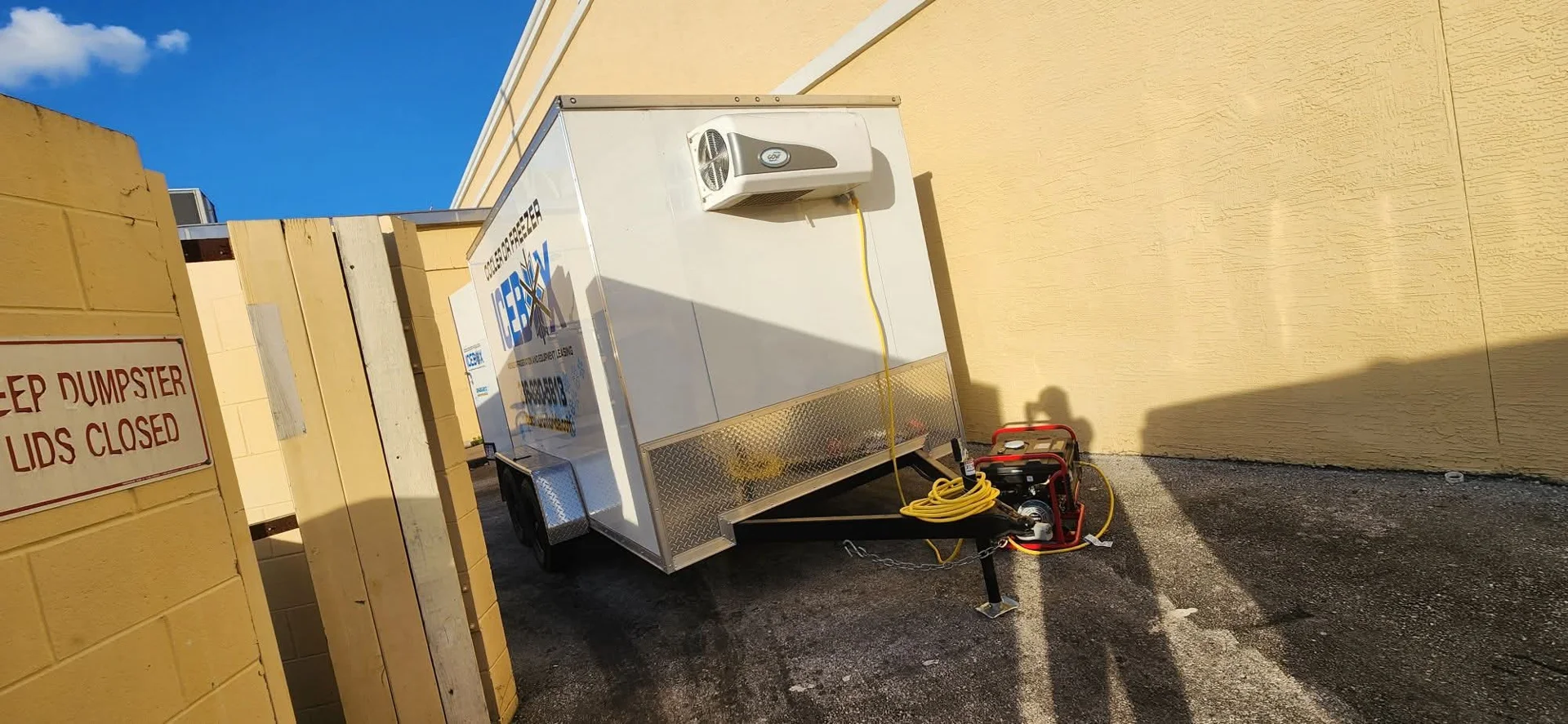
At Icebox, we provide 24-hour emergency service to keep your business running when the unexpected happens. If your primary building power goes down, our units can be hooked up to portable backup generators. To learn more about setting up emergency plans and managing long-term rentals, check out our Refrigeration Trailer Leasing Complete Guide.
Maximizing Energy Efficiency and Regulatory Compliance
As environmental policies tighten globally, energy efficiency is more important than ever. The industry is rapidly shifting away from high-GWP (Global Warming Potential) synthetic refrigerants in response to strict HFC phase-downs and updated F-gas regulations.
Choosing modern, well-insulated mobile units helps reduce your carbon footprint and lowers daily operational costs. You can read more about the technical push toward low-GWP systems in this academic study on low-GWP refrigerants and electronic expansion valves.
To keep your energy costs low during extended use:
- Use strip curtains on the doors to block warm air from entering during inventory checks.
- Keep the unit level to ensure the door seals remain perfectly airtight.
- Avoid blocking the internal airflow vents so the cold air can circulate evenly.
Ready to secure a reliable, hassle-free on-site cold storage solution? We serve businesses along the East Coast, including major hubs like Charlotte, Detroit, Miami, Tampa, Philadelphia, and Nashville.
For customized sizing and options tailored to your business, visit our Icebox Rentals Page and request a quote today!
Choose the perfect rental option
Explore our wide range of trailer rentals and find the one that suits your needs
%20(2)-min.webp)
Discover New Blog Posts
Stay updated with our latest blog content.