Why Cold Storage for Restaurants Is a Food Safety Essential
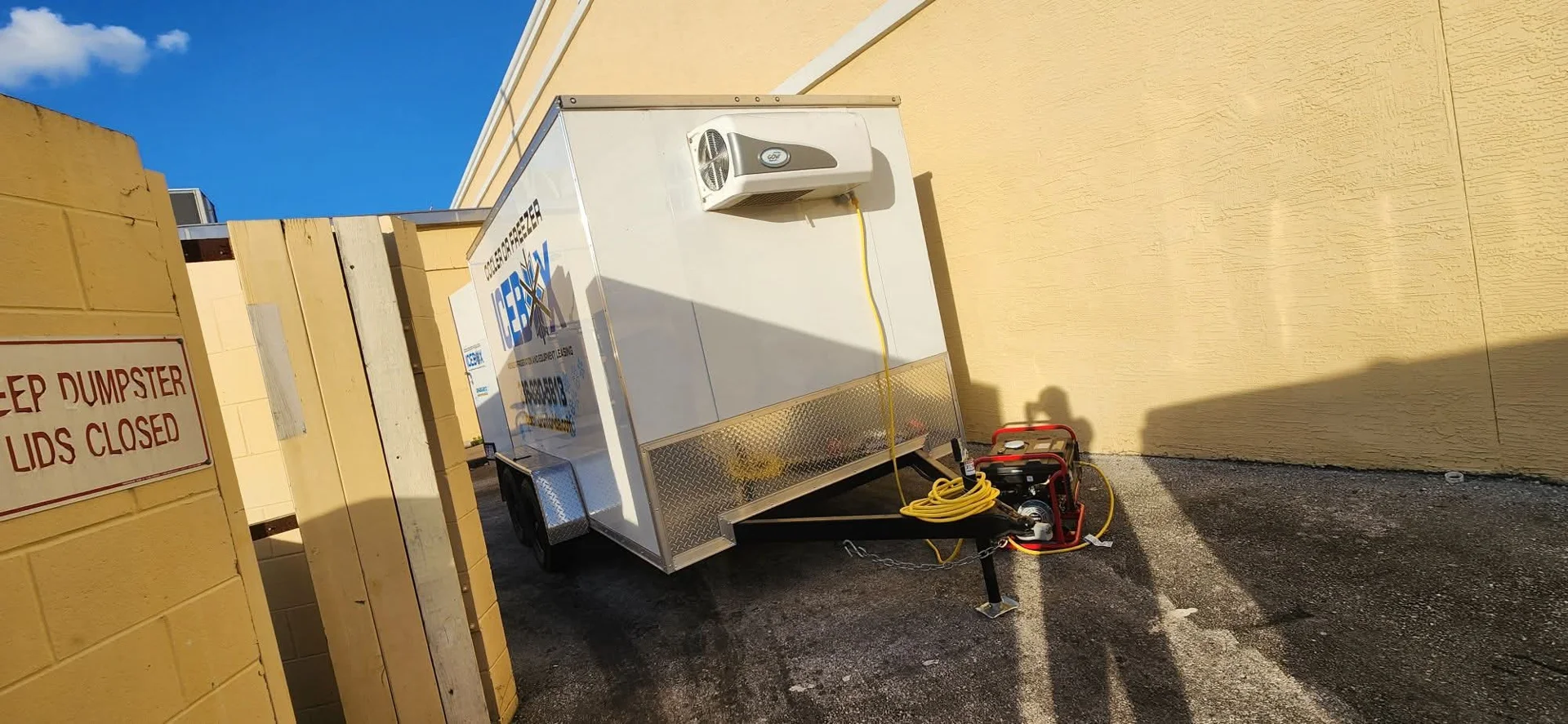
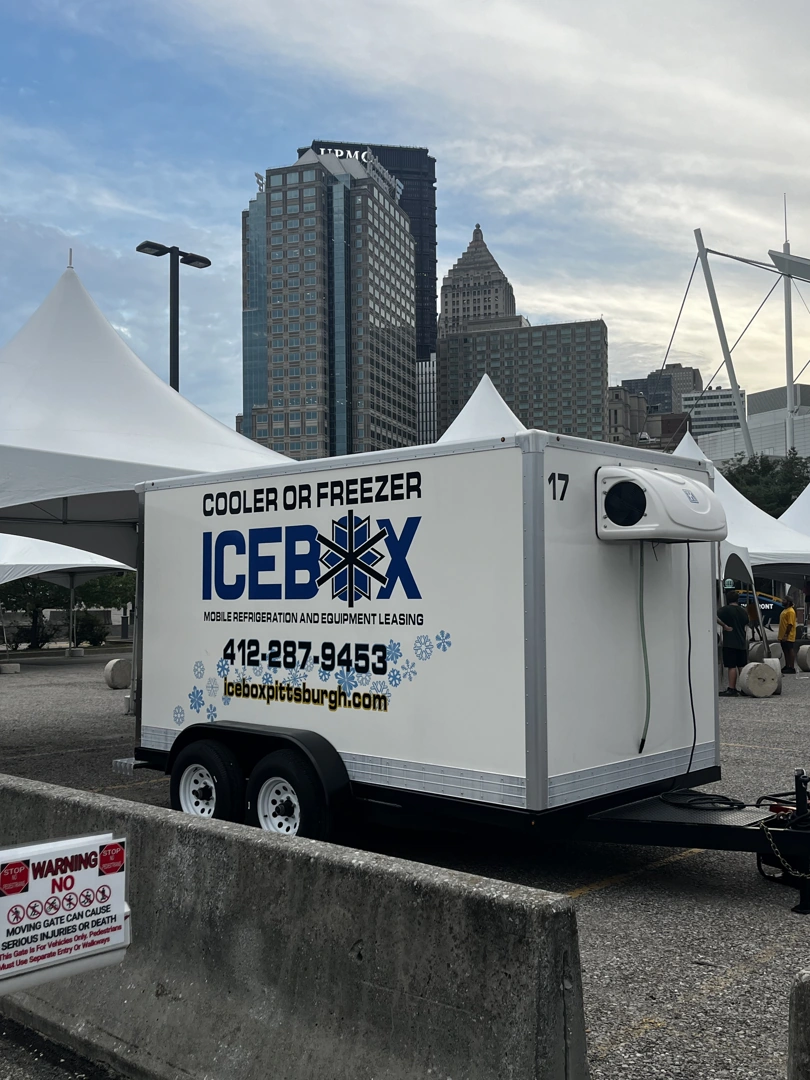
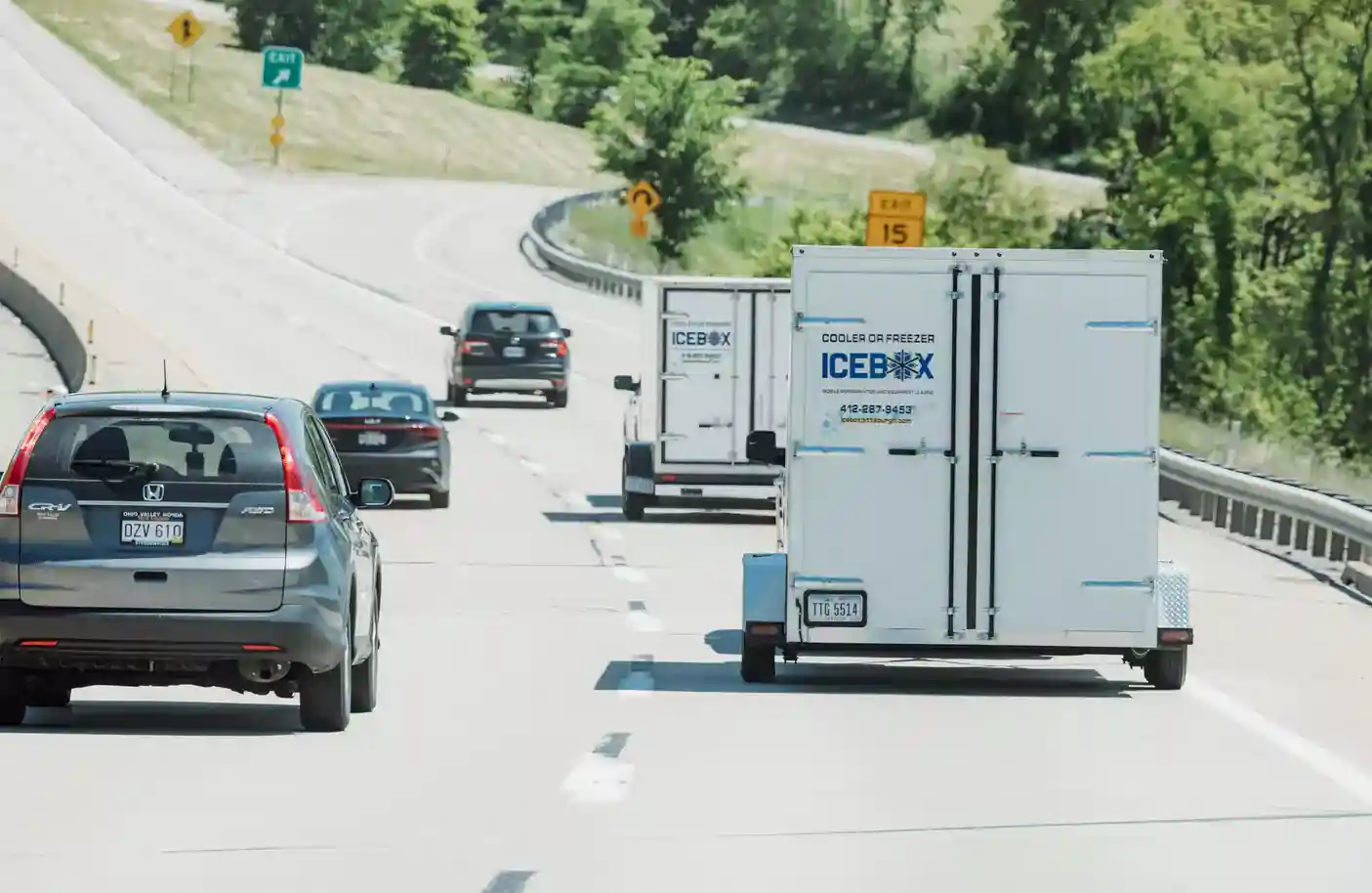
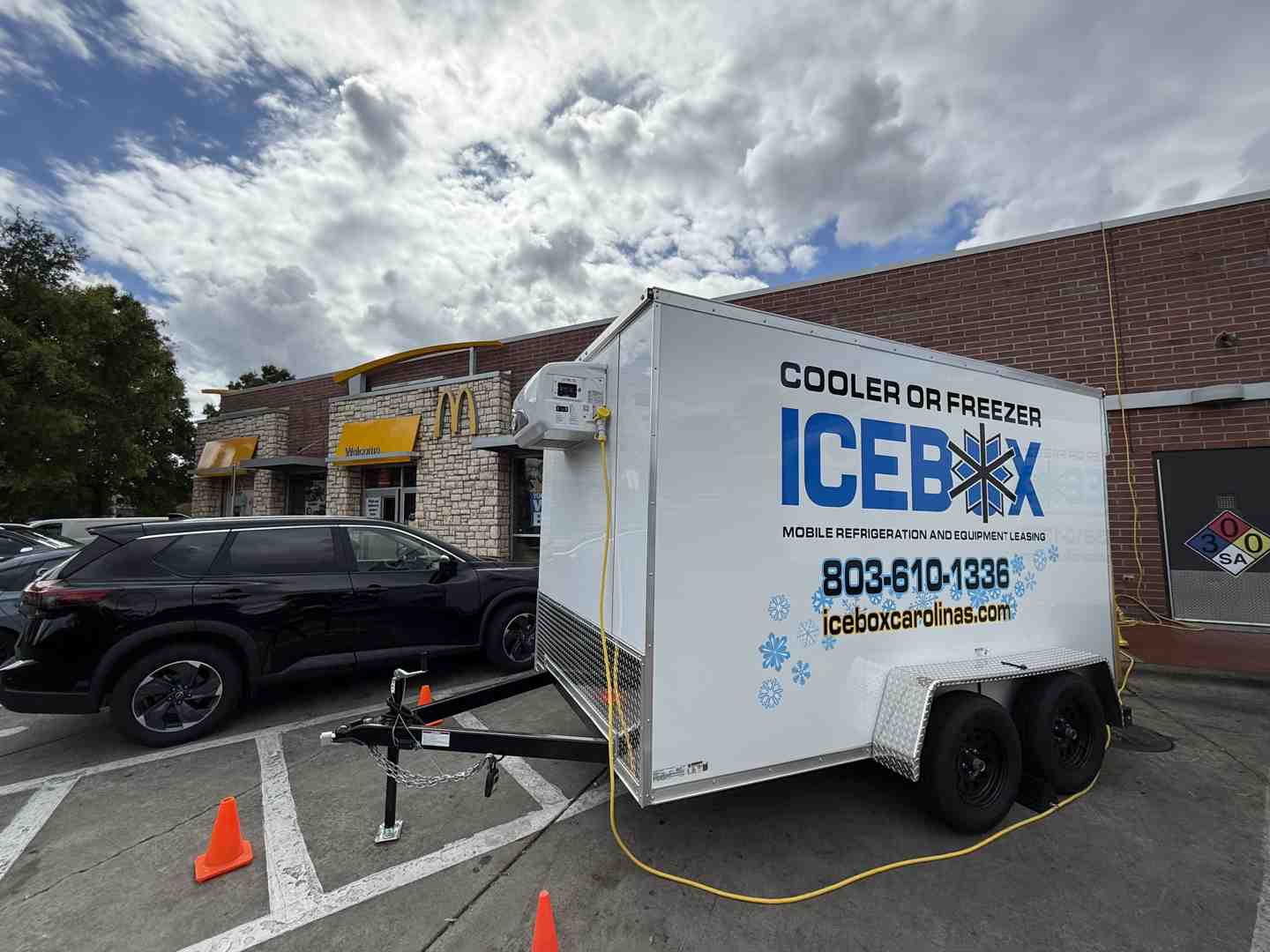
Cold storage for restaurants means keeping perishable food at safe temperatures in reliable on-site cooling space, including temporary mobile cooler trailers and mobile freezer trailers when regular capacity is tight or unavailable.
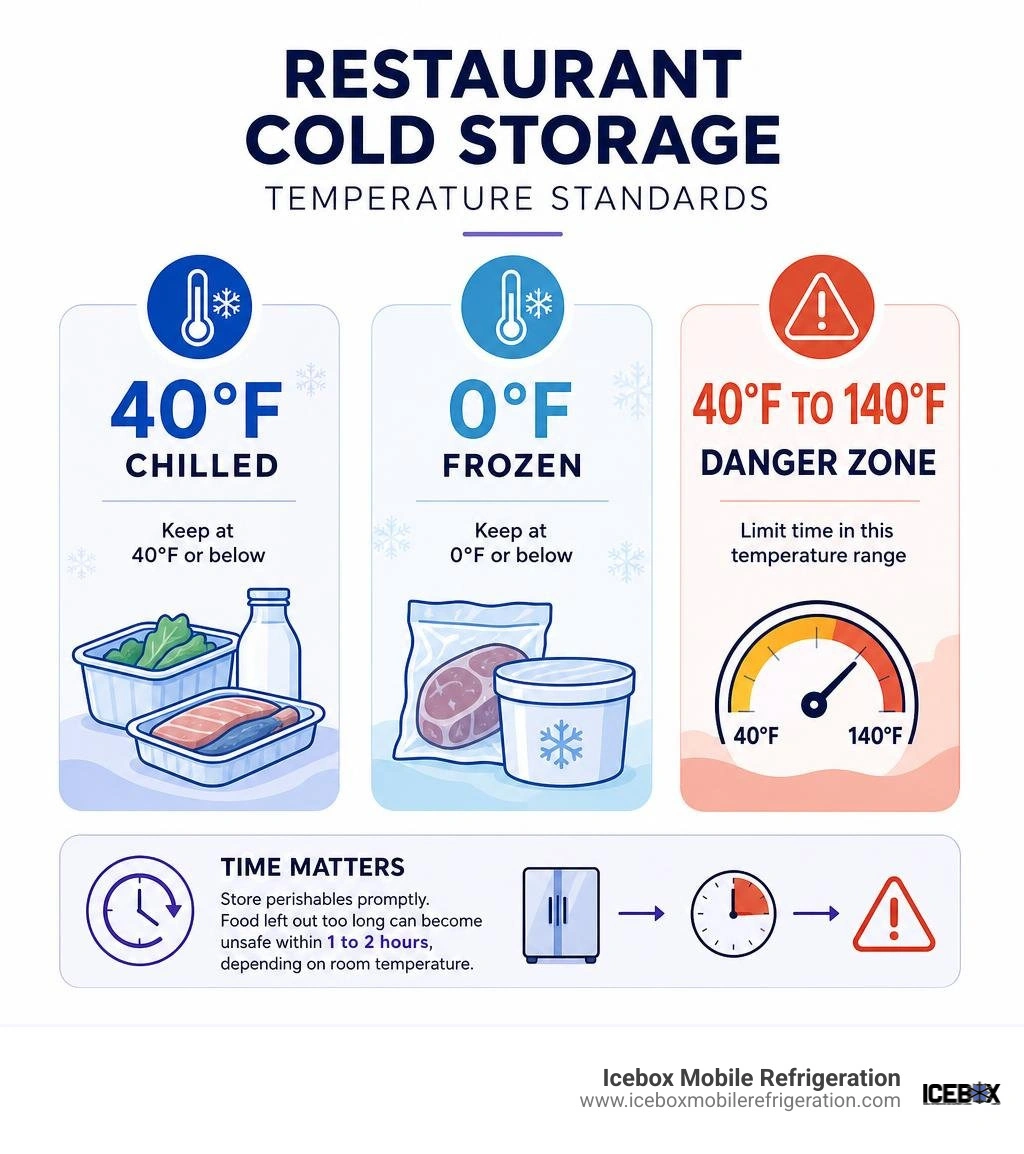
- Keep chilled food at 40°F or below.
- Keep frozen food at 0°F.
- Limit time in the 40°F to 140°F danger zone, where bacteria can double in as little as 20 minutes.
- Store perishables promptly. Food left out too long can become unsafe within 1 to 2 hours, depending on the room temperature.
For restaurants and event teams, cold storage is more than a convenience. It protects food quality, helps prevent cross-contamination, reduces waste, and supports health-code compliance. It also becomes critical during peak events, renovations, equipment failures, and power-related emergencies, when a delivered mobile cold-storage trailer can provide needed on-site capacity.
Dan and Kelley at Icebox Mobile Refrigeration help East Coast foodservice teams plan dependable temporary cold storage when the stakes are high.
Explore more about cold storage for restaurants:
Best Practices and Guidelines for Cold Storage for Restaurants
Every commercial kitchen relies on consistent workflow rules to maintain health standards and pass routine inspections. Did you know that 1 in 6 Americans suffers from a foodborne illness every single year, according to the Centers for Disease Control and Prevention (CDC)? Proper management of cold storage for restaurants directly reduces this statistic in your establishment.
By establishing strict stock rotation, enforcing temperature logs, and organizing walk-in storage correctly, kitchen managers protect both customer health and the bottom line.
Temperature Guidelines and Organization in Cold Storage for Restaurants
Maintaining precise thermal boundaries is your first line of defense against pathogenic growth. To keep food safe:
- Set walk-in cooler spaces to maintain 40°F or below.
- Set mobile freezer trailer units to maintain 0°F.
Never rely solely on external equipment dials, as ambient door openings can create slight variances. Place secondary, calibrated internal thermometers near the warm side of the door to verify accurate readings during prep shifts.
Preventing cross-contamination requires organizing food shelves according to minimum internal cooking temperatures. Raw meats carry bacteria that must be cooked to specific temperatures to destroy; storing raw juices above prepared items creates a serious hazard if drips occur.
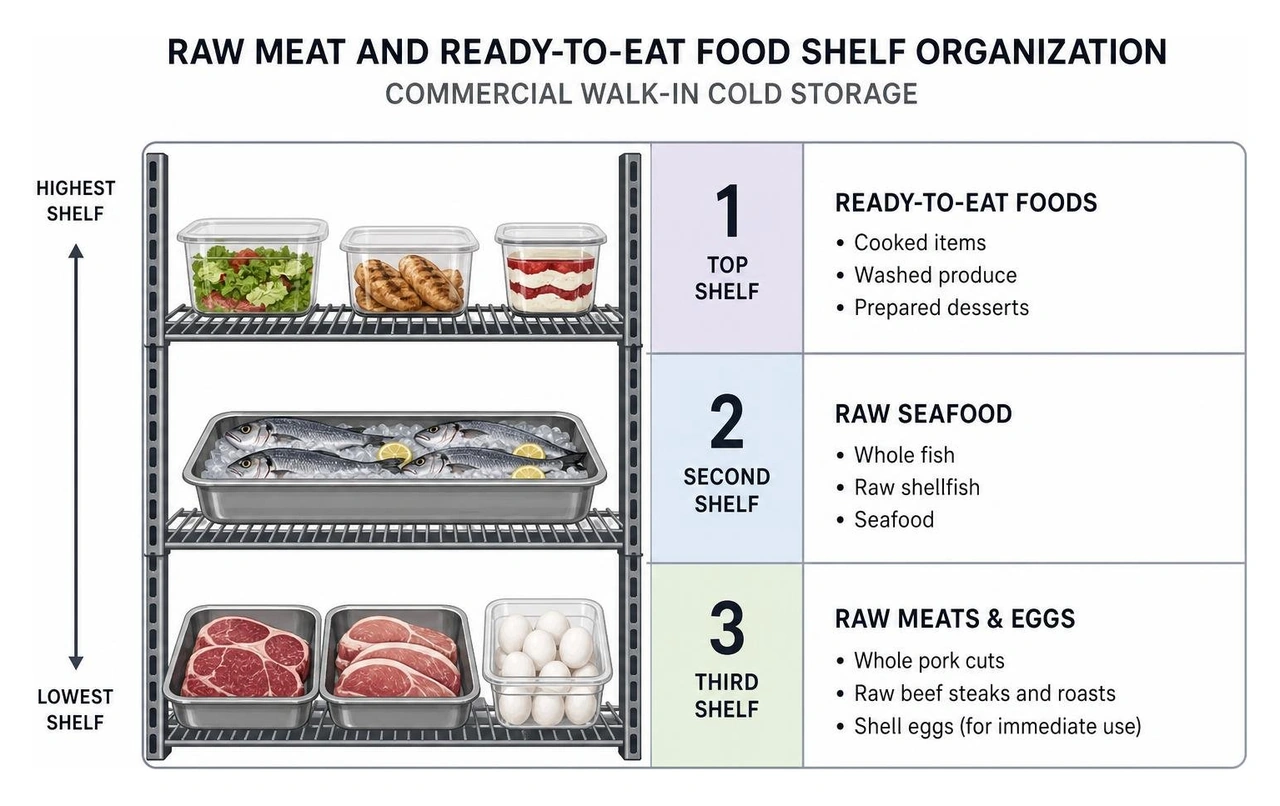
Use this top-to-bottom shelf arrangement in your walk-in storage:
- Top Shelves: Ready-to-eat foods, cooked items, washed produce, and prepared desserts.
- Second Shelf: Whole raw seafood, fish, and raw shellfish.
- Third Shelf: Whole raw pork cuts, raw beef steaks, roast portions, and immediate-use shell eggs.
- Fourth Shelf: Raw ground beef, ground pork, and ground fish.
- Bottom Shelf: Whole or ground raw poultry (chicken, turkey, duck), which requires the highest internal cooking temperature (165°F).
For a deeper look into structuring high-volume commercial storage environments, review our comprehensive Commercial Kitchen Refrigeration Complete Guide.
Storage Timelines, FIFO Rotation, and Sanitation Protocols

Food safety requires managing hold times and implementing strict inventory practices. The standard "2-hour rule" dictates that perishable food items left in the temperature danger zone (40°F to 140°F) for more than two hours must be discarded. If ambient kitchen temperatures exceed 90°F during peak summer service, that safety window shrinks to just one hour.
To prevent waste and enforce health standards, use the First In, First Out (FIFO) inventory method:
- Attach clear, moisture-resistant labels to all prepped containers.
- Write both the preparation date and the scheduled discard date.
- Place newer inventory behind older inventory so staff naturally use older stock first.
Here is a quick operational reference for safe cold holding limits:
- Raw Ground Meats: 1 to 2 days chilled at 40°F; 3 to 4 months frozen at 0°F.
- Raw Poultry: 1 to 2 days chilled at 40°F; 6 months frozen at 0°F.
- Fresh Shell Eggs: 3 to 5 weeks chilled at 40°F (do not freeze).
- Cooked Soups and Stews: 3 to 4 days chilled at 40°F; 2 to 3 months frozen at 0°F.
Cleanliness is equally vital. Deep-clean internal walk-in walls and shelving routinely, and clean condenser coils every 3 to 4 months. Dust buildup forces cooling systems to work harder, raising utility bills and increasing the risk of temperature spikes. Explore our guide on keeping units in top operational condition through our detailed commercial storage maintenance tips.
Mobile Cold Storage Solutions: Walk-In Coolers and Freezer Trailers
When standard kitchen capacity reaches its limit or undergoes maintenance, on-site mobile storage provides immediate relief. Portable walk-in trailers park directly outside your delivery doors, providing walk-in storage without costly building alterations.
| Feature / Capability | Mobile Cooler Trailers | Mobile Freezer Trailers |
|---|---|---|
| Operating Temperature | Maintained at 40°F or lower | Maintained at 0°F |
| Primary Kitchen Function | Staging prepped ingredients, produce, dairy, and beverages | Preserving bulk frozen inventory, meats, and ice stocks |
| Electrical Power Hookup | Standard 110-volt, 15-amp electrical connection | Standard 110-volt, 15-amp electrical connection |
| Air Circulation Design | Forced-air dynamic cooling to maintain stable holding | Heavy-duty perimeter airflow to maintain thermal barrier |
| Ideal Operational Use | Event catering, kitchen renovations, seasonal overflow | Emergency backup, long-term frozen prep storage |
Mobile units plug directly into standard 110-volt outlets, making setup simple for high-volume caterers and busy restaurant teams. Learn more about selecting dedicated freezer setups by reading about our specialized Food Service Freezer configurations.
Handling Emergencies, Emerging Trends, and On-Site Mobile Storage
Power Outages, Temp Swings, and Emergency Cold Backup
A power outage or sudden mechanical breakdown can jeopardize thousands of dollars in inventory within hours. Knowing how to handle thermal emergencies protects your bottom line:
- Keep Storage Doors Closed: An unopened walk-in storage unit can maintain safe holding temperatures for several hours during an outage.
- Log Product Temperatures: Use a calibrated probe thermometer to check internal food temperatures frequently once power returns.
- Deploy Temporary On-Site Relief: When primary equipment fails, prompt action prevents total stock loss.
At Icebox Mobile Refrigeration, we understand that kitchen emergencies don't stick to business hours. We offer 24-hour emergency service along the East Coast, delivering 110-volt walk-in trailers directly to your facility. Our mobile cooler trailers keep your kitchen operational while primary units undergo repair. Discover how quickly you can secure temporary storage with a Walk In Cooler For Rent.
Modern Trends and Choosing Mobile Cold Storage for Restaurants
The commercial foodservice sector is adopting smart monitoring technology to safeguard inventory. Digital sensors and automated logging tools send instant text alerts to kitchen operators if ambient temperatures rise above 40°F, preventing spoilage before it happens. Modern operations are also transitioning toward eco-friendly refrigerants with low environmental impact.
When evaluating your establishment's temporary storage capacity—whether preparing for summer rushes, catering large off-site venues, or navigating planned kitchen remodels—mobile trailer rentals offer flexibility without long-term capital commitments.
Our mobile trailer units fit easily into standard parking spaces and connect directly to basic 110-volt electrical outlets, providing walk-in access without needing heavy industrial power upgrades. For an in-depth breakdown on choosing temporary cold holding for your facility, check out our Food Storage Rental Guide 2026.
Need emergency cold backup or extra storage for an upcoming event? Explore temporary refrigeration trailer options and service locations across the East Coast and contact our expert team at Icebox Mobile Refrigeration today for a customized quote.
Choose the perfect rental option
Explore our wide range of trailer rentals and find the one that suits your needs
%20(2)-min.webp)
Discover New Blog Posts
Stay updated with our latest blog content.