When Your Refrigeration Fails, Every Minute Costs You Money
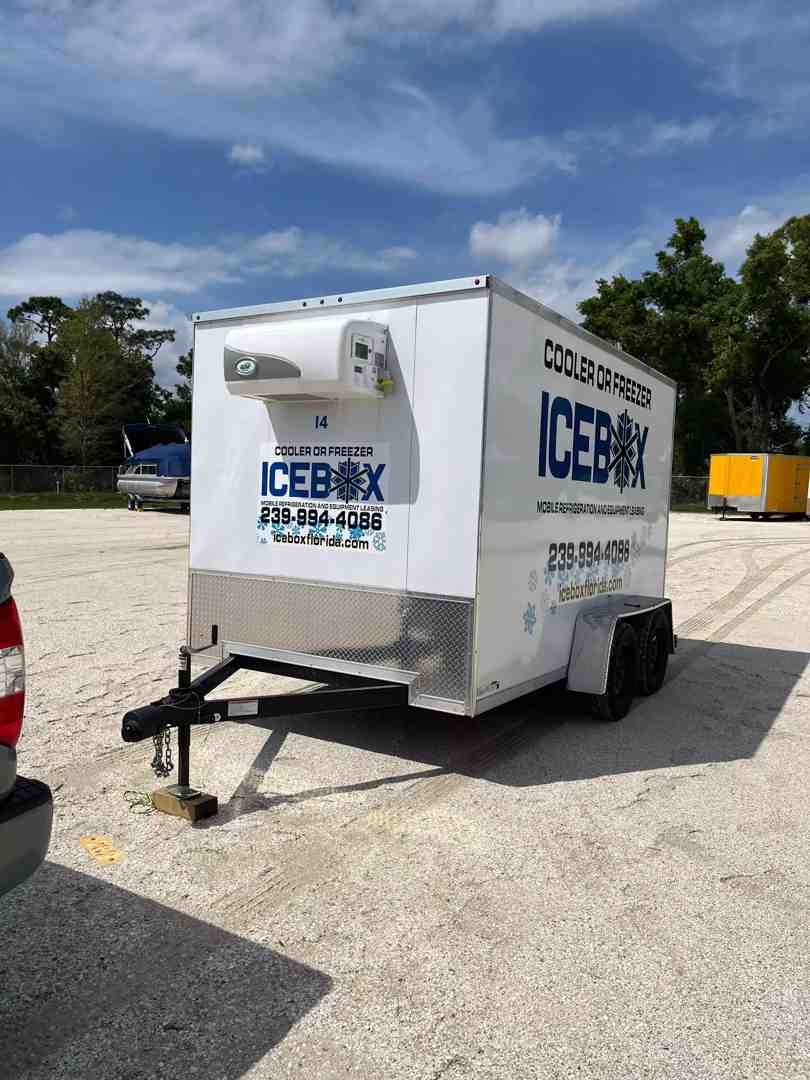
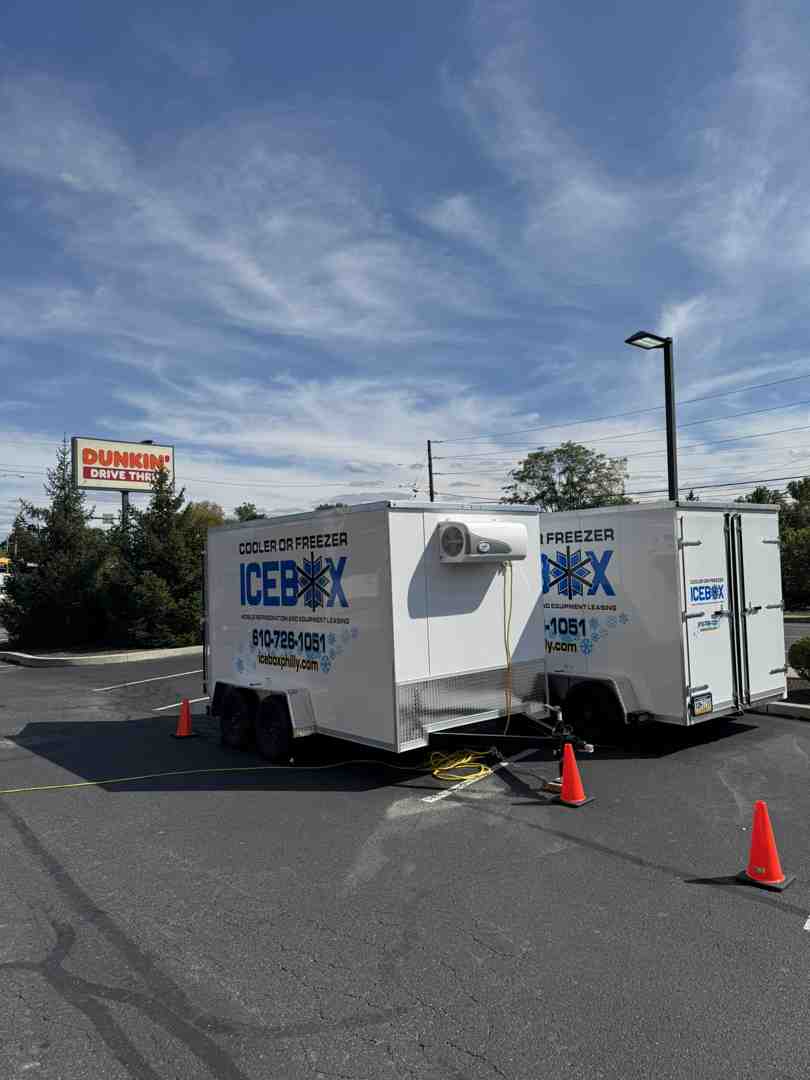
Emergency walk-in coolers are temporary mobile cooler trailers delivered to your location when your permanent refrigeration breaks down — or when you need extra cold storage fast.
Here's what to do right now if your walk-in cooler has failed:
- Keep the doors closed — trap whatever cold air remains inside
- Call an emergency mobile refrigeration provider — look for 24/7 service with same-day or next-day delivery
- Consolidate your inventory — move perishables to the coldest part of the unit
- Document everything — take photos and notes for your insurance claim
- Transfer stock to the rental trailer once it arrives on-site
A refrigeration failure can go from inconvenient to catastrophic in a matter of hours. Spoiled inventory, health code violations, and potential business shutdowns are all real risks. Businesses can lose thousands of dollars per incident from food spoilage alone — and that doesn't account for lost revenue or reputation damage.
The good news? A mobile cooler trailer can be delivered and running at your location — plugged into a standard outlet — often within 24 hours.
Whether you're an event planner managing a last-minute catering crisis, a restaurant owner dealing with a compressor failure, or a business preparing for peak season overflow, a mobile refrigerated trailer rental is almost always faster and cheaper than waiting for repairs.

Must-know emergency walk-in coolers terms:
Why Emergency Walk-In Coolers are Essential During Breakdowns
When a primary cooling system fails, the clock starts ticking against your bottom line. In the food service industry, "temperature abuse" isn't just a buzzword; it’s a fast track to a total loss of inventory. Emergency walk-in coolers serve as a critical safety net, bridging the gap between a mechanical failure and a successful repair.
The financial implications of a breakdown are staggering. Research shows that businesses can lose hundreds or even thousands of dollars in a single incident due to food spoilage. Beyond the immediate cost of the lost product, you face the risk of failing health department inspections. Most local codes require that Time/Temperature Control for Safety (TCS) foods—like dairy, seafood, and meats—be discarded if they remain above 41°F for more than a few hours.
By utilizing Emergency Refrigeration Services, you aren't just renting a trailer; you are buying time. These mobile units provide a controlled, food-grade environment that meets all necessary sanitation standards, allowing you to keep your doors open and your customers safe while your permanent unit is serviced.
Immediate Steps to Take When Your System Fails
The moment you realize your cooler is warming up, panic often sets in. However, your first few actions are the most important. As mentioned in our Emergency Walk-in Cooler Guide, your primary goal is to preserve the "thermal mass" already inside the unit.
- Seal the Unit: Check the door gaskets immediately. If they are worn, the residual cold air will escape even faster. Keep the door shut—every time you open it to "check the temperature," you lose precious minutes of safety.
- Inventory Consolidation: If the unit is only partially full, move the most sensitive items to the bottom and back of the cooler, where cold air tends to settle.
- Call for Help: Don't wait for a technician to tell you they can't get the part until next Tuesday. Secure a mobile cooler trailer immediately to ensure you have a backup ready before the internal temperature hits the danger zone.
Key Features of High-Quality Emergency Walk-In Coolers
Not all temporary cooling solutions are created equal. When your business is on the line, you need a unit specifically engineered for rapid deployment and reliability. We prioritize 110-volt power compatibility because it allows for a true "plug-and-play" setup. In an emergency, you don't have time to wait for an electrician to wire a 220V or 460V connection.
Quality units, such as those inspired by the Arctic BL1012-C-SC 10x12 Walk-In Cooler, No Floor, feature high-density urethane insulation that maintains internal temperatures even in high ambient heat. Key safety features are also non-negotiable. OSHA requires that all walk-in units include an interior safety release to prevent entrapment. Our units go a step further with glow-in-the-dark knobs and frost-resistant hardware, ensuring that even in a low-light emergency, your staff can operate the unit safely.
Temperature Ranges and Food Safety Standards
To comply with modern food safety regulations, a mobile cooler must be versatile. Most high-quality mobile cooler trailers are designed to maintain a range from 35°F to 50°F, while mobile freezer trailers can maintain temperatures as low as 0°F.
According to Product Details • Arctic Walk-In Coolers & Walk-In Freezers, achieving these standards requires superior thermal barriers. Many industry-leading panels utilize 4-inch thick insulation with an R-value of 28. This level of insulation ensures that the cooling unit doesn't have to work overtime, which reduces energy consumption and minimizes the risk of the rental unit itself failing. Monitoring these temperatures is made easier with external digital displays, allowing you to verify food safety without ever opening the door.
Securing Your Emergency Walk-In Cooler Rental
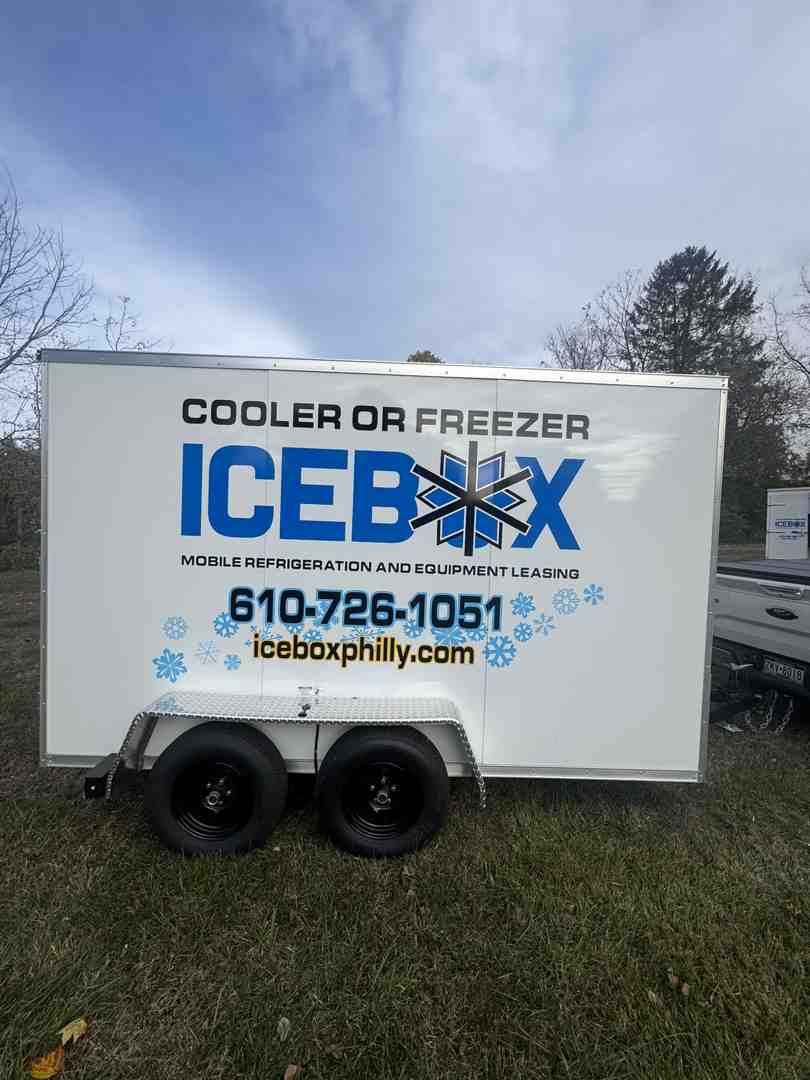
When disaster strikes in May 2026, you need a partner who understands that "emergency" means now. We provide rapid delivery across the East Coast, serving major hubs from Pittsburgh, PA, and Cleveland, OH, down to Miami and Fort Lauderdale, FL. Our logistics team is designed to get a unit to your site within 24 hours, often much faster in metropolitan areas like Nashville or Charlotte.
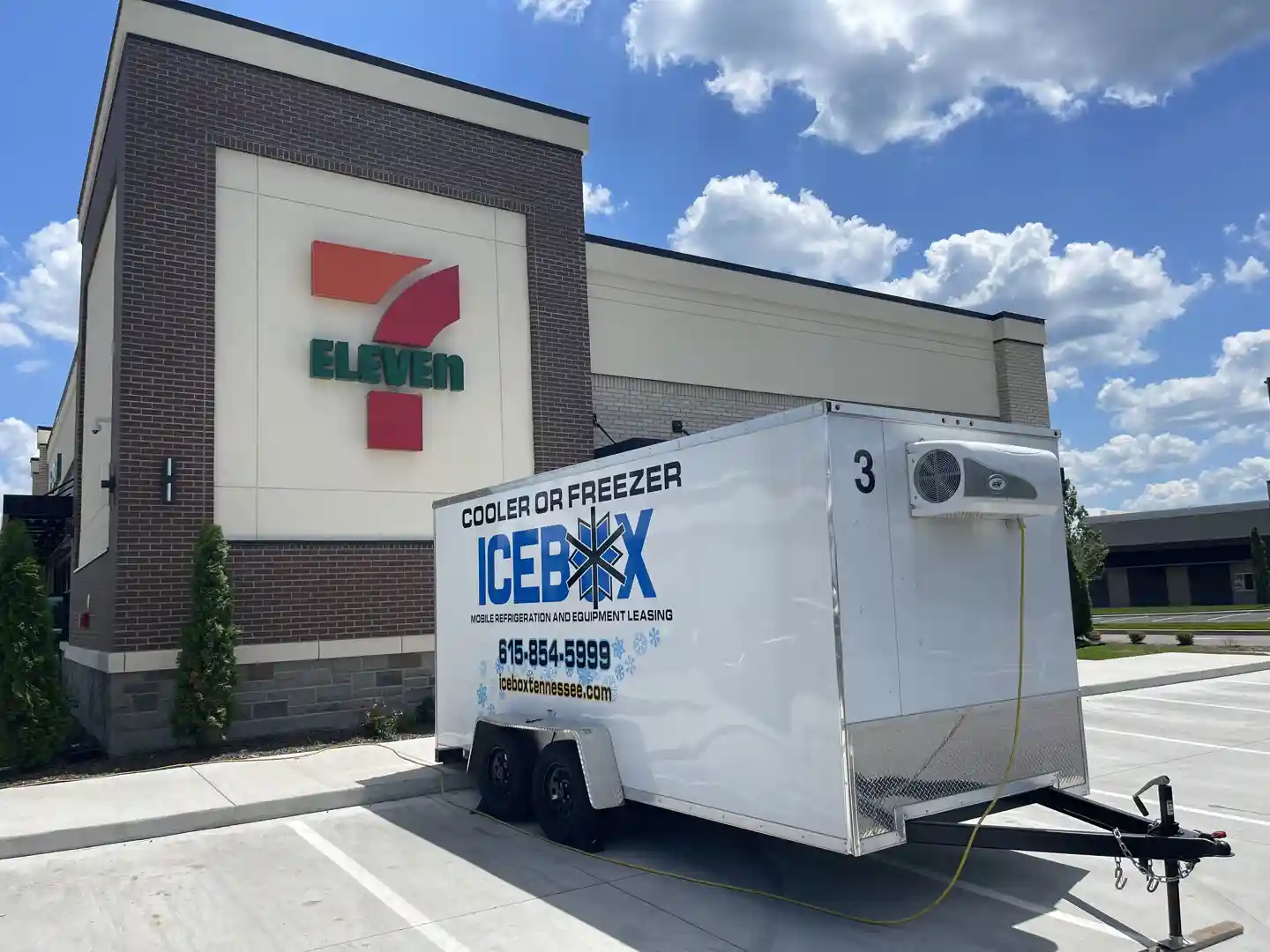
The process is straightforward: you call us, we determine the right size for your inventory, and we dispatch a trailer that sits at ground level. This eliminates the need for awkward ramps or heavy lifting, making the transfer of your stock as seamless as possible.
| Trailer Type | Typical Size | Power Requirement | Temp Range |
|---|---|---|---|
| Standard Cooler | 6' x 8' | 110V / 15A | 35°F - 50°F |
| Large Cooler | 6' x 12' | 110V / 15A | 35°F - 50°F |
| Mobile Freezer | 6' x 10' | 110V / 15A | 0°F - 10°F |
Power Requirements for Portable Emergency Walk-In Coolers
One of the most common questions we hear during a crisis is, "Do I need a generator?" For our specialized units, the answer is usually no. As detailed in our Walk-in Cooler Rental Guide, our trailers are designed to run on a standard 110V/15A dedicated circuit.
This is a game-changer for small businesses. Instead of hiring a contractor to install specialized high-voltage outlets or dealing with the noise and fumes of a diesel generator, you simply plug the unit into a standard wall outlet. This "plug-and-play" capability is what makes emergency walk-in coolers so effective for rapid response.
Common Use Cases for Mobile Refrigerated Trailers
While mechanical breakdowns are the most frequent reason for a rental, many businesses use our services for planned needs. Our Emergency Cold Storage Rental Guide highlights several scenarios:
- Restaurants & Catering: Whether it's a primary cooler failure or a massive outdoor wedding in Charleston, SC, mobile trailers provide the necessary cold chain.
- Disaster Relief: Following storms or power outages in coastal areas like Wilmington, NC, or Myrtle Beach, SC, mobile units can run on small portable generators to save community food supplies.
- Medical & Pharmaceutical: Hospitals and labs in cities like Detroit, MI, or Pittsburgh, PA, use our trailers to store temperature-sensitive supplies during facility renovations.
- Seasonal Overflow: Grocery stores often need extra space during the holidays or peak summer months to handle bulk inventory.
Preventing Future Failures with Icebox
At Icebox, we believe the best emergency is the one that never happens. While we are always ready to provide 24/7 support, we also encourage our clients to implement rigorous preventive maintenance.
Simple steps can extend the life of your permanent equipment:
- Clean Your Coils: Debris on condenser coils is a leading cause of overheating and system failure.
- Inspect Gaskets: A cracked seal forces your compressor to work twice as hard, leading to premature burnout.
- Monitor Performance: Use secondary thermometers to catch "temp creeps" before they become full-blown failures.
If you find yourself in a bind, we have locations ready to serve you throughout the East Coast and Midwest. From Akron and Toledo, OH, to Savannah and Augusta, GA, we are your local experts in keeping things cold.
For immediate assistance or to prepare a contingency plan for your business, visit our locations page to find the service center nearest you. We are committed to protecting your inventory and your reputation with reliable, easy-to-use mobile refrigeration solutions. Don't wait until the ice melts—contact us today for a quote and breathe easy knowing your stock is secure.
Choose the perfect rental option
Explore our wide range of trailer rentals and find the one that suits your needs
%20(2)-min.webp)
Discover New Blog Posts
Stay updated with our latest blog content.