Why Emergency Food Storage Matters for Every Business
Emergency food storage is the practice of maintaining ready-to-use food supplies that remain safe and edible during disasters, power outages, or supply chain disruptions. Whether you're managing a restaurant, planning a large event, or running a catering operation, having a solid emergency food storage plan protects your inventory, your reputation, and your bottom line.
Quick Overview: Emergency Food Storage Essentials
- 72-Hour Minimum: Stock at least three days of non-perishable food per person
- Temperature Control: Keep perishables below 40°F; freezers should stay at 0°F or below
- Critical Timeline: Food left above 40°F for more than 2 hours must be discarded
- Water Supply: Store one gallon per person per day for drinking and food prep
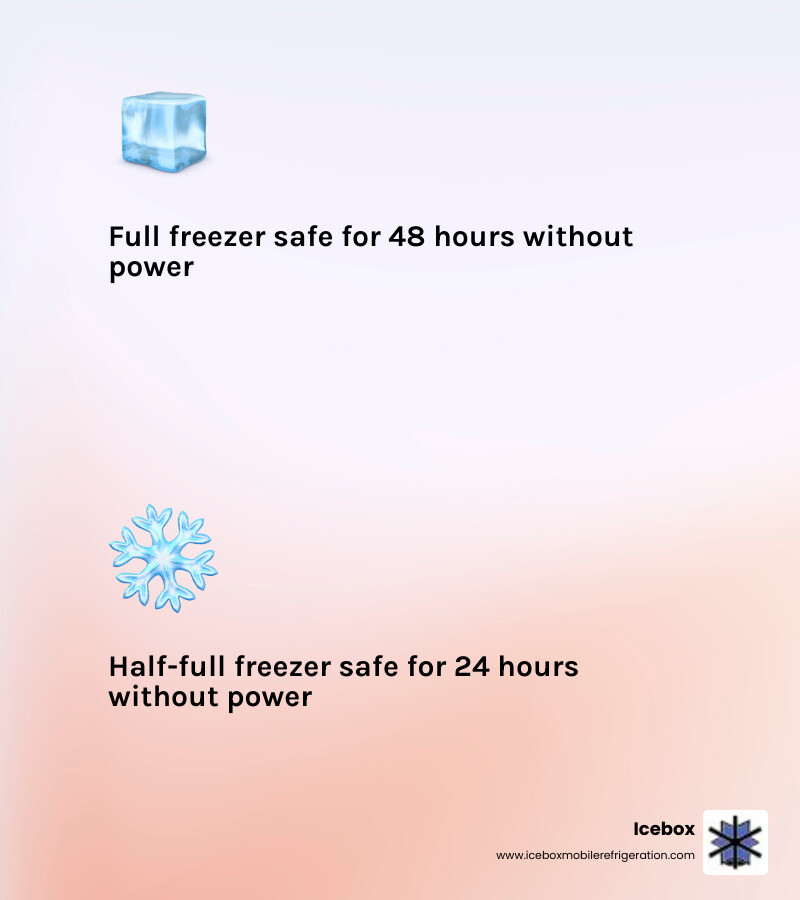
- Power Outage Safety: A full freezer keeps food frozen for 48 hours (24 hours if half-full); refrigerators stay cold for about 4 hours
Natural disasters like hurricanes, severe storms, and extended power outages can strike the East Coast without warning. In 2024 alone, experts predicted almost 10 major hurricanes and large-scale weather events. When power fails, perishable inventory worth thousands of dollars can spoil within hours if you don't have a backup plan.
The difference between a minor inconvenience and a major financial loss often comes down to preparation. Commercial operations face unique challenges—you're not just feeding a family for a few days, but protecting large quantities of perishable goods that represent significant investment. Restaurant walk-in coolers fail. Event venues lose power. Catering operations face unexpected overflow during peak season.
While shelf-stable foods like canned goods, freeze-dried meals, and dried grains form the foundation of any emergency food storage plan, businesses with perishable inventory need a different solution. You can't store fresh proteins, dairy products, or prepared foods on a shelf. You need reliable refrigeration that works when your primary system fails.
Emergency food storage terms made easy:
Essential Strategies for Emergency Food Storage
When we talk about emergency food storage, it’s easy to focus solely on the "food" part, but the strategy behind it is what keeps you safe. A successful plan balances caloric requirements, nutrition, and safety protocols to ensure that when the lights go out, your team or family stays fed and healthy.
For commercial entities, the caloric requirements are often calculated based on the number of staff or guests you are responsible for. It’s not just about bulk; it’s about nutritional balance. You need a mix of proteins, carbohydrates, and fats to maintain energy levels during high-stress situations. According to scientific research on shelf-stable food, foods like canned meats can last at least two years in the pantry, while vacuum-packed pouches might have a shorter window of about six months.
Water is the most critical element of any survival plan. The CDC and other experts recommend at least one gallon of water per person per day. This covers both drinking and basic hygiene. In a business setting, you may need even more if you are rehydrating freeze-dried meals or cleaning food-prep surfaces. For more detailed safety protocols, you can refer to scientific research on food safety to ensure your well water or tap sources remain uncontaminated after a storm.
Calculating Your Emergency Food Storage Needs
Building a supply isn't an overnight task—it's a gradual process. We recommend starting with a 72-hour kit for immediate evacuation scenarios and then scaling up to a two-week supply for sheltering in place. For businesses, this might mean having enough non-perishables to sustain operations or staff during a localized lockdown.
When calculating your needs, consider:
- Family or Staff Size: Multiply your daily requirements by the number of people.
- Dietary Restrictions: Ensure you have gluten-free or low-sodium options where necessary.
- Non-food Essentials: Don't forget manual can openers, utensils, and disposable plates.
- Calorie Density: Some 72-hour kits provide between 2,000 and 2,600 calories per day, which is ideal for maintaining strength.
If you are looking for more ways to organize your commercial inventory for high-stress periods, check out our more info about food storage solutions.
Maintaining the Cold Chain During Power Outages
In the refrigeration industry, we know that the "danger zone" is real. Bacteria grow most rapidly between 40°F and 140°F. During a power outage, your primary goal is to keep the refrigerator door closed. An unopened refrigerator will keep food cold for only about 4 hours.
Freezers are a bit more resilient. A full freezer can maintain its temperature for 48 hours, while a half-full one only gives you 24 hours. To maximize this, we suggest keeping a physical list of freezer contents on the outside of the door so you can grab what you need quickly without letting the cold air escape. If the outage exceeds these windows, you must have a plan for emergency refrigeration to prevent massive inventory loss.
Optimal Conditions for Long-Term Emergency Food Storage
Where you store your food is just as important as what you store. Heat, light, and moisture are the enemies of longevity. Ideally, emergency food storage should be kept in a cool, dark, and dry area—ideally between 55°F and 70°F. Avoid attics or garages where temperatures fluctuate wildly, as this can drastically shorten shelf life.
| Food Type | Typical Shelf Life | Storage Tip |
|---|---|---|
| Canned Goods | 2–5 Years | Store in a cool, dry place; discard if dented. |
| Freeze-Dried Meals | 25–30 Years | Use oxygen absorbers for maximum life. |
| Hard Grains (Rice/Wheat) | 30+ Years | Store in food-grade buckets with airtight lids. |
| Potatoes/Root Veggies | 1 Month | Keep in a dark, cool area away from onions. |
| Apples | 3 Months | Store separately to prevent ripening other fruits. |
To manage your stock effectively, use the First-In, First-Out (FIFO) method. Mark containers with the purchase date and place newer items at the back. For those interested in DIY strategies, pressure canning and dehydration are excellent ways to preserve garden harvests, but always follow tested recipes to ensure safety. For more on keeping your perishables from hitting the bin, see our food spoilage prevention tips.
Professional Solutions for On-Site Refrigeration
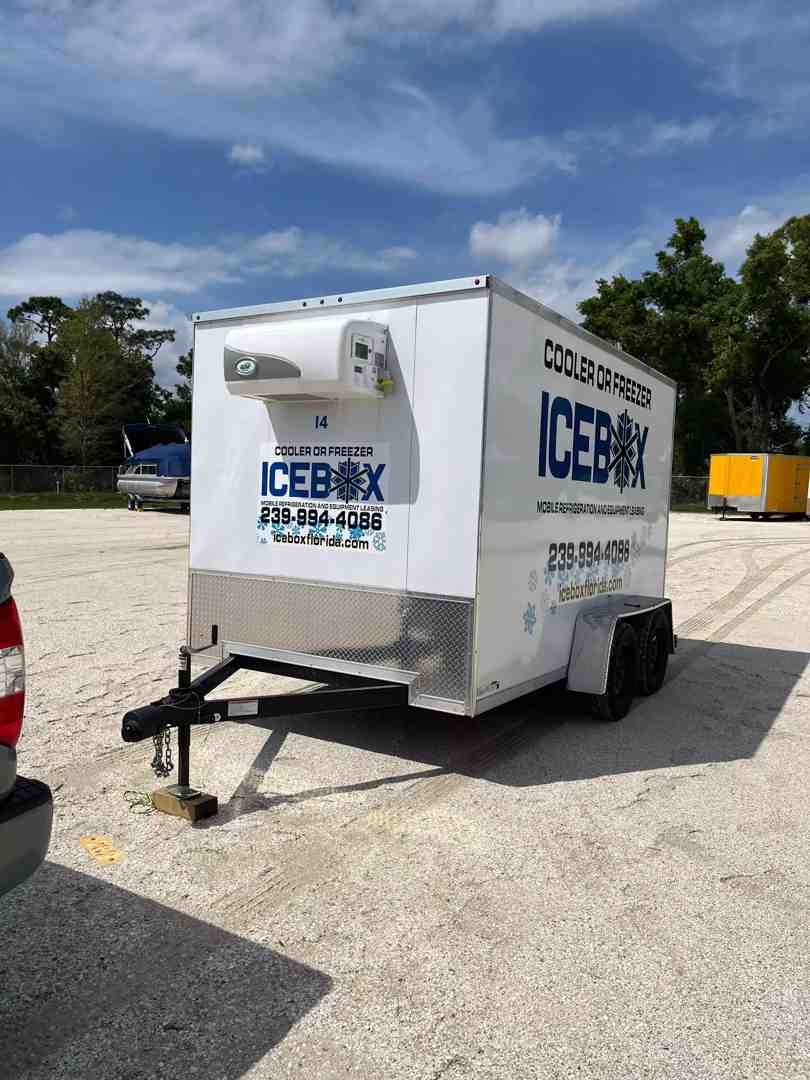
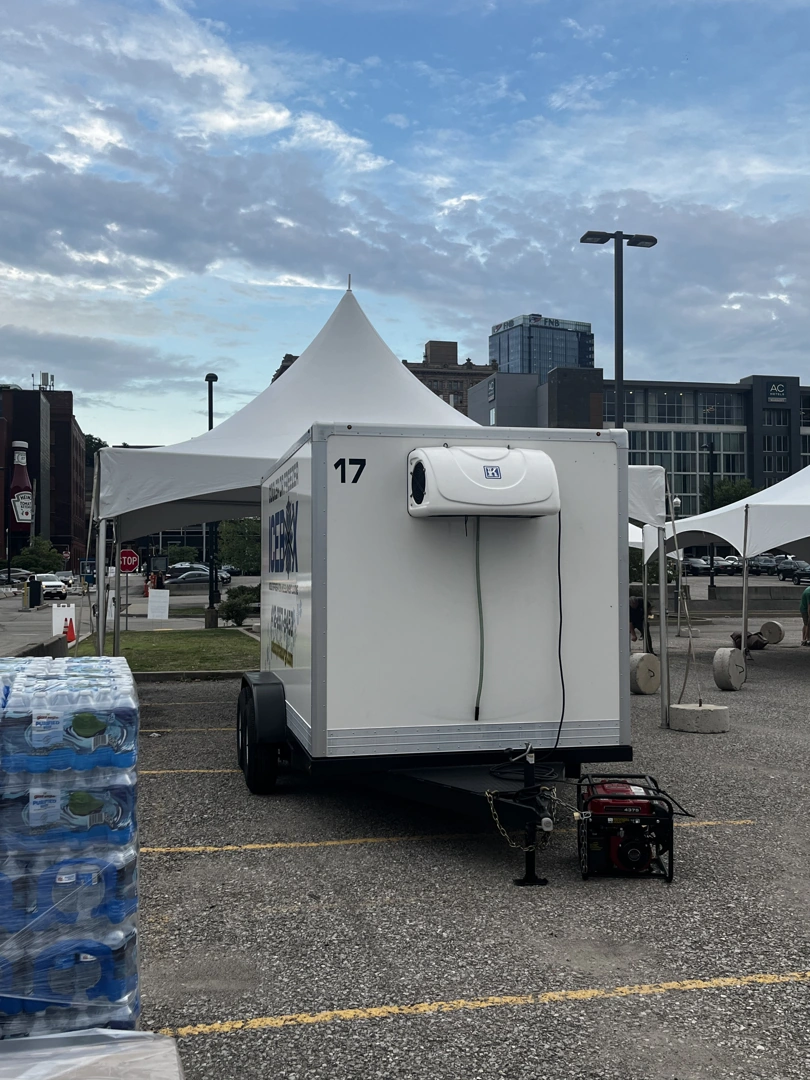
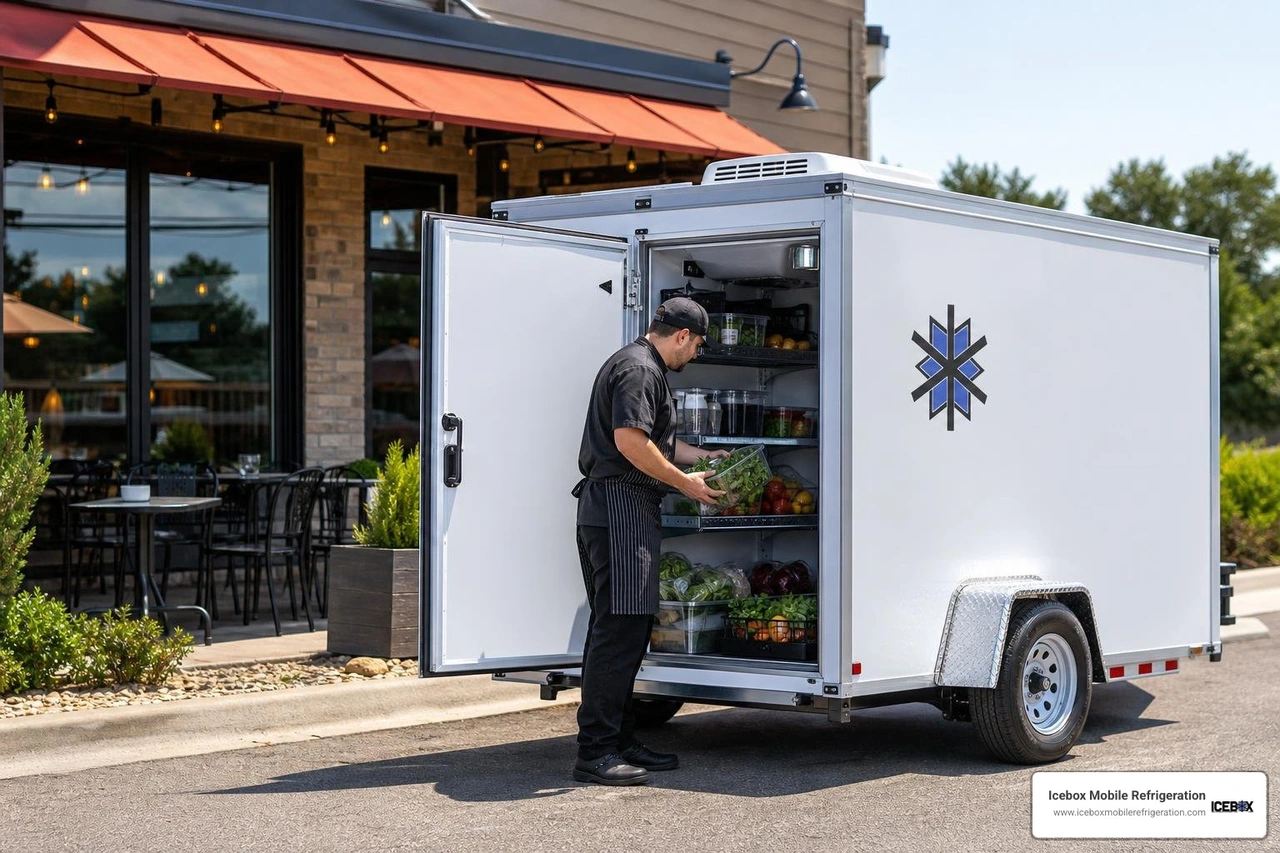
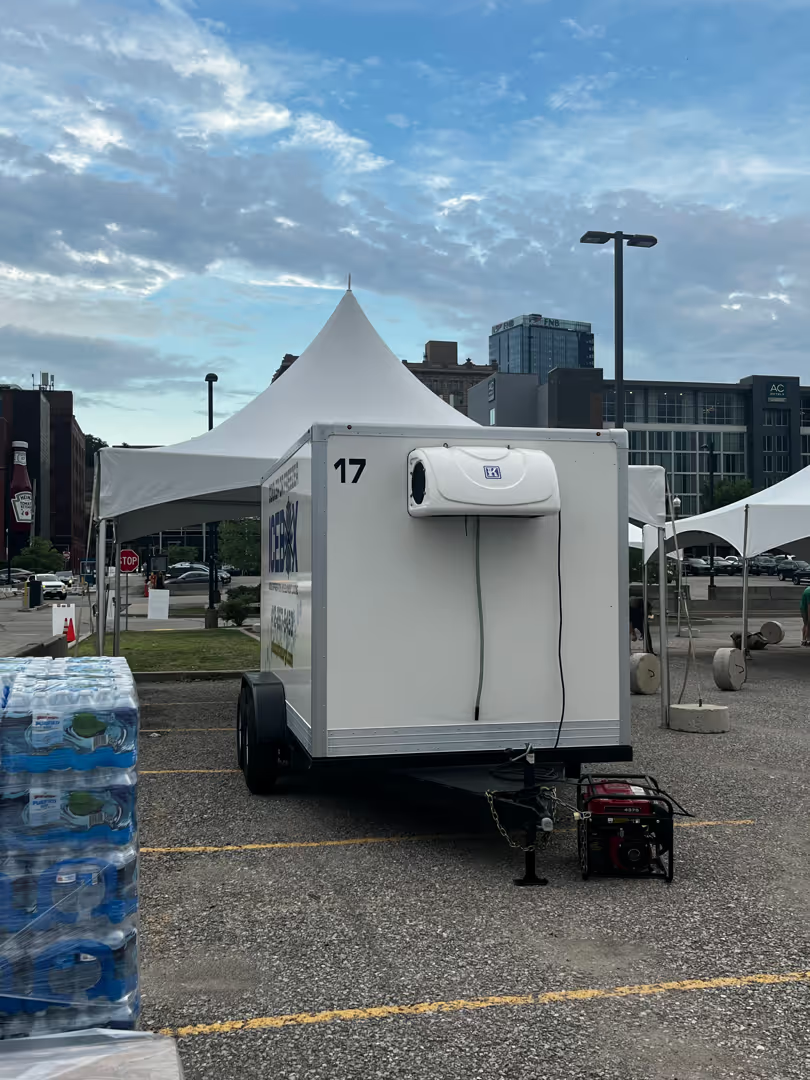
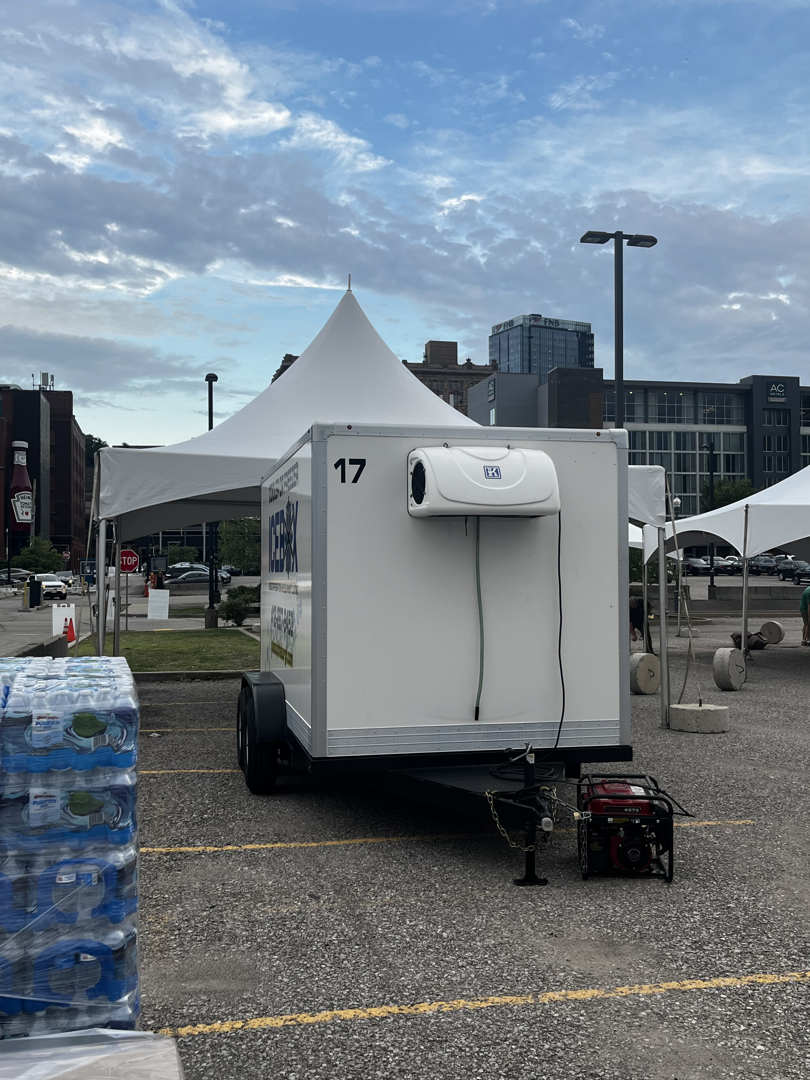
While dry goods are great, they don't help a restaurant owner with $10,000 worth of steak and seafood in a dead walk-in. This is where on-site mobile refrigeration becomes a vital part of your emergency food storage strategy. We provide mobile cooler trailers that can be delivered directly to your location, offering an immediate "life raft" for your perishables.
Our units are designed for ease of use. They run on standard 110-volt power, meaning you don't need a specialized electrician or a massive industrial generator to get them running. Whether you are dealing with a scheduled renovation or an unscheduled disaster, having a emergency refrigeration rental guide handy ensures you know exactly how to secure your inventory.
Rapid Response for Commercial Food Preservation
When a compressor fails in the middle of a Friday night rush, time is your most expensive commodity. We specialize in rapid response for commercial food preservation across the East Coast. From Pittsburgh, PA to Miami, FL, we understand that "emergency" means now.
Our mobile trailers are ideal for:
- Restaurant Emergencies: Save your inventory when the main cooler goes down.
- Catering Overflow: Extra space for large weddings or corporate events.
- Seasonal Demand: Additional cooling during peak holidays or summer heatwaves.
By opting for emergency refrigeration services, you bypass the stress of trying to find off-site space. The cooling comes to you.
Benefits of On-Site Mobile Refrigeration Trailers
Our trailers aren't just a temporary fix; they are professional-grade cooling solutions. Our units are compact enough to fit into a standard parking space, making them perfect for tight city alleys or crowded event lots.
Key benefits include:
- Easy Setup: Delivered and leveled by our team; just plug it in.
- Ground-Level Access: No ramps or lift gates required, reducing the risk of workplace injuries.
- 24-Hour Service: We are available around the clock because emergencies don't stick to a 9-to-5 schedule.
- Mobile Freezer Trailers: Our freezer units can maintain temperatures at 0°F, which is essential for keeping frozen goods safe during long-term outages.
For businesses needing to keep items frozen, our portable walk-in freezer rental options provide the reliability you need without the complexity of heavy machinery.
Securing Your Inventory with Icebox Mobile Refrigeration
We take pride in serving the East Coast with reliable, on-demand refrigeration. Our fleet of 110-volt walk-in trailers is ready to deploy to cities like Nashville, Charlotte, Tampa Bay, and Philadelphia at a moment's notice. We understand the local climate and the specific risks—from the humidity of Florida to the winter storms of Ohio and West Virginia.
If you find yourself facing a refrigeration crisis or simply need to expand your emergency food storage capabilities for an upcoming event, we are here to help. Our focus is on short-term, on-site reliability that keeps your business running when the unexpected happens.
Don't wait until the temperature starts rising in your cooler to make a plan. For more info about mobile refrigeration rentals or to get a custom quote for your specific needs, contact us today. We’ll make sure your inventory stays cold and your business stays hungry for success, not for solutions.
Choose the perfect rental option
Explore our wide range of trailer rentals and find the one that suits your needs
%20(2)-min.webp)
Discover New Blog Posts
Stay updated with our latest blog content.