Emergency Cold Storage for Food Protects Inventory When Power Fails
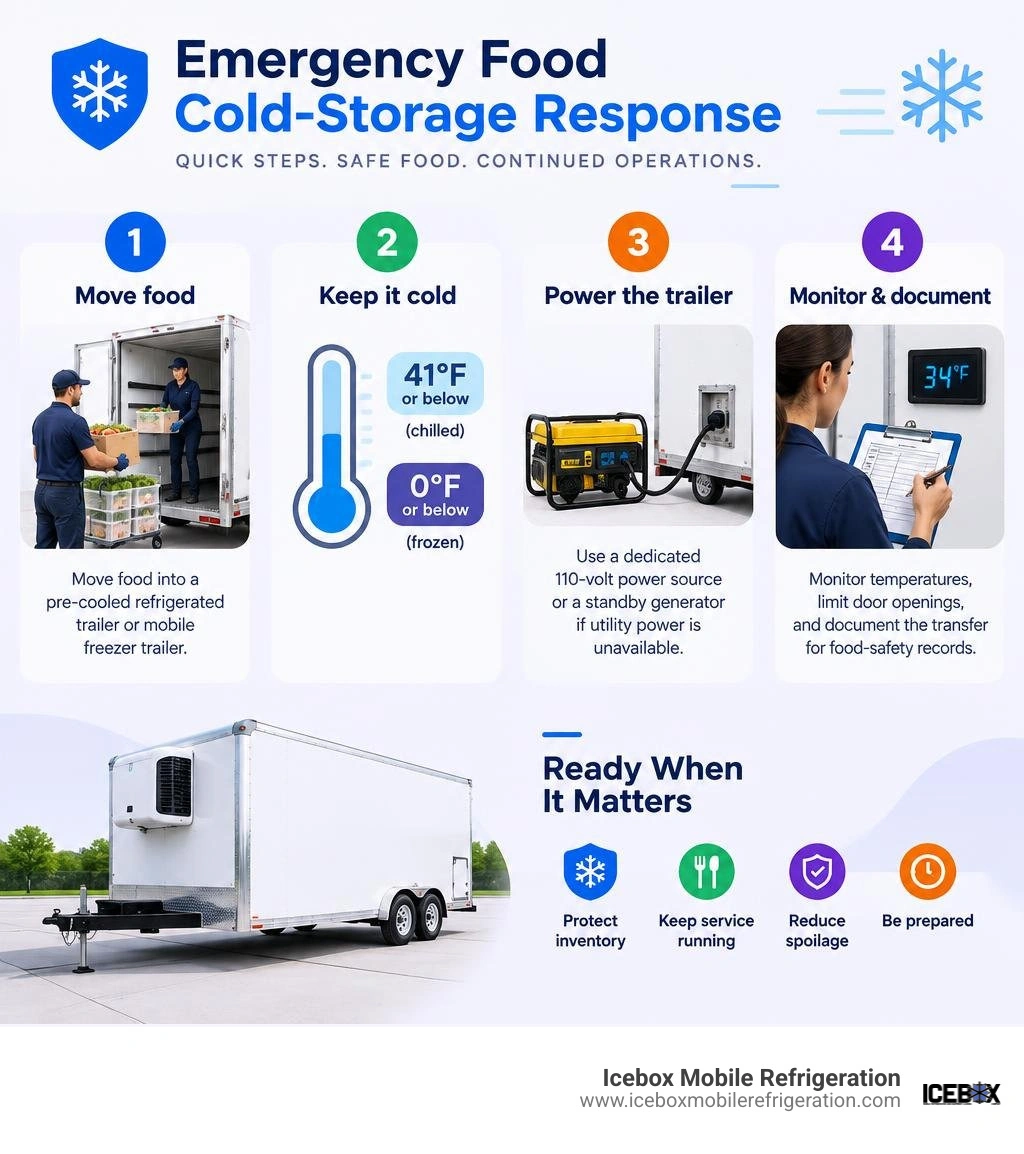
When an outage, storm, or cooler failure puts perishable inventory at risk, emergency cold storage for food means getting a temperature-controlled trailer on-site fast. The practical priorities are simple:
- Move food into a pre-cooled refrigerated trailer or mobile freezer trailer.
- Hold chilled food at 41°F or below and frozen food at 0°F.
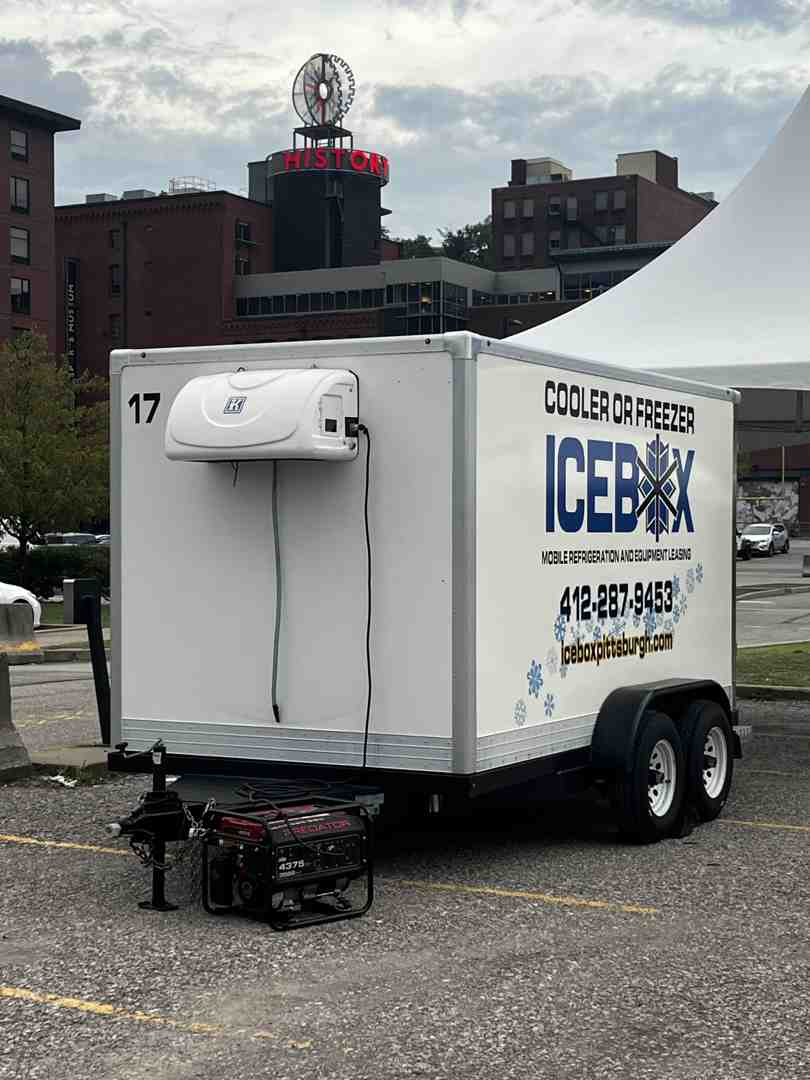
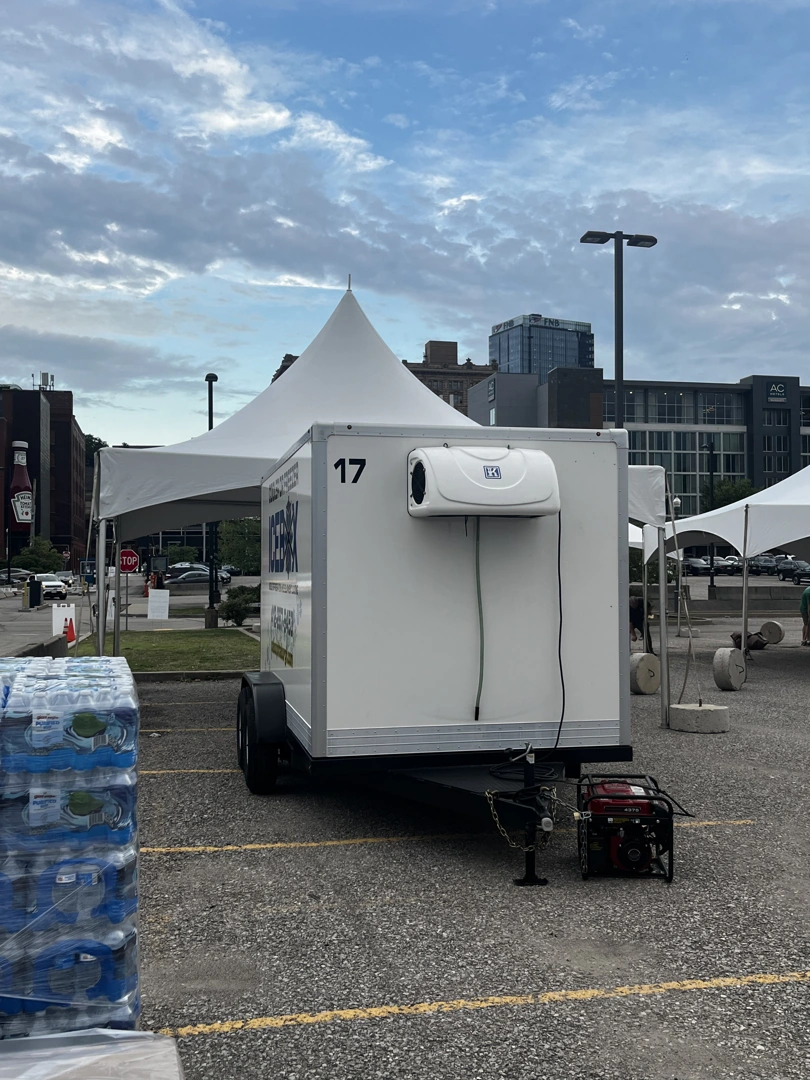
- Use a dedicated 110-volt power source or a standby generator if utility power is unavailable.
- Monitor temperatures, limit door openings, and document the transfer for food-safety records.
For busy event sites, restaurants, caterers, and food-service facilities, mobile cooler trailers provide temporary, on-site capacity without waiting for a permanent system to be restored. A prepared plan should identify a level parking area, power access, clear loading space, and the person authorized to make the call.
The goal is not just to keep food cold. It is to protect safe service, reduce preventable spoilage, and keep your operation moving through an unexpected disruption. Following FDA food safety guidelines can help operators understand the timelines for refrigerated and frozen food during outages.
We are Dan and Kelley, and the next sections explain how to prepare, deploy, and manage mobile cold storage before a disruption becomes a loss.
Deploying Emergency Cold Storage for Food During Unplanned Outages
When mechanical cooling equipment fails unexpectedly, the countdown to inventory spoilage begins immediately. Commercial kitchens, grocers, caterers, and food banks operate under tight margins, and a single equipment failure can wipe out thousands of dollars in perishable stock within hours.
Unplanned outages strike without warning. Whether triggered by an overloaded regional electrical grid, a blown transformer, severe storm fronts, or sudden mechanical breakdowns of primary walk-in systems, having access to rapid, on-site refrigerated trailers keeps operations running smoothly. Instead of letting goods spoil while waiting days for parts or technicians, deploying mobile cooler trailers directly outside your kitchen door or loading dock bridges the gap seamlessly.
Our team frequently assists operations across Florida, the Carolinas, Ohio, Tennessee, Kentucky, Michigan, Pennsylvania, and West Virginia, ensuring that localized grid disruptions do not disrupt daily commerce. From coastal hurricane threats in Tampa Bay, Fort Myers, and Wilmington to sudden summer grid surges in Columbus, Nashville, or Charlotte, mobile units provide an immediate thermal barrier against catastrophic product loss.
Critical On-Site Requirements for Emergency Cold Storage for Food
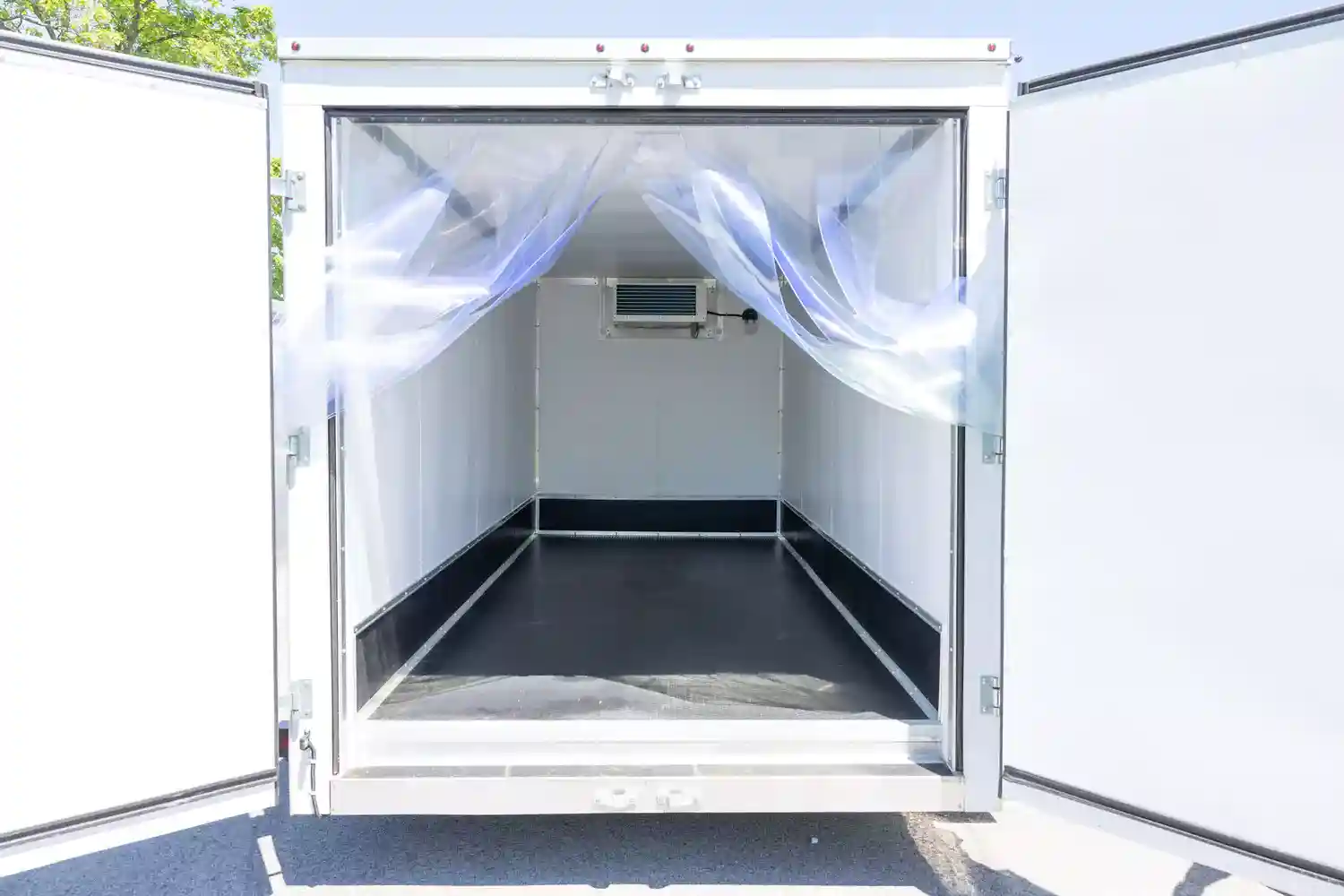
Positioning a mobile cold-holding unit on-site requires minimal preparation, but understanding basic site logistics makes setup effortless:
- Footprint and Clearance: Mobile cooler trailers typically require approximately one-and-a-half standard vehicle parking spaces. Ensure the ground is firm, relatively flat, and free of low-hanging tree limbs or structural overhangs.
- Rear Door Access: Keep the space directly behind the trailer clear. Staff need adequate swing room for rear doors and a smooth walking path to roll carts and carry crates securely.
- Electrical Proximity: Our units are engineered for high efficiency and run on a standard, dedicated 110-volt, 15-to-20-amp electrical circuit. Locating the trailer within 50 to 100 feet of a suitable outlet simplifies setup without requiring complicated electrical modifications.
- Sanitary Interior Surfaces: The interior of an emergency storage trailer should feature seamless, washable, food-safe wall panels and non-slip flooring that can be easily sanitized between product rotations.
- Thermal Retention: High-density polyurethane or polyisocyanurate insulation panels ensure that the internal atmosphere remains steady, even when ambient outdoor temperatures climb during high-humidity summer afternoons.
Temperature Integrity and Food Safety Compliance Standards
Food safety regulations leave no room for guesswork. The FDA Food Code dictates that potentially hazardous, temperature-controlled-for-safety (TCS) foods—such as raw meats, poultry, dairy, seafood, and cut produce—must be held at 41°F or below. Once product temperatures rise above 41°F, standard health code requirements establish a strict four-hour window before items must be discarded to prevent foodborne illness.
For frozen inventories, our mobile freezer trailers hold products reliably at 0°F, preserving the structural integrity and safety of raw and prepared items.
To maintain regulatory compliance during an emergency:
- Deploy Digital Logging: Utilize automated digital thermometers and continuous data loggers that track and display internal air temperatures without opening doors.
- Set Threshold Alerts: Modern digital controls allow operators to receive immediate notifications if temperatures creep past critical food-holding boundaries.
- Maintain HACCP Documentation: Keep written transfer logs detailing when food entered the trailer, baseline temperatures upon loading, and periodic checks throughout the day. Local health inspectors require verifiable paper or electronic trails during unexpected mechanical downtime.
Power Resilience and On-Site Mobile Unit Integration
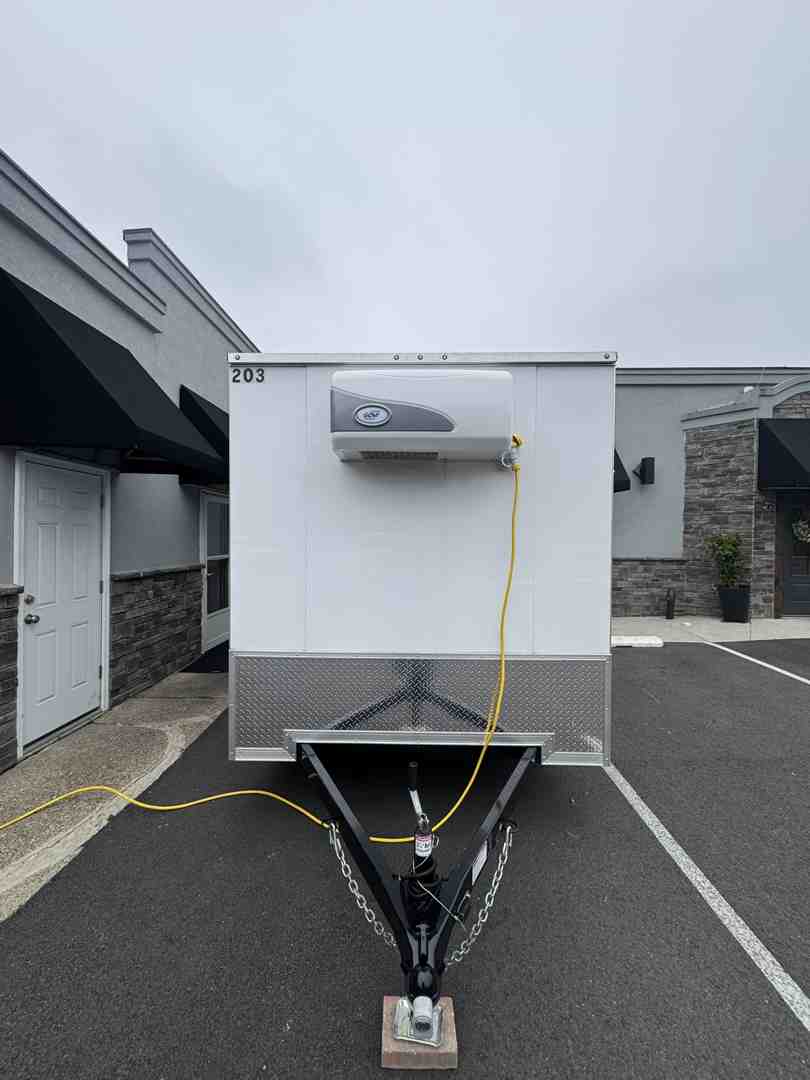
Power flexibility is the cornerstone of emergency cold storage. During utility interruptions, our equipment can run via existing on-site outlets or seamlessly pair with a portable standby generator.
| Feature | Dedicated 110-Volt Utility Circuit | Standby Generator Setup |
|---|---|---|
| Primary Use Case | Mechanical cooler failure with building power intact | Complete grid failure, storm damage, or remote sites |
| Setup Speed | Immediate plug-and-play via standard heavy-duty cord | Requires fueling, grounding, and generator startup |
| Fuel Management | None required; runs continuously from building utility | Requires periodic fuel monitoring and replenishment |
| Noise Profile | Near-silent operation | Low-decibel quiet-run models ideal for outdoor setups |
| Ideal Location | Adjacent to exterior kitchen service doors | Open, well-ventilated parking or loading areas |
Operational Best Practices and Pre-Disaster Preparedness
The most effective emergency response happens before disaster strikes. Establishing a structured contingency plan ensures that facility managers, head chefs, and kitchen directors know exactly what steps to take when temperature alarms sound.
Regularly evaluate local weather vulnerabilities, whether facing severe winter conditions in Pittsburgh and Cleveland or seasonal windstorms in Myrtle Beach and Miami. Conducting periodic disaster drills with staff helps kitchen teams execute rapid, organized product transfers without panic.
Step-by-Step Contingency Protocols for Emergency Cold Storage for Food
When a primary cooling system fails, follow this operational sequence to protect your inventory:

- Size Your Load: Calculate the total volume of perishable goods that must be salvaged. Categorize inventory by holding requirements—separating items destined for 35°F to 41°F holding from goods requiring 0°F frozen storage.
- Contact Your Rental Partner: Request immediate dispatch of the appropriate mobile cooler trailers or mobile freezer trailers to match your volume needs.
- Pre-Cool the Unit: Allow the trailer to run empty until it reaches its target setpoint before moving food inside. Loading inventory into a warm compartment creates unnecessary thermal stress.
- Organize via FIFO (First-In, First-Out): Position items that need immediate kitchen prep or rapid distribution near the rear doors, while long-hold bulk crates go toward the front.
- Inspect Gaskets and Minimize Openings: Verify that door seals seat tightly after every entry. Consolidate trips to keep the interior climate stable.
Securing Rapid Deployment and Dedicated Rental Support
When cooling fails, speed is everything. We deliver dedicated 24-hour emergency response services to ensure your business experiences zero preventable spoilage. Our walk-in trailer units arrive clean, sanitized, and ready for immediate operation on standard 110-volt power.
Whether you need a short-term rental to survive a weekend repair or an extended setup while planning facility upgrades, we provide customized on-site solutions tailored to your operational needs. To protect your inventory and keep your kitchen code-compliant, contact our team today to request a quote and secure a dependable cooler trailer before an unexpected outage impacts your bottom line.
Choose the perfect rental option
Explore our wide range of trailer rentals and find the one that suits your needs

Discover New Blog Posts
Stay updated with our latest blog content.