A Walk-In Cooler for Short-Term On-Site Storage
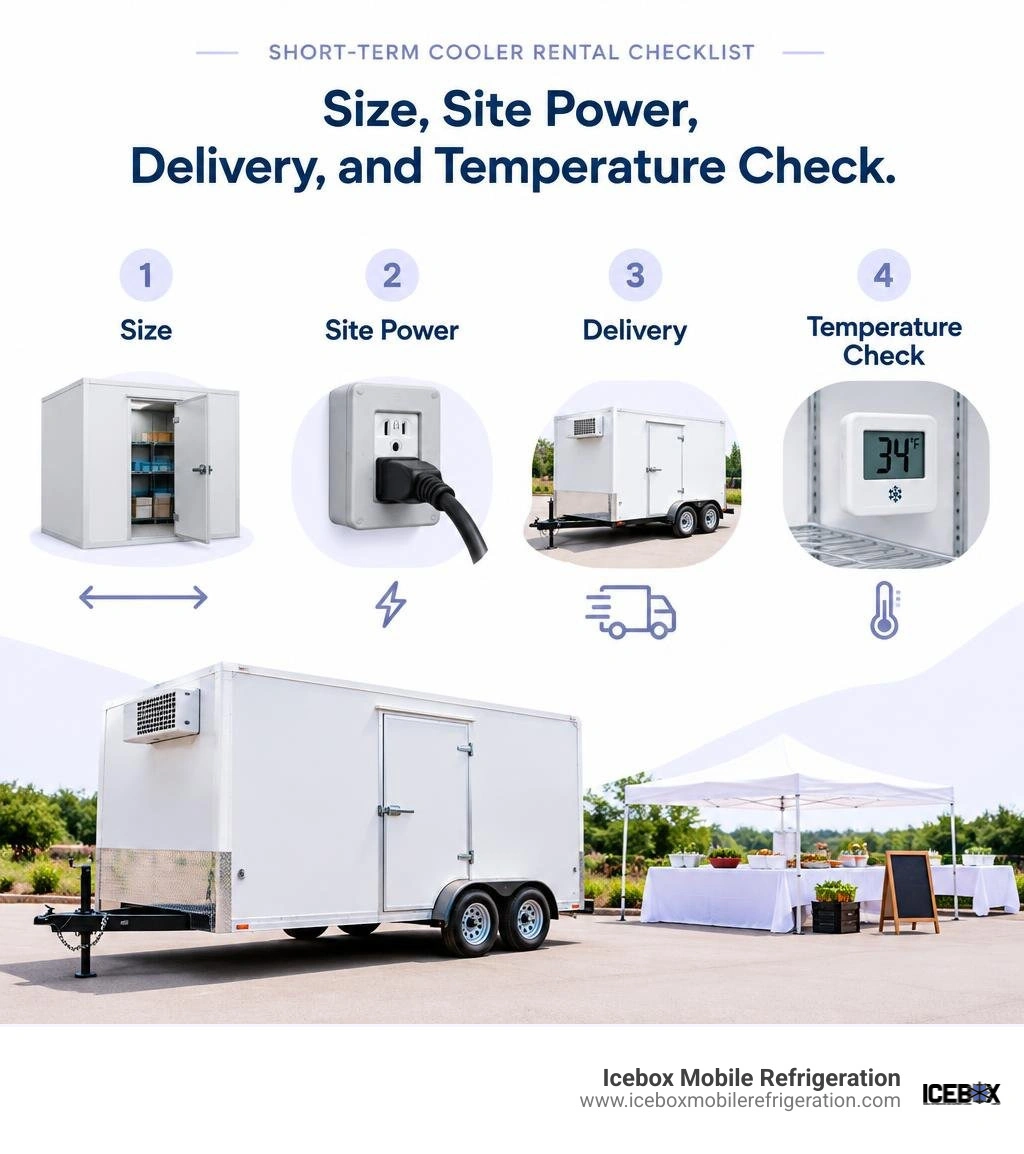
For short-term cold storage, rent a mobile walk-in cooler trailer that can be delivered to your site. Choose a size that fits your inventory, confirm the power available at your site, and check the inside temperature before loading perishables. This gives an event or business accessible cold storage without a permanent installation.
Icebox Mobile Refrigeration provides dependable support for planned events and rapid cold storage emergency rental deployments along the East Coast. Whether you require a versatile mobile walk in fridge trailer or want to review our detailed refrigerated trailer rental guide, our walk-in units are designed for straightforward setup on standard 110-volt power. Contact Icebox for a quote based on your site and rental needs.
I'm Alexander Palmiere, owner of an Icebox Mobile Refrigeration franchise. My experience with on-site mobile refrigeration helps me guide businesses looking for a walk in cooler for short term use.
Choosing a Walk-In Cooler for Short-Term Commercial and Event Needs
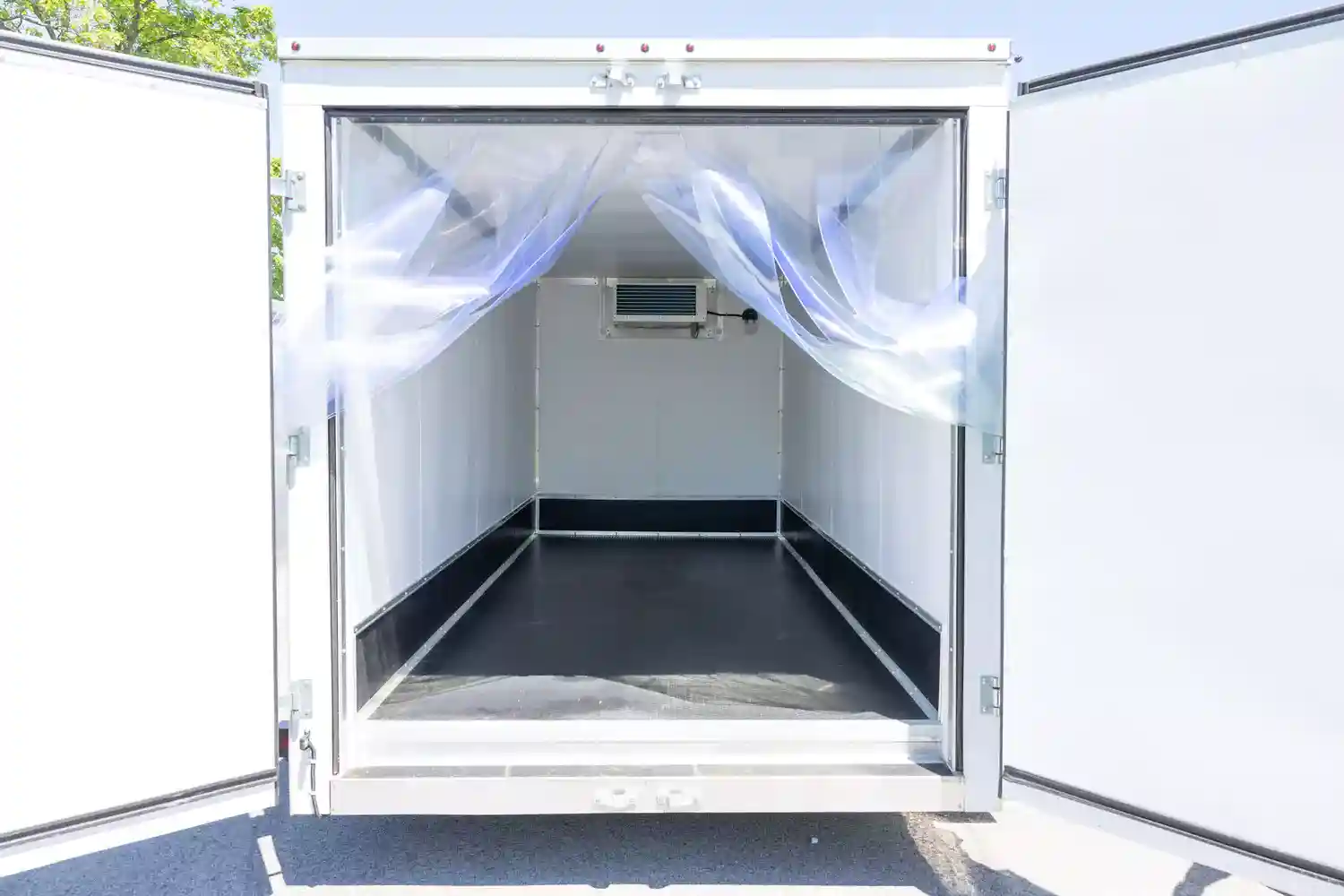
When unexpected demand spikes or planned facility renovations interrupt your standard cooling footprint, bringing in a temporary walk-in cooler bridges the gap seamlessly. Unlike permanent installations that require weeks of structural alterations, site construction, and permanent utility hookups, mobile units provide immediate, ground-level access right where your staff needs it most.
Whether you are managing catering logistics for a large outdoor festival, holding floral inventory for a busy holiday weekend, or preserving valuable inventory during a planned kitchen remodel, portable refrigeration delivers commercial-grade reliability without long-term overhead. For organizations in food service and event management, understanding the fundamentals of cooling systems—as outlined in technical resources on walk-in coolers—helps highlight why purpose-built mobile trailers are superior to improvised chilling methods.
Sizing and Power Options for a Walk-In Cooler for Short Term Use
Securing the proper equipment starts with matching your storage volume and on-site electrical infrastructure. Our fleet focuses on easy integration, utilizing self-contained cooling assemblies mounted directly to high-performance trailers.
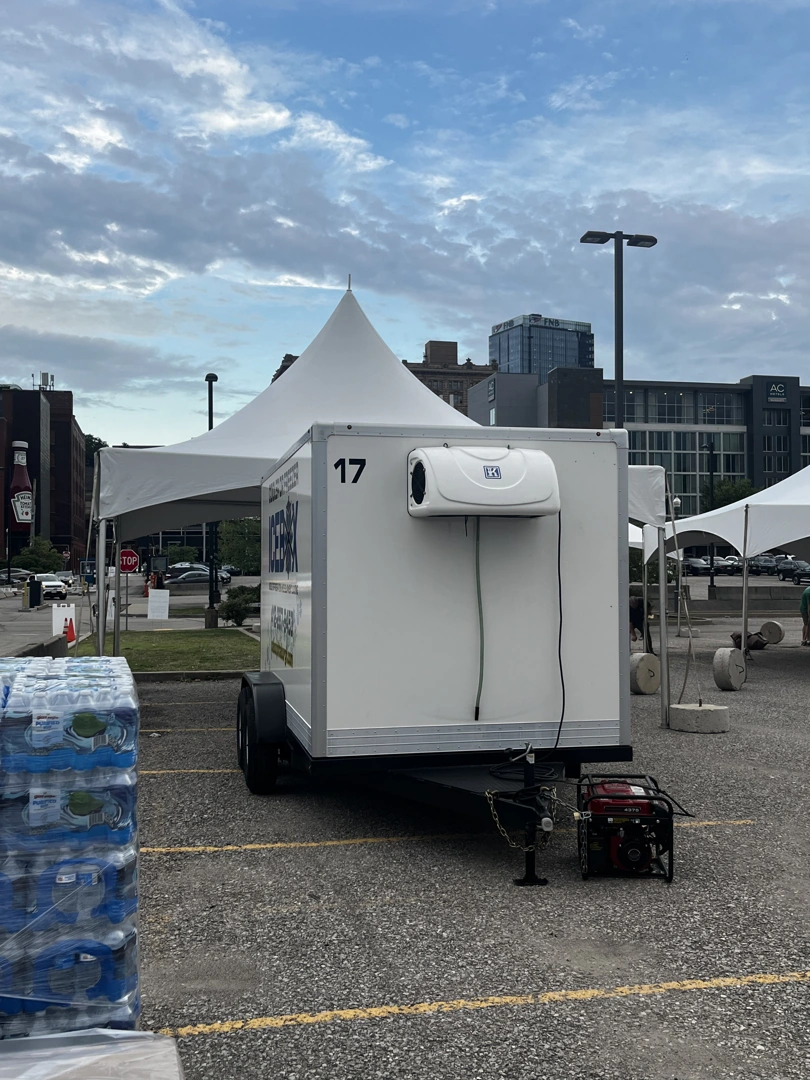
Most temporary deployments operate effectively on standard 110-volt, 15-amp or 20-amp dedicated circuits. This standard plug-and-play capability eliminates the need for expensive commercial electrical work or dedicated high-voltage drops. When staging in remote event fields, agricultural zones, or disaster relief stations without grid access, these units pair smoothly with properly sized portable generators.
Selecting the right interior volume ensures you do not waste energy chilling empty air or crowd your stock so tightly that cold air cannot circulate. Exploring dedicated temporary cooling solutions helps you identify unit dimensions ranging from compact footprints to expansive multi-pallet layouts suited for high-turnover inventory.
Advantages of Renting a Walk-In Cooler for Short-Term Use
Renting on-site mobile units offers distinct operational advantages over building out permanent cold rooms:
- Rapid Deployment: Delivered directly to your staging area and ready for temperature pull-down in minutes rather than months.
- Zero Permitting Hassles: Because mobile cooler trailers remain on wheels, they generally bypass municipal building permits, architectural reviews, and permanent tax assessments.
- Complete Site Flexibility: Units can be positioned in loading docks, parking stalls, or directly behind kitchen prep doors to minimize transit time.
- Capital Preservation: Avoid substantial capital outlays by reviewing a comprehensive short-term refrigeration rental guide and treating storage purely as an operational expense.
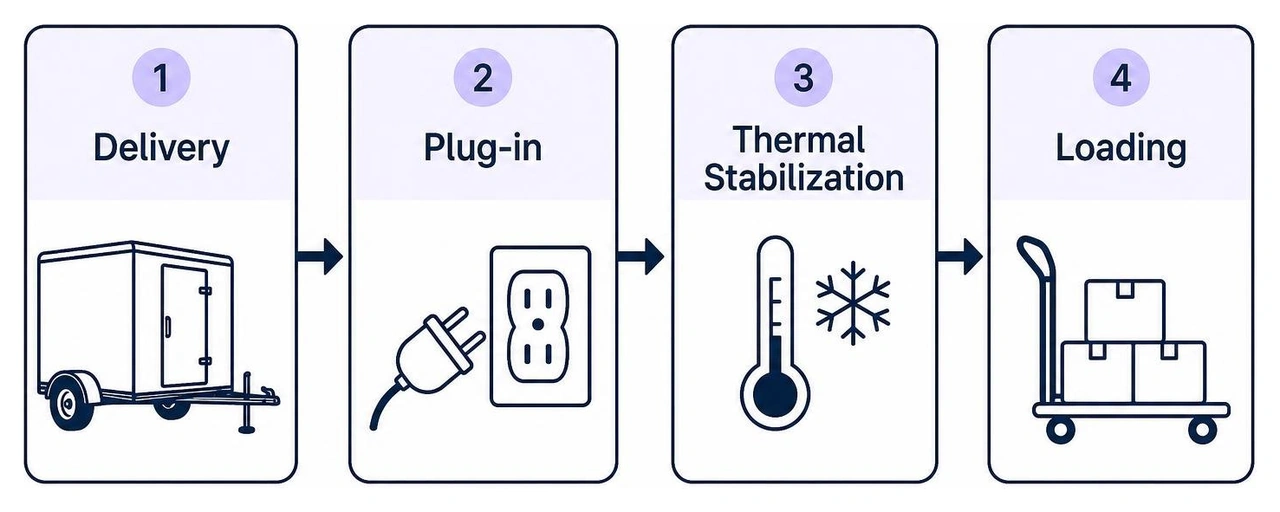
Operational Best Practices, Food Safety, and Rental Planning
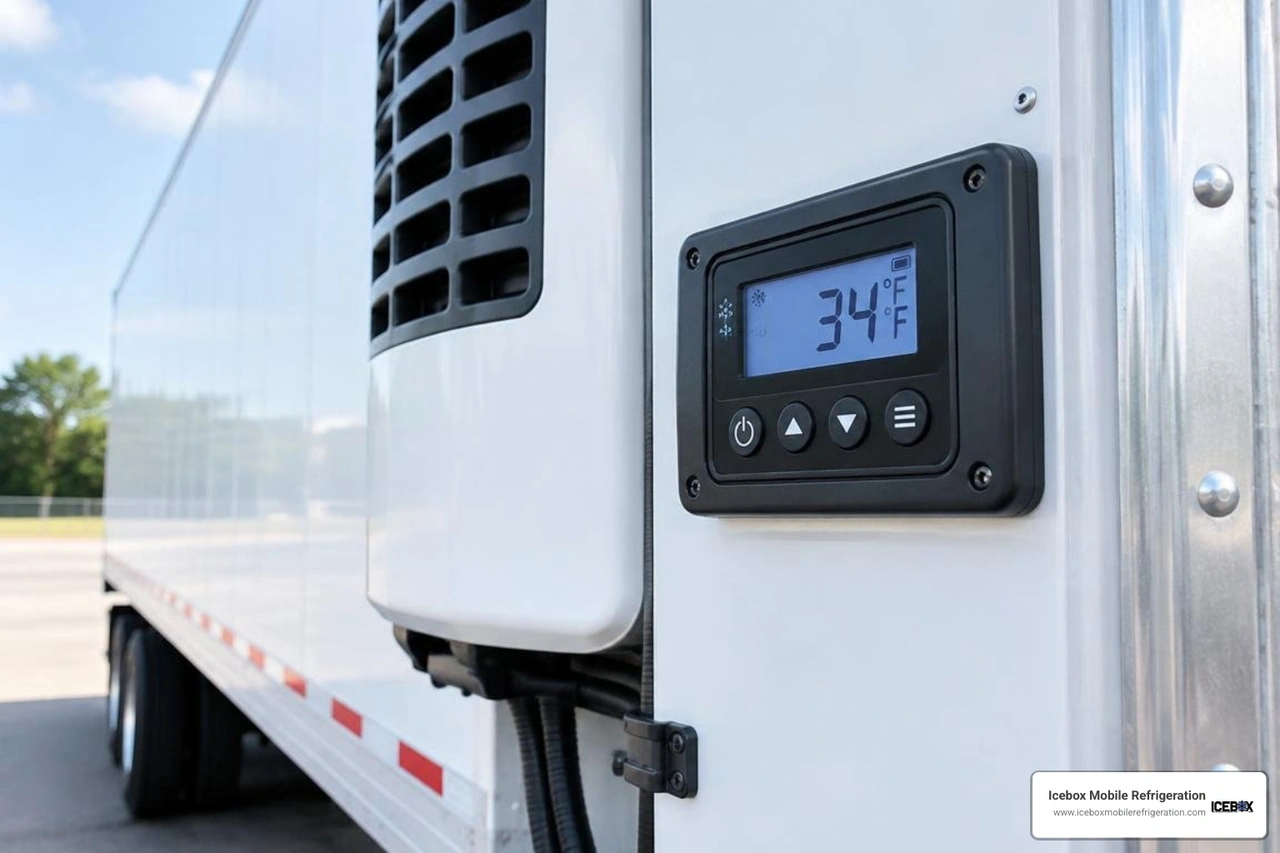
Operating temporary refrigeration requires strict adherence to commercial food safety regulations. Per USDA and FDA guidelines, business-owned cold storage must maintain temperatures at or below 40°F for refrigerated items and 0°F for frozen goods to prevent bacterial proliferation and maintain Hazard Analysis Critical Control Point (HACCP) standards.
When your temporary unit arrives on-site, always verify internal air temperatures with a secondary digital thermometer or data logger before stocking your perishables.
Temperature Management and Thermal Mass Optimization
Commercial mobile cooler trailers typically operate in a safe holding band between 36°F and 40°F, while mobile freezer trailers maintain holding temperatures at 0°F. Maintaining steady temperatures requires balancing airflow with internal thermal mass.
An underfilled walk-in cooler can experience rapid air temperature spikes whenever the door opens, causing the compressor to cycle on and off frequently. This short-cycling increases wear on the refrigeration components and leads to temperature instability. To maximize efficiency:
- Add Food-Grade Thermal Mass: If your cooler is partially empty, add clean, sealed NSF-compliant water containers along the bottom shelves. Water absorbs and retains cold, acting as a thermal buffer that stabilizes the air.
- Maintain Clear Air Pathways: Keep inventory stacked at least 2 to 4 inches away from interior walls and ensure clear, unobstructed clearance around the evaporator fans.
- Install Heavy-Duty Strip Curtains: Vinyl strip curtains act as a barrier, reducing ambient air infiltration by up to 70% during active loading and unloading.
Weatherproofing and Site Setup Requirements
When placing a mobile cooler outdoors, location selection directly influences performance and energy draw. Units positioned in continuous direct sunlight can consume significantly more electricity than those situated in shaded areas or beneath structural overhangs.
To ensure optimal performance:
- Choose Level, Stable Ground: Position the trailer on asphalt, concrete, or compacted gravel to prevent shifting and ensure proper drainage of defrost lines.
- Protect Against Elements: Our trailers feature insulated panels, UV-resistant exterior coatings, and heavy-duty magnetic door gaskets to form a tight thermal barrier against extreme summer heat and driving rain.
- Verify Clearance: Ensure adequate airflow around the exterior condensing unit so heat can disperse freely. For additional local setup tips, consult our walk-in cooler guide.
Rental Considerations and Next Steps with Icebox Mobile Refrigeration
Whether you are handling seasonal inventory surges, orchestrating a high-profile banquet, or facing an unexpected refrigeration failure, Icebox Mobile Refrigeration provides reliable, turnkey support. We specialize in fast, 24-hour emergency delivery across our East Coast service areas—including major hubs throughout Florida, Ohio, North Carolina, South Carolina, Tennessee, Georgia, Kentucky, Michigan, Pennsylvania, and West Virginia.
Our clean, modern mobile cooler trailers and mobile freezer trailers arrive fully sanitized and ready to plug into a standard 110-volt outlet. For a comprehensive look at commercial cold storage options, browse our walk-in refrigeration guide to determine the right unit for your specific timeline.
Contact our team today to request a custom rental quote and secure dependable cold storage delivered directly to your venue or facility.
Choose the perfect rental option
Explore our wide range of trailer rentals and find the one that suits your needs

Discover New Blog Posts
Stay updated with our latest blog content.