Cold Storage for Meat: The Temperature Checklist That Protects Quality
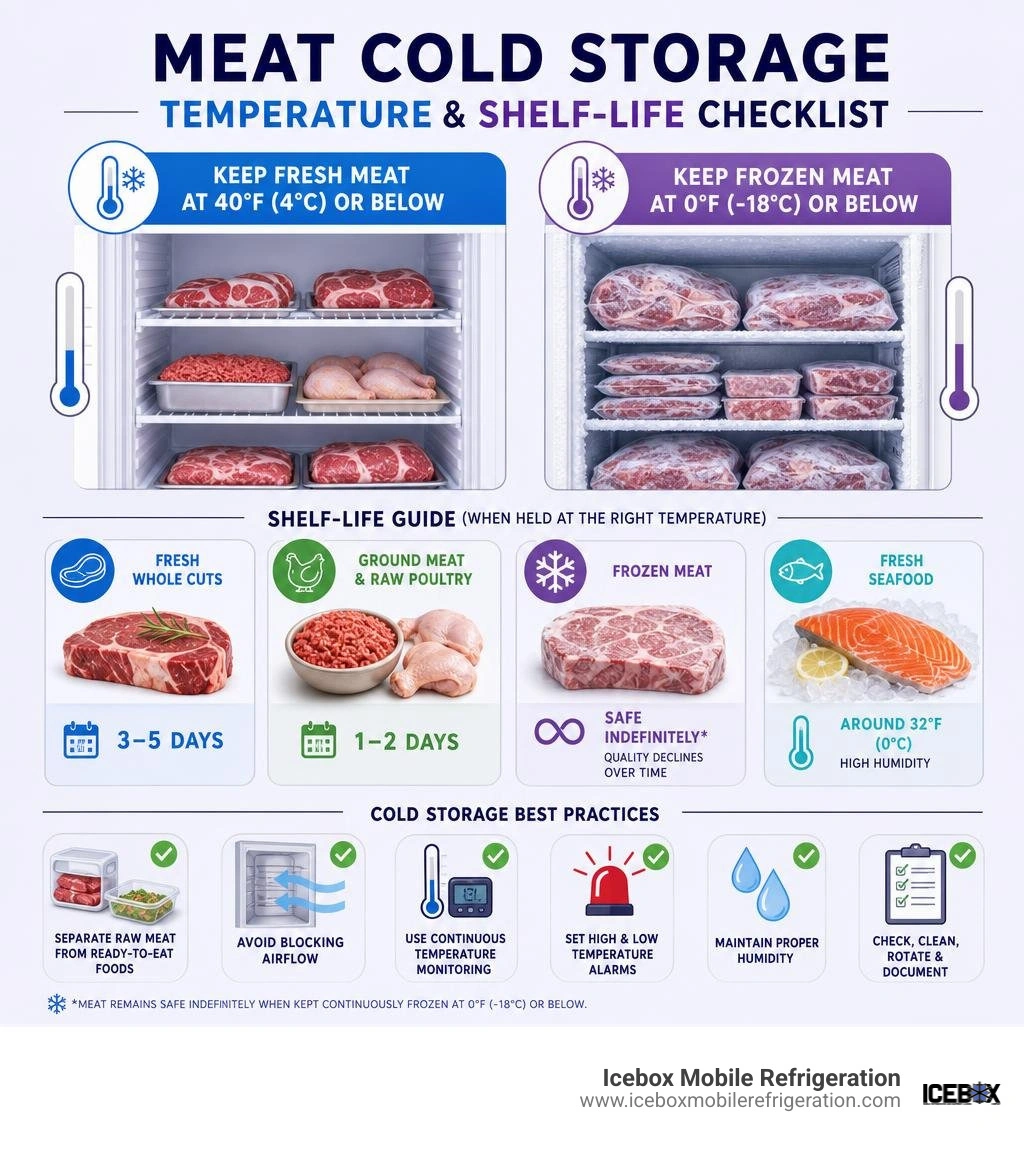
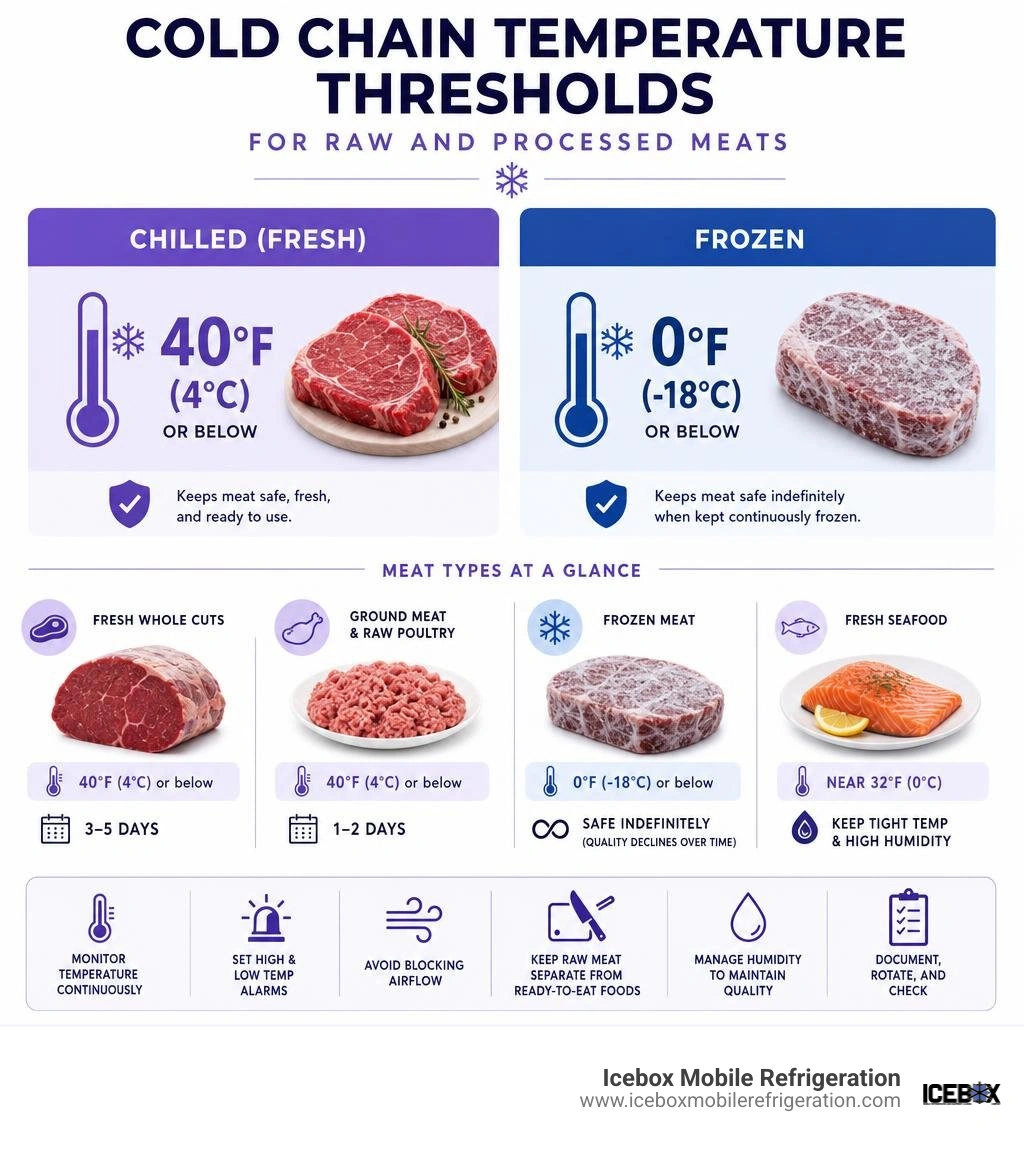
For safe cold storage for meat, keep fresh products at 40°F (4°C) or below and frozen products at 0°F (-18°C). Separate raw meat from ready-to-eat foods, avoid blocking airflow, and use continuous temperature monitoring with high- and low-temperature alarms.
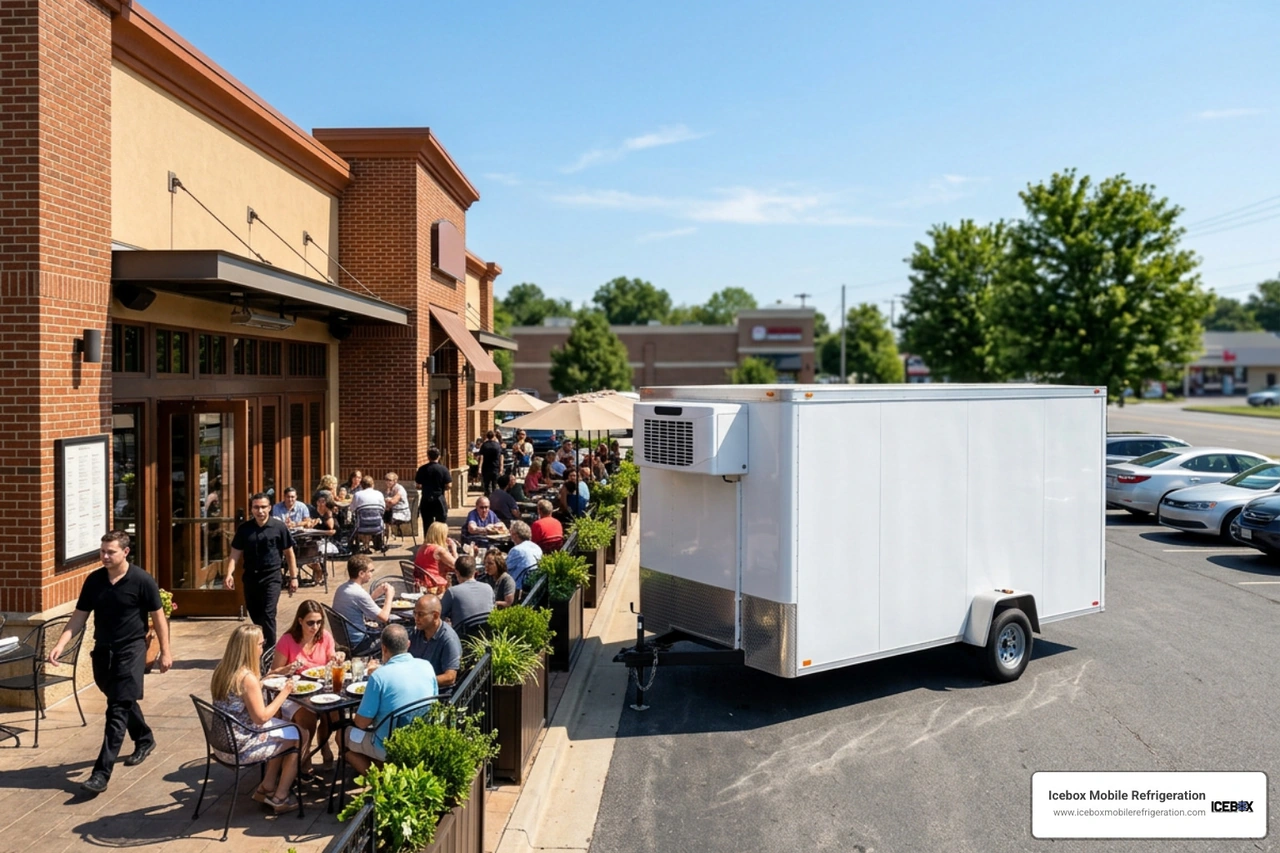
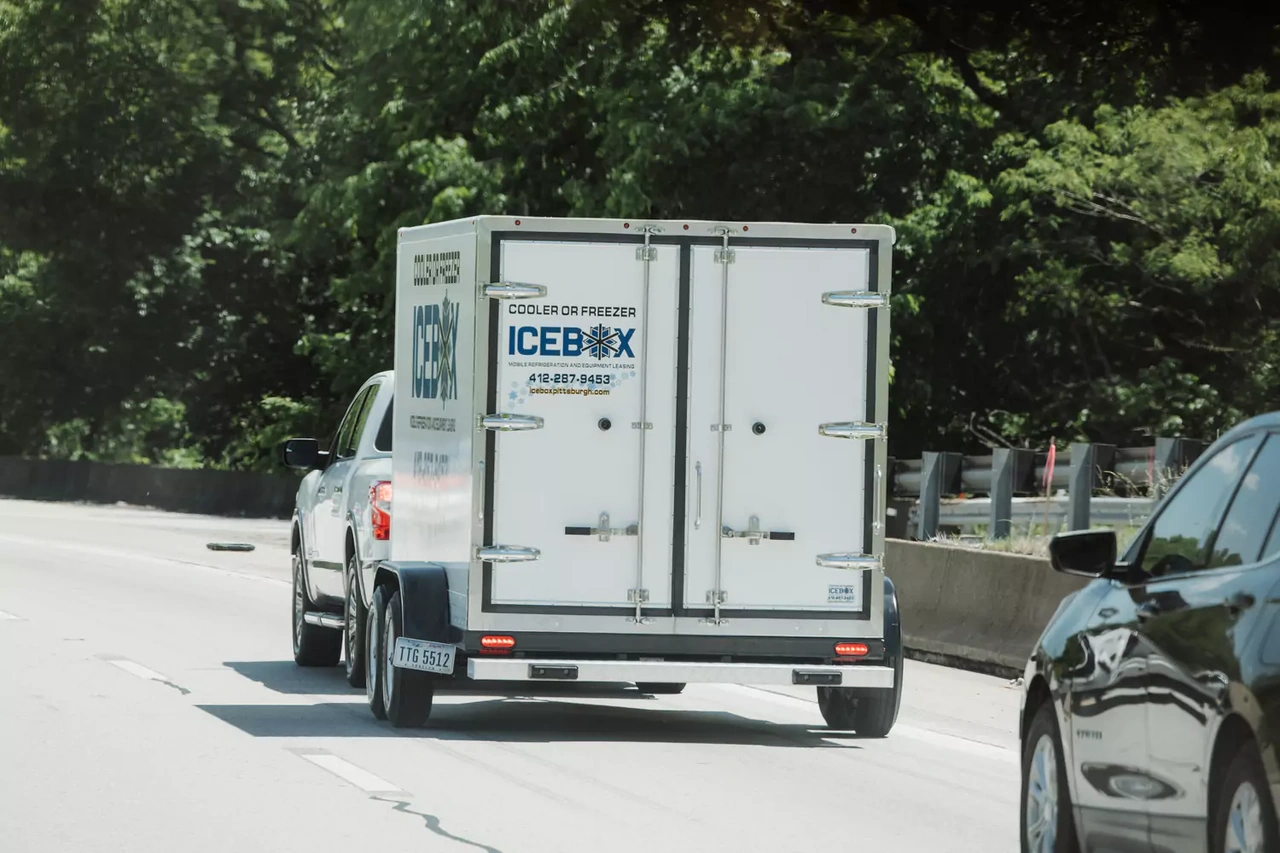
For temporary on-site needs, use a refrigerated trailer for chilled meat or a mobile freezer trailer for frozen inventory. This is especially useful during busy catering events, seasonal demand spikes, planned maintenance, or an unexpected cooling failure.
The right target depends on the product:
- Fresh whole cuts: Generally 3-5 days when held at 40°F (4°C) or below.
- Ground meat and raw poultry: Usually only 1-2 days chilled.
- Frozen meat: Hold at 0°F (-18°C). It remains safe indefinitely when kept continuously frozen, though quality declines over time.
- Fresh seafood: Needs especially tight control, often near 32°F (0°C), with high humidity.
Meat storage is not just about choosing a cold setting. Temperature consistency, clean organization, protected loading areas, humidity, stock rotation, and documented checks all affect food safety and product value.
We are Dan and Kelley, and this checklist will help you plan reliable on-site meat storage for routine operations, events, and urgent cold-chain needs.
Quick cold storage for meat definitions:
Essential Guidelines for Cold Storage for Meat
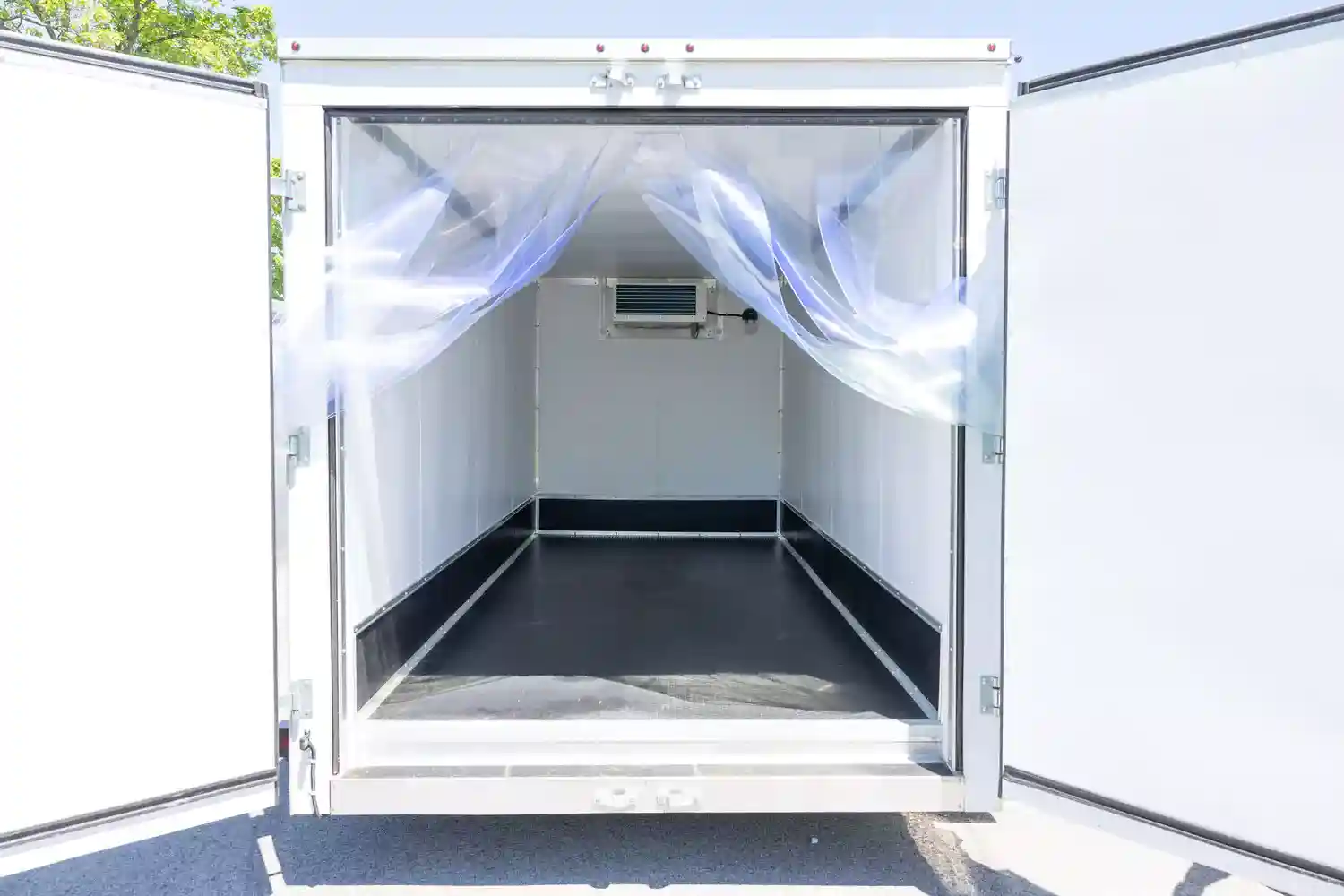
Maintaining a baseline temperature between 0°C and 4°C (32°F to 39°F) protects chilled meats from dangerous bacterial blooms while preserving lean tissue firmness and moisture. When storing fresh proteins, relative humidity management is just as critical as thermal stability. Insufficient moisture draws juices out of exposed surfaces, creating irreversible shrinkage, color darkening, and trim loss. Excessive or stagnant moisture causes surface condensation, which accelerates microbial slime and off-odors.
Temperature and Humidity Benchmarks in Cold Storage for Meat
Different proteins require tailored holding conditions to optimize shelf life:
| Meat Category | Optimal Storage Temp | Relative Humidity (RH) | Practical Storage Life | Key Handling Parameters |
|---|---|---|---|---|
| Fresh Beef | -1.5°C to 0°C (29°F to 32°F) | 90% | 3–5 weeks | Minimal surface air velocity to prevent trim loss |
| Beef (Controlled Atmosphere) | -1.5°C to -1°C (29°F to 30°F) | 90–95% | Up to 9 weeks | 10% CO₂ atmosphere to double shelf life |
| Fresh Poultry | -1°C to 2°C (30°F to 35°F) | >95% | 7–10 days | High humidity to prevent skin desiccation |
| Fresh Seafood | -1°C to 0°C (30°F to 32°F) | 95–98% | 3–7 days | Staged over melting ice with positive drainage |
| Pork & Veal | -1.5°C to 0°C (29°F to 32°F) | 90–95% | 1–3 weeks | Consistent airflow to prevent mold formation |
| Lamb & Mutton | -1°C to 0°C (30°F to 32°F) | 90–95% | 10–15 days | Separate storage from poultry to protect delicate fat |
| Dry-Aging Beef | -2°C to +4°C (28°F to 39°F) | 40–90% | 21–45+ days | Precise air velocity and UVC sanitation control |
Industrial facilities and butcher shops referencing REF. 0521 technical specs rely on precise atmospheric balancing to prolong quality across every protein cut.
Storage Life Guidelines and Meat Preservation Thresholds
Microbiological activity drops rapidly below 40°F (4°C) and halts once meat freezes to 0°F (-18°C). While frozen storage keeps proteins safe indefinitely by arresting pathogen proliferation, sensory quality degrades over time due to slow chemical oxidation, moisture sublimation, and ice recrystallization.
- Raw ground meats and poultry mixtures: Hold for only 1 to 2 days under refrigeration; freeze at 0°F for 3 to 4 months.
- Fresh beef steaks, roasts, and chops: Hold for 3 to 5 days chilled; freeze for 4 to 12 months for peak culinary texture.
- Whole fresh poultry: Hold for 1 to 2 days chilled; freeze for up to 12 months.
- Cooked meats and leftovers: Hold for 3 to 4 days refrigerated; freeze for 2 to 6 months.
Maintaining steady freezing environments prevents large ice crystals from shearing muscle fibers, safeguarding tenderness upon thawing. For operations managing high daily inventory rotations, our guide on butcher shop refrigeration outlines targeted handling methods.
Mobile Cold Storage Specifications, Safety Standards, and Organization
Our mobile cooler trailers and mobile freezer trailers use high-density polyurethane (PU) insulation panels with a core density of 40–42 kg/m³ and B2 flame retardancy. These panels use airtight tongue-and-groove cam-lock joints to eliminate thermal bridging. Modern eco-friendly units utilize natural refrigerants like R290 or R744 (CO₂) with ultra-low Global Warming Potential, matching standards highlighted in Brochure 2026 .
Non-porous, slip-resistant floors paired with seamless food-grade walls simplify daily washdowns. Wall-hung, cantilevered shelving keeps floors clear of obstructions, eliminating debris accumulation and simplifying sanitization.
HACCP Compliance, Food Safety, and Defrost Management
Meat storage facilities must satisfy strict USDA-FSIS requirements. Keep these critical control points in mind:
- Critical Temperature Limits: Maintain raw meat cold storage below the 44.6°F (7.0°C) critical threshold established in food science literature to prevent rapid proliferation of Salmonella, Staphylococcus aureus, and E. coli O157:H7.
- Cooling Down Cooked Proteins: Follow strict time-temperature cooling curves (such as USDA FSIS Appendix B) to stop spore germination of Clostridium perfringens and Clostridium botulinum.
- Intelligent Defrost Controls: Electric defrost systems with optimized fin spacing clear coil frost efficiently without causing internal temperature spikes that trigger partial thaw cycles.
- Personnel Safety Hardware: In accordance with EN378 safety recommendations, walk-in doors feature internal glow-in-the-dark emergency release push-buttons and continuous frame heaters to prevent rubber perimeter gaskets from freezing shut.
- Continuous Telematics: IoT wireless sensors monitor internal temperatures and humidity, triggering automatic alerts before issues cause temperature abuse.
For detailed equipment handling, consult our walk-in freezer services complete guide.
Workflow Optimization, Capacity Sizing, and Load Handling
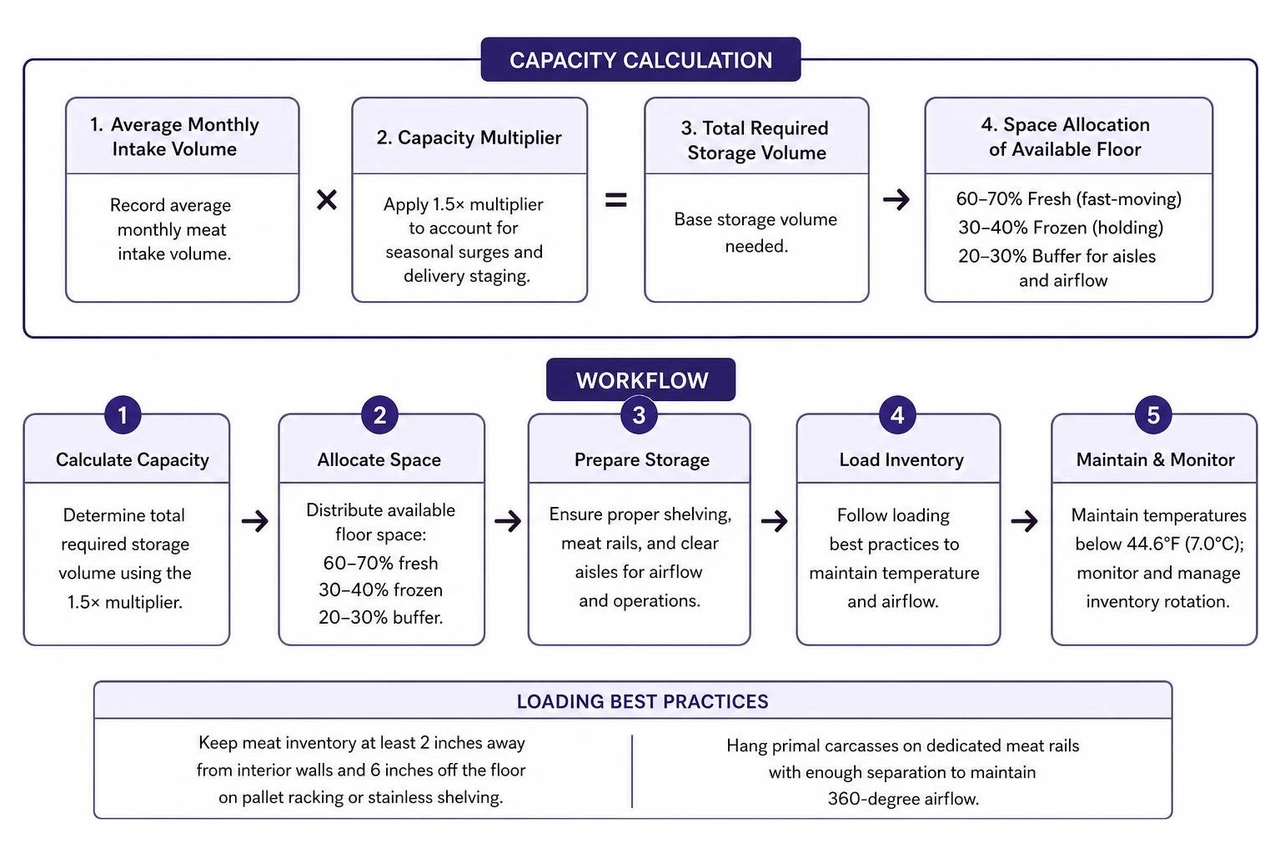
Calculate cold storage footprints using a 1.5x multiplier against average monthly intake volume to account for seasonal surges and delivery staging. Allocate 60–70% of available floor space to fast-moving fresh inventory and 30–40% to frozen holding. Always reserve a 20–30% buffer for clear aisle pathways and interior airflow.
When loading mobile trailers:
- Keep meat inventory at least 2 inches away from interior walls and 6 inches off the floor on pallet racking or stainless shelving.
- Hang primal carcasses on dedicated meat rails with enough separation to maintain 360-degree airflow.
- Position raw poultry and unsealed items on bottom shelving tiers below whole beef and pork cuts to eliminate cross-contamination risks.
- Maintain thermal transition zones near entry doors using heavy-duty vinyl strip curtains to reduce warm air ingress during loading.
Explore our commercial walk-in freezers guide for comprehensive layout blueprints.
Temporary and On-Site Cold Storage Management for Meat Operations
Commercial meat processors, regional packers, event caterers, and butcher shops frequently face sudden storage crunches. Whether managing heavy autumn harvest intakes, scheduling planned plant renovations, or responding to unexpected equipment breakdowns, on-site mobile trailers provide an immediate, dependable cold chain solution.
Our refrigerated storage trailer rental fleet bridges critical operational gaps without requiring costly facility expansion.
Deploying On-Site Cold Storage for Meat During Spikes and Maintenance
Mobile cooler trailers and mobile freezer trailers deliver on-demand flexibility right outside your loading dock or prep kitchen:
- Volume Buffering: Hold seasonal poultry runs, holiday ham orders, and wholesale shipments without overcrowding your primary walk-in boxes.
- Wild Game Processing: Outfitter operations and specialty butchers can stage hundreds of pounds of deer, elk, and boar carcasses during open hunting seasons.
- Turnkey Setup: Units operate on standard, easily accessible 110-volt single-phase power connections, eliminating the need for complex high-voltage utility drops.
- Versatile Dual-Temp Range: Seamlessly configure storage setpoints from 0°F for deep-frozen inventory up to 50°F for controlled tempering or produce holding.
- Ground-Level Access: Low step-in door thresholds make hand-truck loading and rolling cart access fast and safe.
To prepare for high-volume seasons, check out our guides on setting up a meat processing freezer or using portable cold storage units.
Sizing and Monitoring On-Site Refrigerated Trailers
Protecting high-value meat inventory requires continuous monitoring and responsive support. Our mobile trailer units feature integrated digital controllers and wireless sensors that provide round-the-clock visibility into holding temperatures. If grid power fluctuates, trailers connect easily to backup generators paired with automatic transfer switches to maintain an unbroken cold chain.
We proudly support meat processors, restaurants, event venues, and wholesale distributors throughout the East Coast, including Akron, OH, Augusta, GA, Charleston, SC, Charlotte, NC, Cincinnati, OH, Clarksville, TN, Cleveland, OH, Columbia, SC, Columbus, OH, Dayton, OH, Detroit, MI, Fort Lauderdale, FL, Fort Myers, FL, Franklin, TN, Greenville, SC, Lexington, KY, Louisville, KY, Miami, FL, Morgantown, WV, Mt. Juliet, TN, Murfreesboro, TN, Myrtle Beach, SC, Naples, FL, Nashville, TN, Parkersburg, WV, Philadelphia, PA, Pittsburgh, PA, Raleigh, NC, Sarasota, FL, Steubenville, OH, Tampa Bay, FL, Toledo, OH, Venice, FL, Weirton, WV, Wheeling, WV, Wilmington, NC, and Zanesville, OH.
With 24-hour emergency response and easy-to-deploy walk-in trailers, we ensure your protein inventory stays perfectly preserved through every seasonal rush, renovation, or equipment outage.
Ready to protect your meat inventory with dependable on-site temporary cold storage? Request on-site trailer rental support today and connect with our team for a fast, customized quote.
Choose the perfect rental option
Explore our wide range of trailer rentals and find the one that suits your needs
%20(2)-min.webp)
Discover New Blog Posts
Stay updated with our latest blog content.
_compressed.webp)