_compressed.webp)
Safe Food Freezer Storage Starts at 0°F
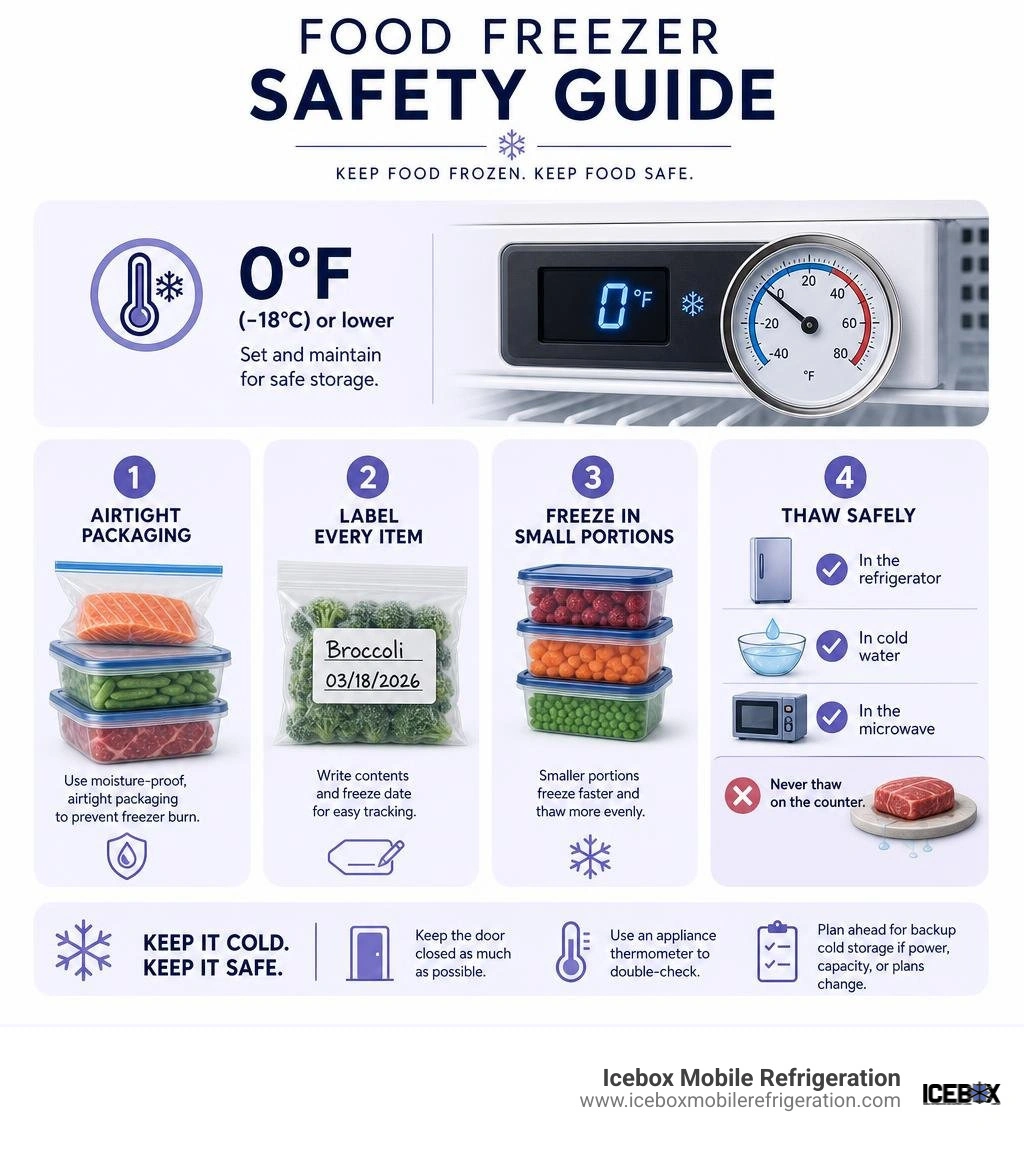
Set your food freezer to 0°F, use a digital thermometer to confirm it, and keep the door closed as much as possible. At that temperature, frozen food remains safe indefinitely when it stays continuously frozen, though taste and texture decline over time.
For event kitchens, caterers, and emergency planning, the basics are simple:
- Pack food tightly in moisture-proof, airtight packaging.
- Label every item with its contents and freeze date.
- Freeze food in smaller portions so it freezes quickly.
- Thaw only in a cold holding area, cold water, or a microwave - never on a counter.
- Have backup cold storage ready if freezer capacity, power, or event plans change.
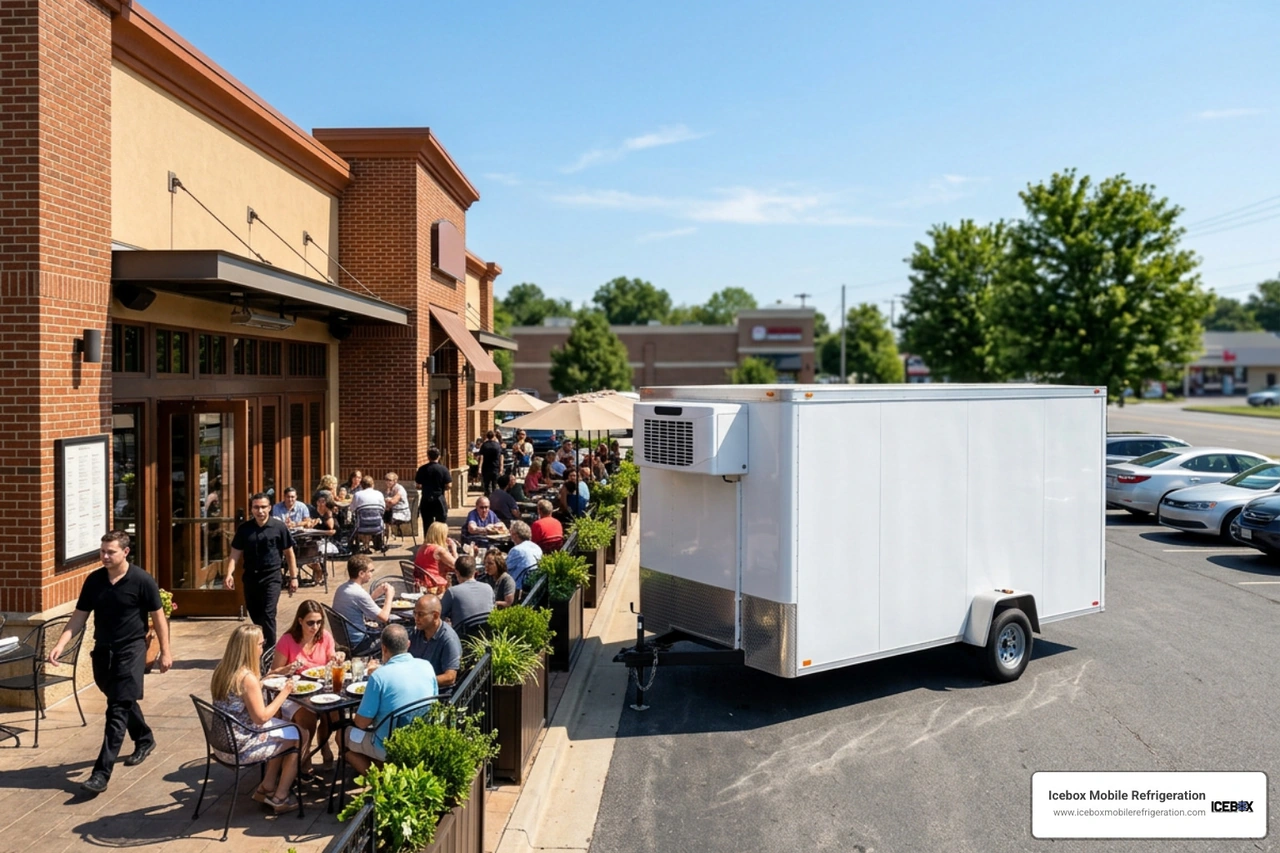
Freezing does not make unsafe food safe again. It puts bacteria, yeasts, and molds into an inactive state; they can become active after thawing. That is why steady temperature control, clean handling, and a reliable mobile freezer trailer matter when food must stay safe on-site.
We are Dan and Kelley, and we will walk through the practical food freezer steps that help East Coast events protect inventory, reduce waste, and handle cold-storage surprises.
Food freezer helpful reading:
Essential Food Freezer Guidelines for Safe Storage and Quality
When running a busy event kitchen or managing inventory, understanding the science of freezing is your best defense against food waste. Freezing preserves perishables by substantially slowing enzyme activity and forcing microbes—such as bacteria, yeasts, and molds—into dormancy. While freezing does not destroy these microorganisms, it completely halts their multiplication as long as the internal temperature remains at 0°F.
The freezing process itself does not destroy nutrients. In meat and poultry products, there is little to no change in nutritional value during cold holding. The true enemy of frozen inventory is freezer burn, which occurs when dry air reaches the surface of food, causing moisture loss and oxidation. This creates grayish-brown, leathery patches. While freezer-burned food remains microbiologically safe, its texture and flavor suffer significantly.
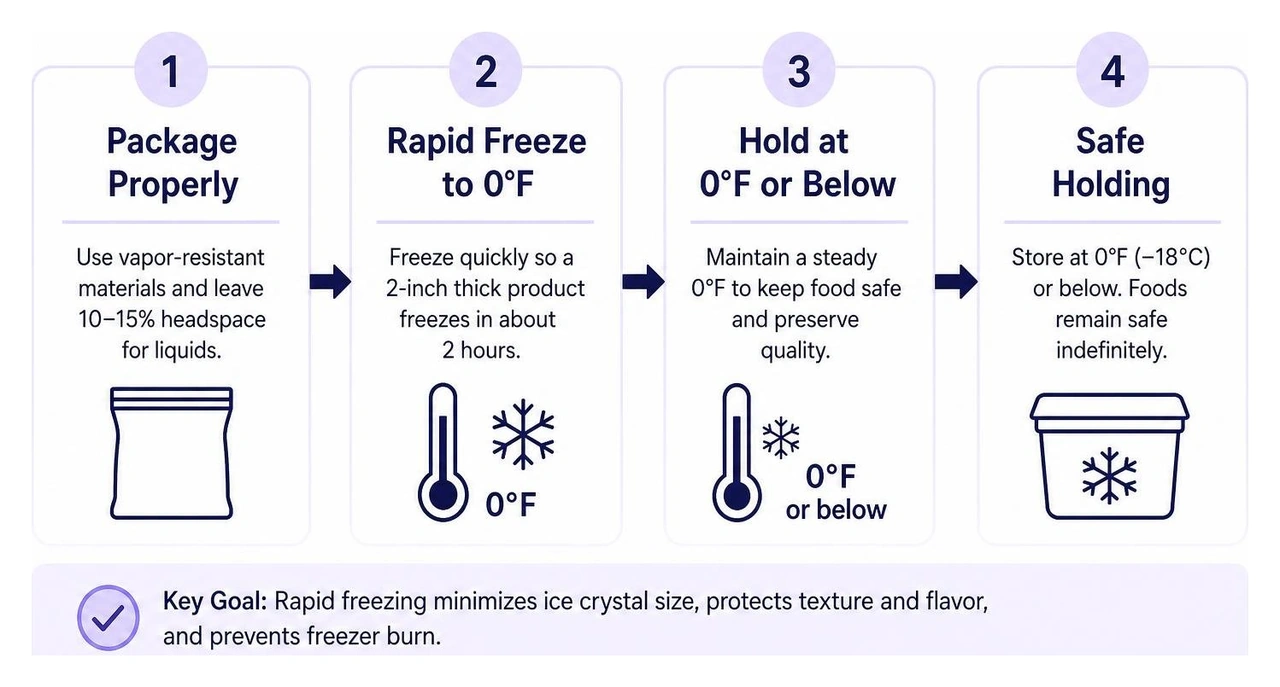
Rapid freezing minimizes ice crystal size. When food freezes slowly, water molecules coalesce into large, jagged crystals that rupture cell walls, resulting in mushy textures upon thawing. Ideally, a product that is 2 inches thick should freeze completely in about 2 hours. Maintaining high food quality in any mobile food service freezer setup relies on fast heat removal and steady thermal stability.
Optimal Temperatures and Safe Food Freezer Storage Times
Maintaining a steady 0°F baseline ensures that foods remain safe indefinitely from a microbiological standpoint. However, peak culinary quality follows strict storage windows. Food service operators must balance product turnover to ensure meats remain juicy and prepared dishes retain their intended flavors.
Industry guidelines established by government food safety standards provide clear benchmarks for quality retention. Proper equipment calibration is essential, as detailed in standard appliance operating standards.
| Food Category | Recommended Freezer Storage Duration (at 0°F) | Primary Quality Factor |
|---|---|---|
| Whole Uncooked Poultry | Up to 12 Months | Moisture retention and skin texture |
| Raw Steaks and Roasts | 4 to 12 Months | Juiciness and oxidation resistance |
| Raw Ground Beef | 3 to 4 Months | Fat flavor preservation |
| Soups and Stews | 2 to 3 Months | Emulsion and seasoning stability |
| Breads and Baked Goods | 2 to 3 Months | Crumb moisture and staling prevention |
| Blanched Vegetables | 8 to 12 Months | Color, crispness, and vitamin retention |
Best Packaging and Thawing Practices for Your Food Freezer
To prevent moisture loss and freezer burn, package all products using vapor-resistant materials such as heavy-duty freezer bags, vacuum pouches, or food-grade high-density polyethylene (HDPE) containers. When packaging liquids, broths, or stews, always leave 10% to 15% headspace inside the container to accommodate natural liquid expansion during the phase change from liquid to ice.
Safe thawing is just as critical as proper freezing. Never leave frozen food to thaw at room temperature on an open counter. Pathogenic bacteria multiply rapidly in the "temperature danger zone" between 40°F and 140°F. Use one of these three approved thawing methods:
- Cold Holding Unit (Preferred): Slow, consistent thawing inside a cold storage unit holding below 40°F. This preserves moisture and allows raw meat to sit safely for several days before cooking.
- Cold Water Submersion: Place sealed packages in leak-proof bags fully submerged in cold tap water, changing the water every 30 minutes until fully thawed. Cook immediately.
- Microwave Defrosting: Use the defrost function for immediate batch prep, followed by instant cooking to eliminate any warm spots where microbes might thrive.
If plans change, food thawed in a safe cold environment below 40°F can be refrozen without cooking, although repeated freeze-thaw cycles will result in some moisture loss.
Foods That Freeze Well vs Foods to Avoid Freezing
Not all ingredients react equally to 0°F holding. Solid proteins, properly blanched produce, and certain dairy derivatives freeze exceptionally well, whereas high-moisture fruits and delicate emulsions do not hold up.
Foods That Freeze Well:
- Raw beef, pork, poultry, and finfish
- Raw egg whites (separated from yolks)
- Blanched vegetables (broccoli, green beans, corn, zucchini)
- Bread, pastries, and baked goods
- Meat- and vegetable-based broths, soups, and hearty sauces
Foods to Avoid Freezing:
- Raw eggs in their shells (the expanding liquid will crack the shell)
- High-water vegetables like lettuce, cucumbers, and radishes (cellular collapse turns them to liquid mush)
- Mayonnaise and cream-based sauces (emulsions separate into watery oil)
- Cooked egg whites (they become rubbery and watery)
Operational Best Practices, Maintenance, and Emergency Cold Storage
Operating a reliable cold storage freezer environment requires disciplined preventive care. Frost accumulation acts as an insulator across cooling coils, forcing internal fans and compressors to run harder, which drives up power consumption and creates temperature fluctuations.
Auto-defrost systems periodically warm cooling elements to eliminate frost, while manual systems require planned shutdowns. To keep equipment running efficiently, regularly inspect door gaskets for tears, seal integrity, and cleanliness. A compromised gasket allows warm, humid ambient air to enter, accelerating ice formation and straining internal mechanical components.
Defrosting, Routine Cleaning, and Preventing Equipment Failures
A clean, well-maintained storage interior prevents cross-contamination and prolongs equipment lifespan.
- Defrost Buildup: If using a manual system, defrost whenever ice thickness exceeds a quarter of an inch. Never use sharp metal scrapers on cooling walls.
- Sanitize Surfaces: Wash internal bins, shelving, and walls with a solution of mild dishwashing liquid and warm water, followed by a food-safe sanitizing rinse. Dry thoroughly before restocking.
- Inspect Gaskets: Wipe down door seals weekly to remove food residues that prevent tight magnetic closure.
- Airflow Management: Avoid packing products directly against interior cooling vents. Proper cold airflow ensures every corner of the storage area remains at 0°F.
- Monitor Temperature Alerts: Use calibrated digital thermometers and external warning lights to identify sensor faults or rising temperatures before product integrity is compromised.
Handling Power Outages and Scaling Up with Temporary Freezer Storage
During unexpected facility outages or equipment breakdowns, protecting perishable assets requires quick action. Keep all doors tightly sealed. A fully loaded storage unit will generally hold safe temperatures for up to 48 hours without power, whereas a half-full unit can only maintain cold for about 24 hours.
If an outage extends past these limits, relying on a dedicated power outage freezer contingency plan protects tens of thousands of dollars in stock. You can consult our comprehensive temporary freezer storage guide for emergency management protocols.
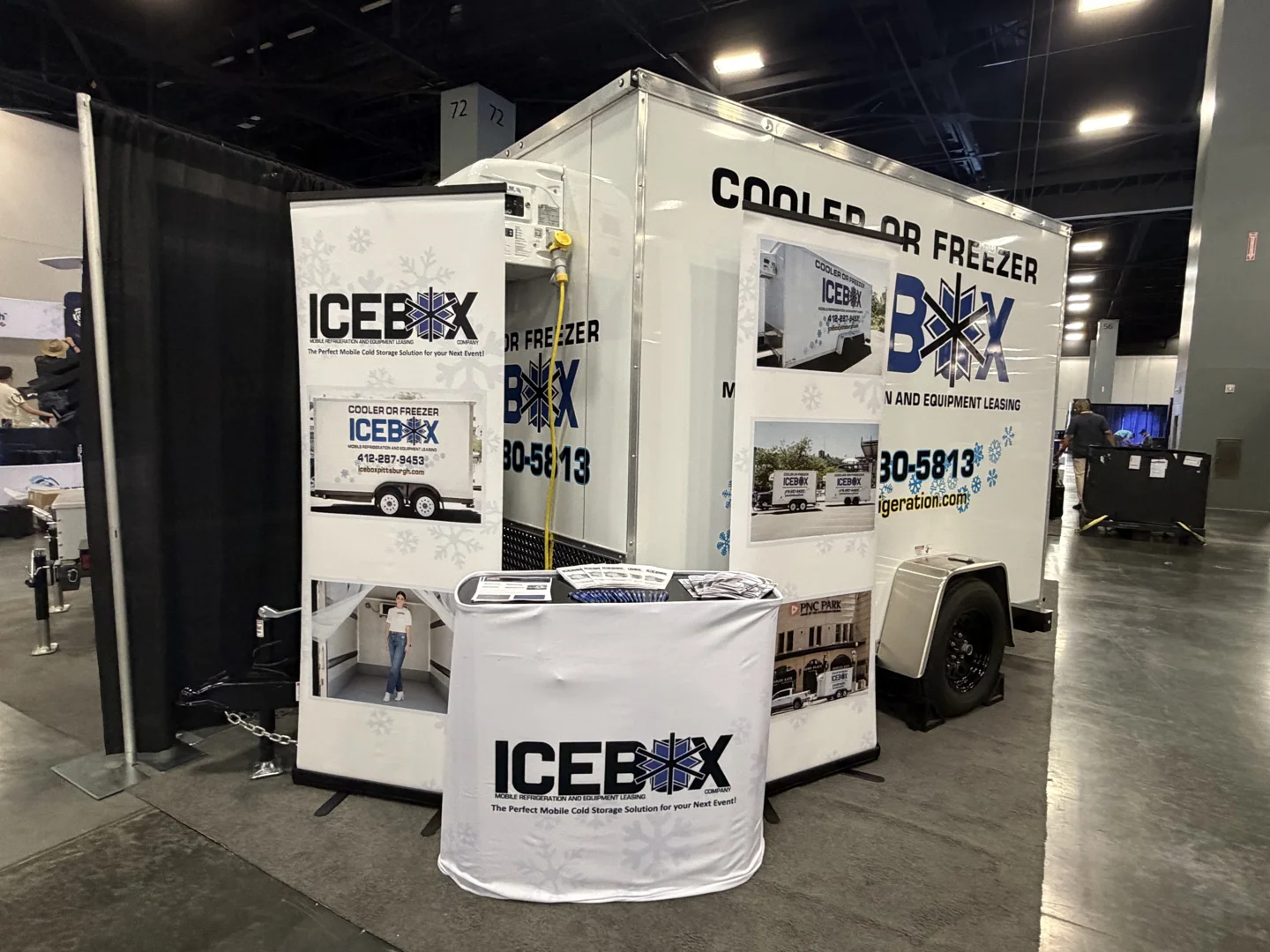
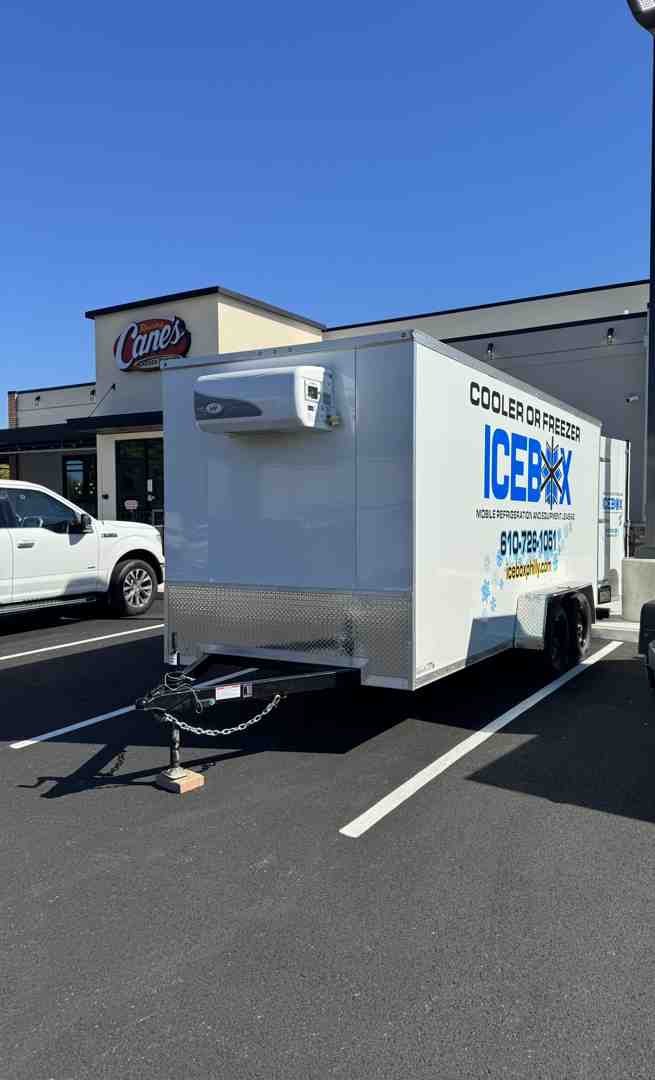
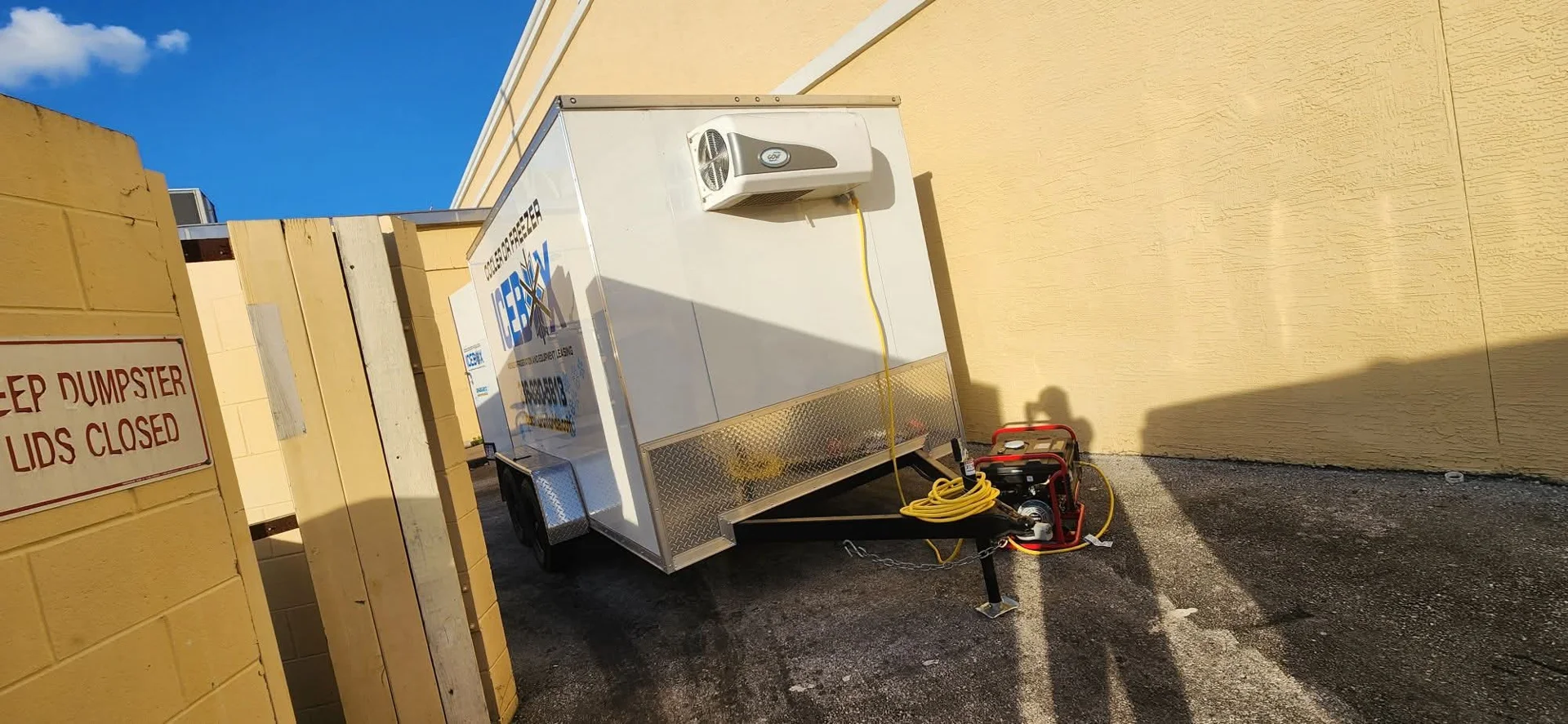
When your operation requires fast, reliable temporary cold storage—whether for an unexpected equipment failure, seasonal inventory overflow, or a large outdoor event—we provide seamless on-site solutions. At Icebox Mobile Refrigeration, we deliver easy-to-set-up, 110-volt walk-in trailer units that operate reliably at 0°F, backed by our 24-hour emergency response team.
Whether you operate in Philadelphia, PA; Charleston, SC; Charlotte, NC; Nashville, TN; Miami, FL; or across our other East Coast locations, our refrigerated trailers and mobile freezer trailers deliver dependable cold storage protection right where you need it.
Ready to secure your on-site cold storage? Visit our on-site mobile freezer rental page today to request a customized quote from our expert team.
Choose the perfect rental option
Explore our wide range of trailer rentals and find the one that suits your needs
%20(2)-min.webp)
Discover New Blog Posts
Stay updated with our latest blog content.