What Do Cold Storage Rental Rates Actually Cost in 2026?
Cold storage rental rates vary widely depending on how you store — and for how long. Here's a quick snapshot of mobile trailer options:
| Trailer Type | Temperature Range | Ideal Use Case |
|---|---|---|
| Mobile Cooler Trailer | 34°F to 40°F | Catering, florists, restaurant overflow |
| Mobile Freezer Trailer | 0°F | Frozen foods, ice cream, event backup |
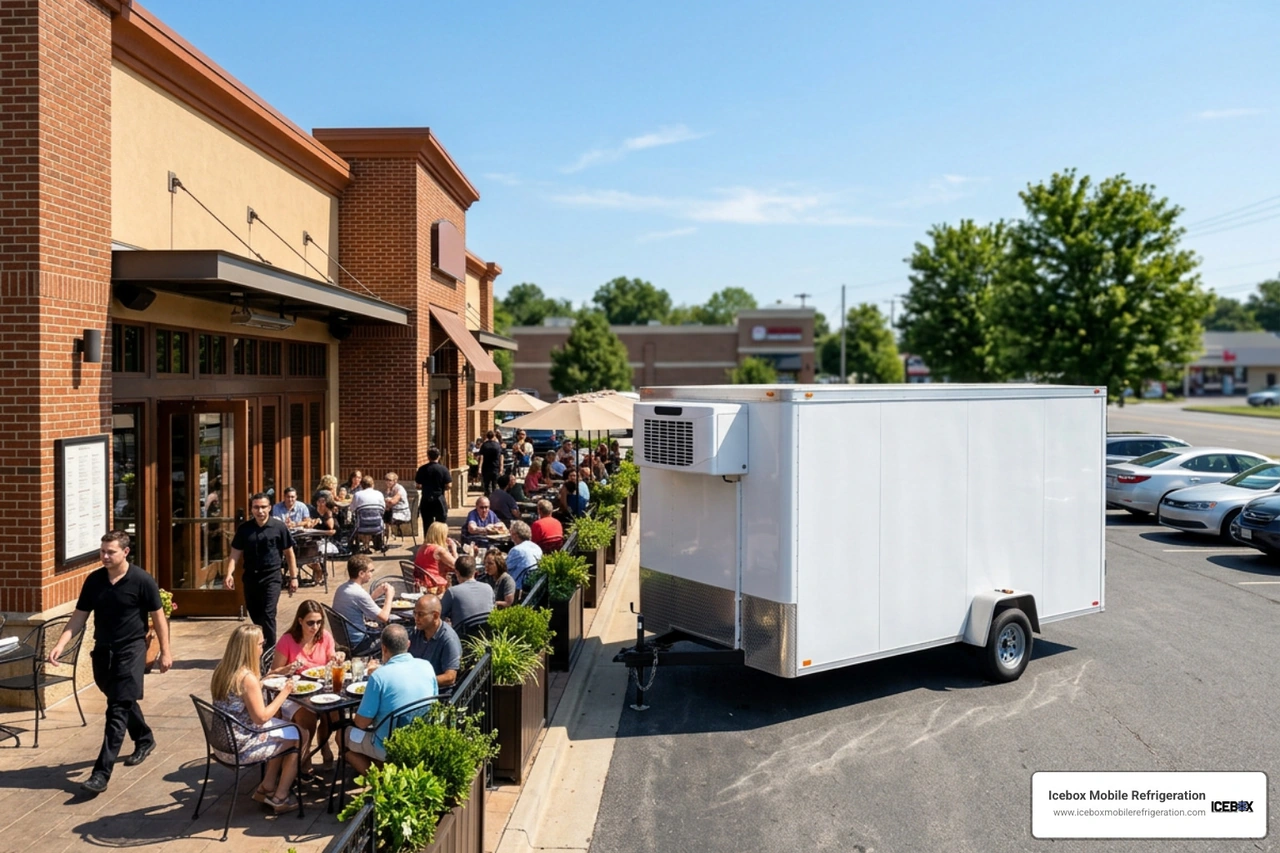
For mobile cooler trailers and mobile freezer trailers delivered on-site, pricing depends on trailer size, rental duration, temperature zone, and whether the rental is scheduled in advance or an emergency. Contact Icebox directly for an accurate quote for your event or situation.
If you've ever tried to price out temporary cold storage for an event, a restaurant equipment failure, or a seasonal overflow situation, you already know how confusing it can be. The base rate is just the beginning. Delivery fees, power requirements, emergency surcharges, and minimum rental periods can quietly double your bill before you've loaded a single case of product.
Cold storage as an industry is growing fast — the global market is projected to grow 14% per year, reaching over $400 billion by 2032. But for event planners, caterers, and food service businesses on the East Coast, the more immediate concern isn't market projections. It's what will this actually cost me this weekend?
That's exactly what this guide answers. We're Dan and Kelley, and below we break down every factor that drives mobile cold storage pricing — so you can plan smarter and avoid surprises.
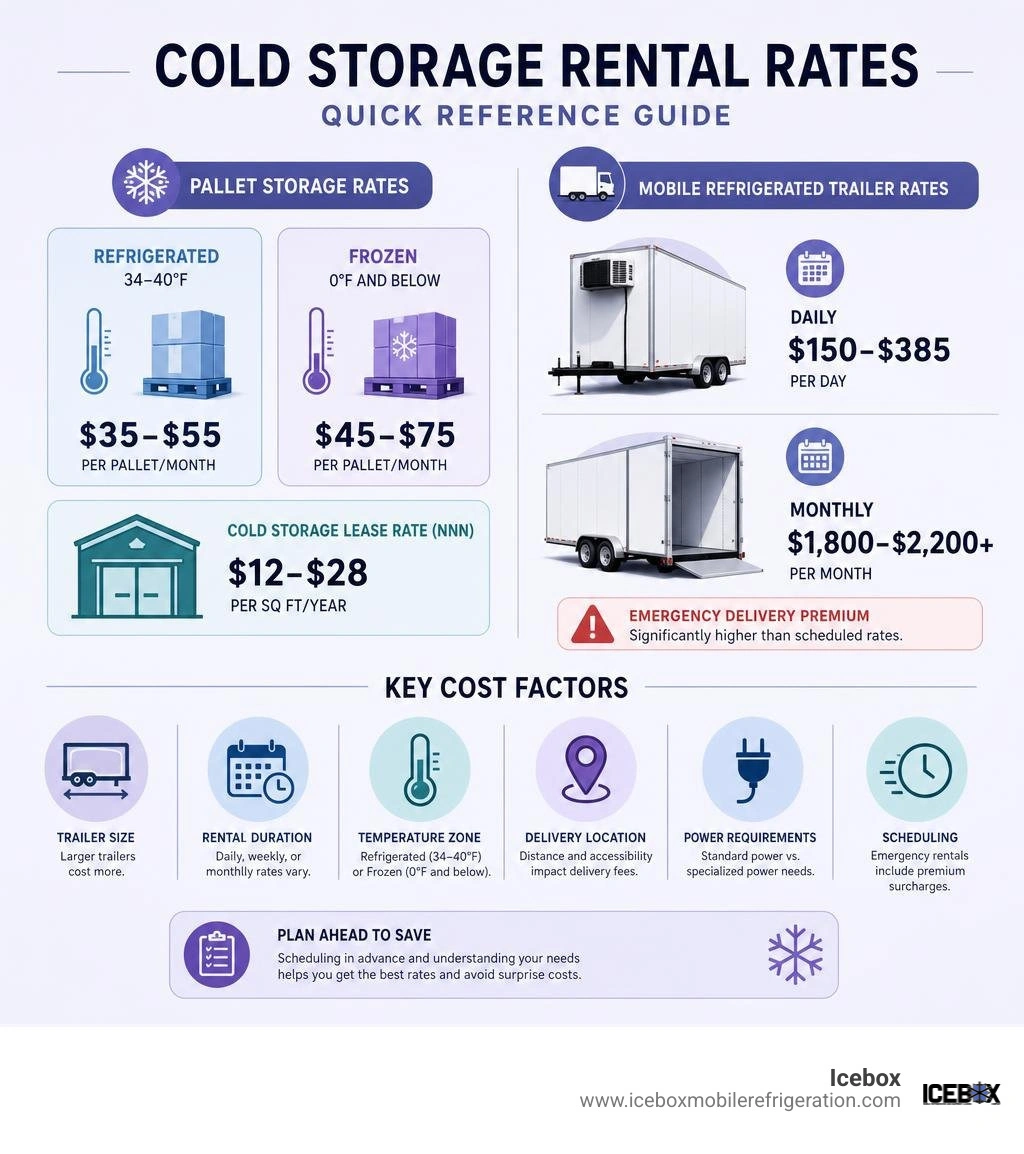
Basic cold storage rental rates glossary:
Key Factors That Influence Mobile Cold Storage Rental Rates
Renting temporary refrigeration for on-site storage focuses on fast, flexible, and convenient solutions. Whether you are coordinating commercial events, managing a seasonal holiday overflow, or scrambling to handle an emergency backup situation, the pricing of mobile cooler trailers and mobile freezer trailers is determined by a few distinct operational factors. If you want a deep dive into the overall setup of these systems, check out our Cold Storage Rental Complete Guide.
Comparing Cold Storage Rental Rates by Trailer Size
The size of the trailer you choose directly impacts your base rate. For most small to mid-sized businesses, selecting the right size is a balancing act between capacity and cost-effectiveness.
Standard mobile cold storage units are typically split into two main size categories:
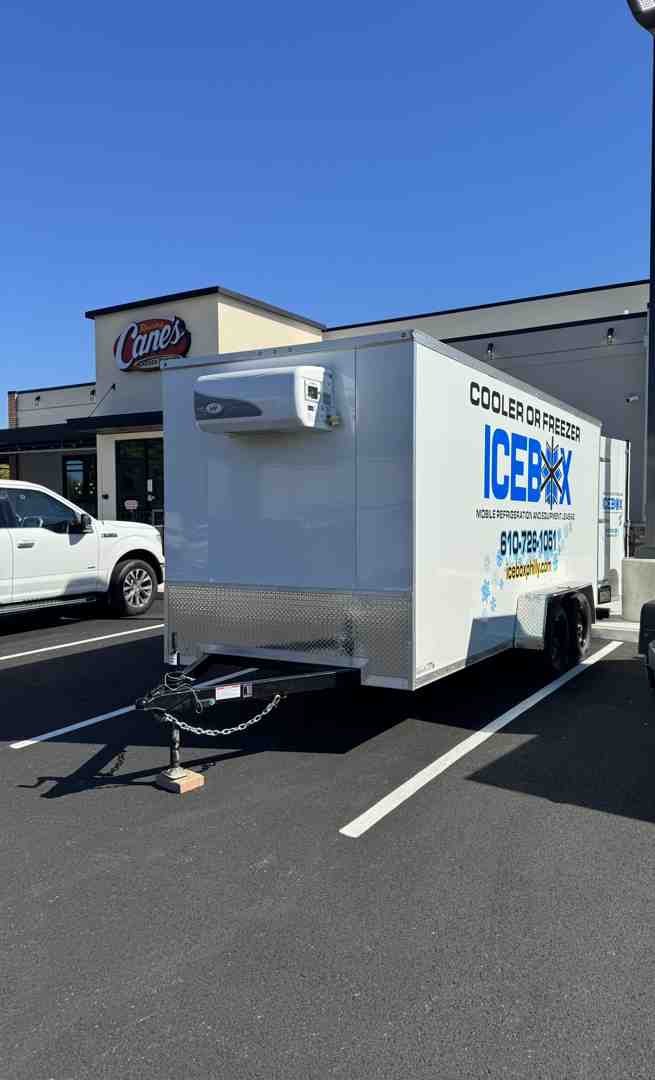
- Medium Trailers (6' x 12'): These units are highly popular because they strike the perfect balance between storage space and footprint. They can comfortably hold up to 4,300 lbs of payload (approximately 283 cubic feet of temperature-controlled inventory) and fit easily into standard parking spaces.
- Large Trailers (6' x 16'): When you need serious volume, a large trailer steps in with a payload capacity of up to 6,690 lbs. These are ideal for major events, large restaurant renovations, or high-volume seasonal inventory.
To see how these specifications translate to real-world utility, take a look at the standard breakdown below:
| Trailer Size | Weight Capacity (Payload) | Volume Capacity | Ideal Use Case |
|---|---|---|---|
| Medium (6' x 12') | ~4,300 lbs | ~283 cu. ft. | Local catering, florists, minor restaurant outages |
| Large (6' x 16') | ~6,690 lbs | ~380+ cu. ft. | Major festivals, large-scale commercial renovations |
If you are located near the East Coast, you can explore local options like our Small Refrigerated Trailer Rental in Augusta GA page, or read through our comprehensive Refrigerated Trailer Rental Cost Guide to learn more about sizing up your options.
Temperature Zone Requirements: Cooler vs. Freezer Trailers
The colder you need your inventory to be, the harder the compressor has to work—and that affects your overall costs. A similar rule of thumb applies to mobile trailers when comparing cooling and freezing capabilities.
- Cooler Trailers (34°F to 40°F): Designed to keep fresh food, beverages, floral arrangements, and agricultural products chilled. They require less energy pull and are perfect for weekend events.
- Freezer Trailers (0°F): If you need to store frozen meats, seafood, or ice cream, you will need a freezer trailer. Please note that mobile trailer units are designed to maintain temperatures at 0°F, but they are not built for deep-freeze operations.
For more details on managing these temperature zones, you can review our Walk-In Cooler Rental Cost Guide and our Cold Room Rental Price Guide.
Rental Duration and Seasonal Demand Impacts
How long you keep the trailer—and when you need it—plays a massive role in your final invoice.
- Daily vs. Monthly Commitments: While daily rates are great for quick weekend events, committing to a longer-term rental (such as a monthly rate) typically unlocks significant savings. In the rental market, committing to a multi-month term can substantially lower your average daily cost.
- Seasonal Peaks: Just like standard climate-controlled self-storage rates peak in late spring and summer due to moving demands, mobile cold storage rates experience high demand during warm-weather event seasons, major holidays (like Thanksgiving and Christmas for grocery overflow), and florist rushes (like Valentine's Day). Booking well in advance of these peak periods is the best way to secure your equipment.
Understanding the Hidden Costs of Temporary Cold Storage
When comparing cold storage rental rates, the base daily or monthly rate is only part of the story. To budget effectively, you must account for the ancillary fees and operating expenses that come with running on-site units.
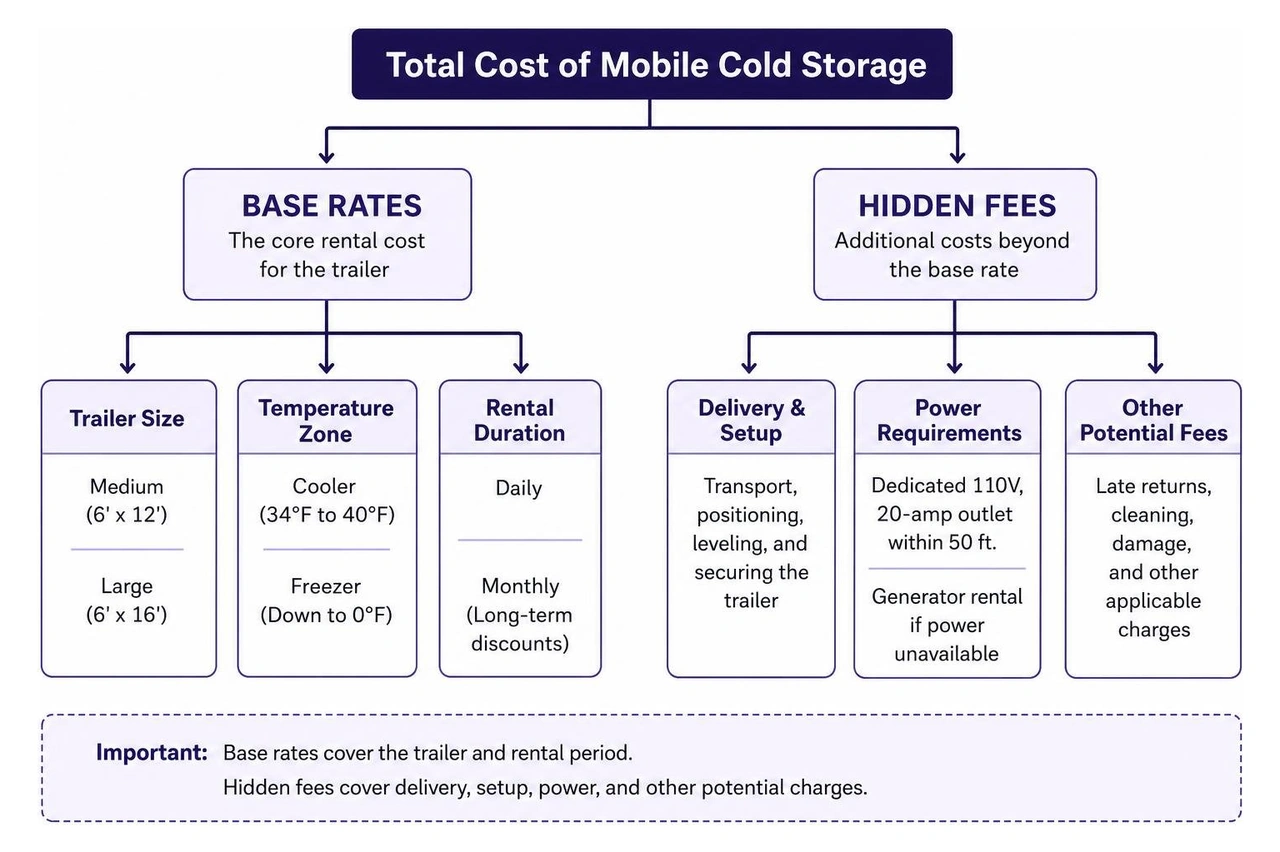
Delivery, Setup, and Power Requirements
Before a mobile trailer can start cooling your inventory, it has to be delivered, positioned, leveled, and powered.
- Delivery and Setup Fees: Bringing a heavy, purpose-built trailer to your location requires specialized logistics. Delivery fees typically cover the transport, leveling, and securing of the unit. These fees are usually priced within a set mileage radius, with additional per-mile charges if you are located further away.
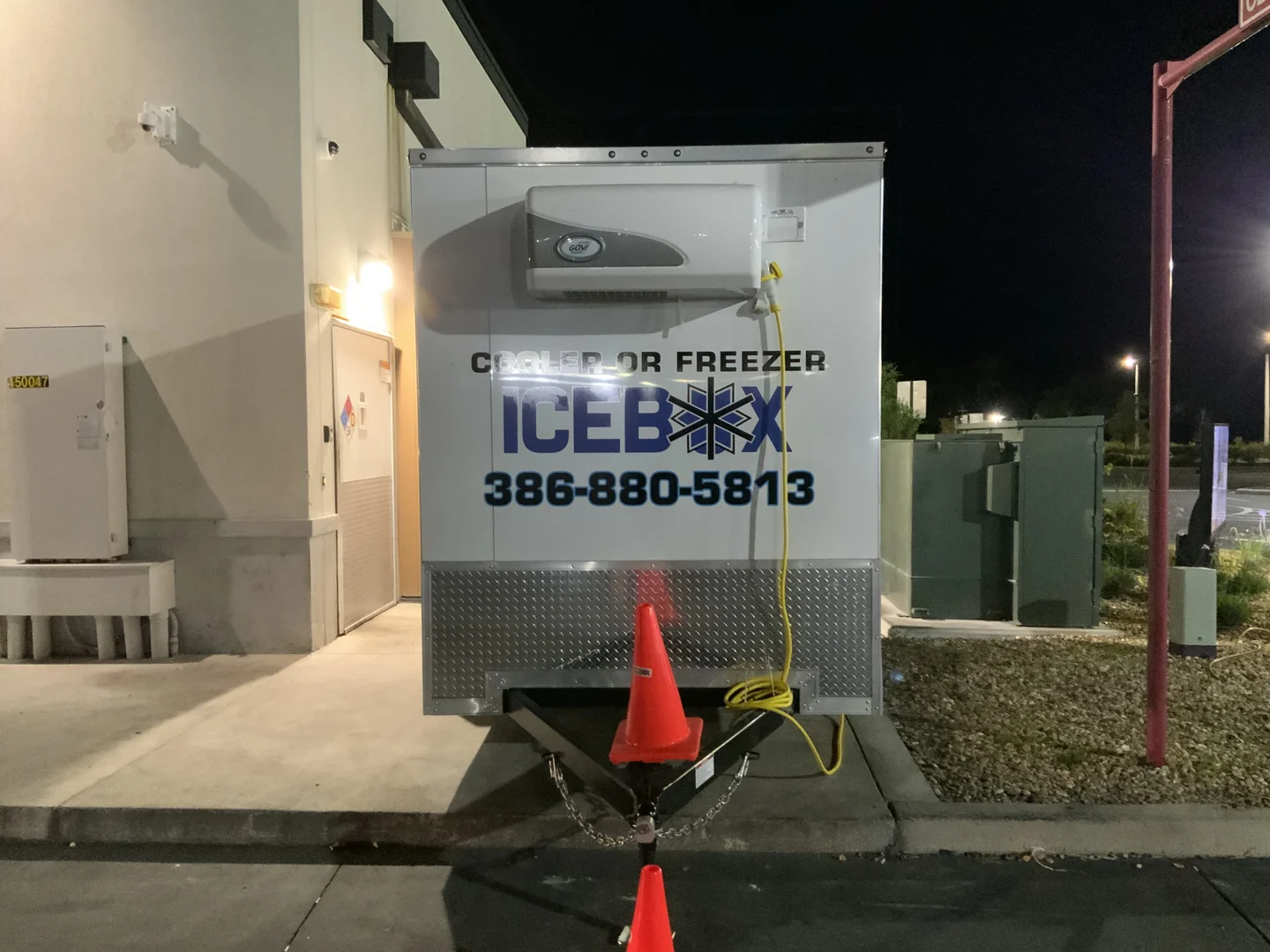
- Power Source: Our mobile trailers are highly efficient, all-electric units that run on standard 110-volt, 20-amp household currents. This is a major advantage over diesel-powered units, which are noisy, smelly, and require expensive fuel. However, you must have a dedicated 110V outlet within 50 feet of the trailer. If standard power is unavailable, you will need to budget for generator rentals and fuel.
For a comparison of how portable power and delivery setups differ across larger containers, you can browse our Refrigerated Container Rental Price Guide 2025.

Emergency vs. Scheduled Cold Storage Rental Rates
When your restaurant's walk-in cooler dies on a Friday night, you don't have the luxury of planning ahead.
- Scheduled Rentals: Booking your rental weeks or months in advance for a planned event or renovation ensures standard delivery rates and guaranteed equipment availability.
- Emergency Services: If you face a sudden equipment failure, rapid deployment is critical to saving thousands of dollars in spoiled inventory. Emergency dispatch requires immediate logistics coordination, which naturally carries a premium delivery charge. At Icebox, we specialize in 24-hour emergency dispatch along the East Coast to keep your business running when disaster strikes.
How to Avoid Unexpected Fees and Reduce Your Bill
To keep your temporary cold storage costs as low as possible, we recommend a few simple best practices:
- Plan Your Power: Ensure you have a dedicated, fully functioning 110V/20A circuit ready to go before the delivery driver arrives to avoid setup delays or generator fees.
- Optimize Your Space: Choose the right size trailer. Don't pay for a 16-foot trailer if your inventory can easily fit inside a 12-foot unit.
- Book in Advance: Avoid emergency delivery premiums by scheduling your trailer as soon as you know your event or renovation dates.
- Use Strip Curtains: Keep the cold air inside! Utilizing plastic strip curtains helps maintain internal temperatures when doors are opened frequently, reducing the strain on the compressor and saving energy.
If you are looking for reliable, clean, and quiet on-site cold storage, we are here to help. Icebox provides premium mobile refrigeration services across the East Coast—from major hubs like Philadelphia, PA and Cleveland, OH, down to Charlotte, NC, Charleston, SC, Tampa, FL, and Miami, FL.
We don't believe in one-size-fits-all pricing or hidden surprises. For a clear, customized quote tailored specifically to your business, event, or emergency situation, visit our Icebox Locations page and contact us today!
Choose the perfect rental option
Explore our wide range of trailer rentals and find the one that suits your needs
%20(2)-min.webp)
Discover New Blog Posts
Stay updated with our latest blog content.